
KI-Systeme und Unternehmensinformation
Zum Einsatz algorithmischer Entscheidungssysteme im Kontext des aktienrechtlichen Informationsmodells
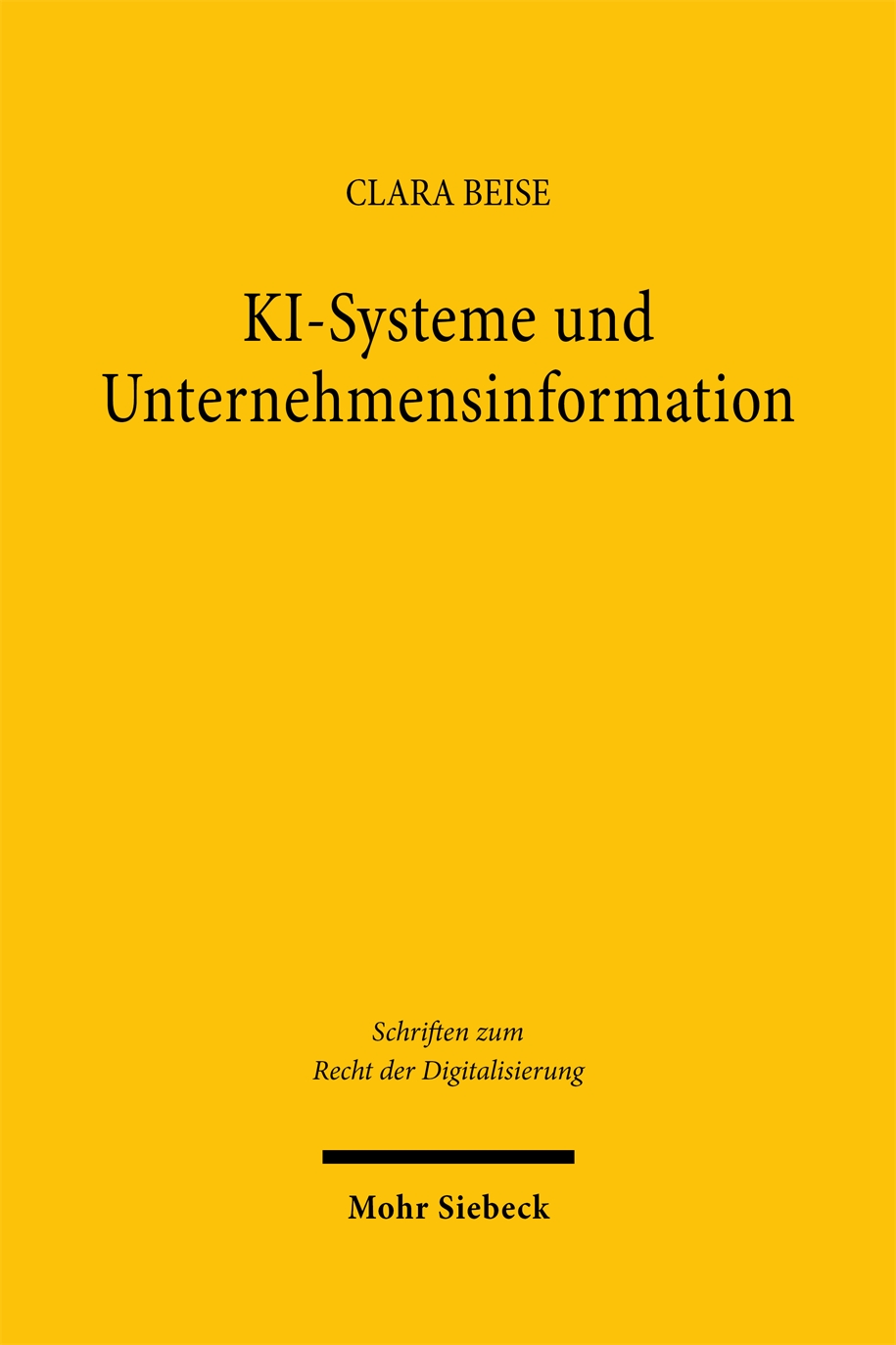
Paperback (Forthcoming)
(May 2027)
ISBN: 9783162008640
6.1 x 9.13 inches
Price: $135.00
What happens to corporate law information rules when AI systems are used? Artificial intelligence has long since become an integral part of decision-making processes. Yet its use within corporations raises important questions at the intersection of information duties and managerial responsibility.
Clara Beise examines algorithmic decision-making systems (“AI systems” or “AI agents”) within the framework of the corporate law information model, thereby operating at the intersection of corporate law and digitalization law. Her analysis does not focus on liability issues, nor is it primarily concerned with the question of whether, and to what extent, corporate functions may be assumed by AI systems. Instead, she develops a cross-organ informational duty of care regime and assesses its continued validity and scope in light of the use of AI in corporate decision-making.
By employing a functional concept of information, the study demonstrates that information and decision-making authority are closely interconnected within the stock corporation. Information is a prerequisite for the ability to make decisions, while, conversely, a corporate actor’s decision-making competence determines its informational needs. Drawing on a normatively adaptable concept of AI that encompasses algorithmic decision-making systems and their technical foundations, the author sheds light on the corporate use of AI systems through the lens of fundamental principles of corporate law. In particular, the deployment of AI must be measured against the corporate law principle of managerial responsibility as well as an expanding body of AI-specific legislation (“AI law”).
The author focuses on five key areas, each characterized by a high demand for information on the part of the actors involved and by the concentration of decision-making authority. Accordingly, the study examines the use of AI systems in corporate law in the contexts of information organization, delegation of tasks, the preparation of business decisions, oversight and supervision, and, finally, shareholder information.
The analysis shows that information rights and duties within the stock corporation follow common underlying principles and can be consolidated into a coherent concept of a corporate law duty of informational care. The use of AI neither leads to an unlimited expansion of this duty nor renders it obsolete in practice. Rather, it necessitates selective adjustments that also incorporate insights from the discourse on transparency ideals and explainable AI.
Other Titles in this Series
 Dezentrale autonome Organisationen (DAOs) und Gesellschaftsrecht
Zum Spannungsverhaltnis Blockchain-basierter und juristischer Regeln
Volume 14


 Blockchain im Wertpapierbereich
Rechtsfragen der Nutzung von Distributed Ledger Technology (DLT) bei Wertpapieren, ihrem Handel, ihrer Abwicklung und ihrer Verwahrung
Volume 4
 Rechtssubjektivität für Künstliche Intelligenz
Eine Untersuchung von Zuerkennungsgründen für die "ePerson"
 Wertpapierrecht der Security Token Offerings
Koharenz von Zivil- und Aufsichtsrecht im europaischen Mehrebenensystem
Volume 15


 Das elektronische Konnossement
Umsetzung der Anforderungen aus 516 Abs. 2 HGB durch funktionsaquivalente Blockchain-Token
Volume 5
 Stablecoins und Aufsichtsrecht
Die Regulierung von E-Geld-Token der MiCAR zwischen Buchgeld, E-Geld und Geldmarktfonds


 Die Regulierung von OTT-Kommunikationsdiensten
Eine rechtliche Analyse von Over-the-Top-Kommunikationsdiensten unter besonderer Berucksichtigung des sich wandelnden Telekommunikationsrechtsrahmens
Volume 6
 Gewaltenteilung im digitalen Staat
Verfassungsrechtliche Maßgaben an die Digitalisierung der Dritten Gewalt
 Die bilanzrechtliche Abbildung von Blockchain-basierten Zahlungsmitteln
Eine Untersuchung nach Handelsrecht und IFRS
Volume 17


 Legal Tech und das Anwaltsmonopol
Die Zulassigkeit von Rechtsdienstleistungen im nationalen, europaischen und internationalen Kontext
Volume 7
 Der personalisiert angebahnte (unerwünschte) Vertrag
Zivilrechtliche Grenzen von Data Driven Exploitative Advertising


 Das Internationale Privatrecht digitaler Werte
Kollisionsrechtliche Interessen bei der Digitalisierung von Vermogenswerten
Volume 29


 Decentralised Autonomous Organisation (DAO) Regulation
Principles and Perspectives for the Future
Volume 30

 Die Durchsetzungslast im Privatrecht
Steuerungsmöglichkeiten und Auswirkungen zivilrechtlicher Technikregulierung
Similar Books


 Balthasar Caymox of Nuremberg
Early Modern German Print Publishers: Popular Prints of the Seventeenth Century
 Constitutional Conflict as Judicial Civil Disobedience and Conscientious Objection
Reconceptualising National Constitutional Court Rulings in the European Union Legal Space

 East Meets West: Justice, Law, and Politics
The 13th Kobe Lecture and the 2nd IVR Japan International Conference, Chiba, September 2023


 False Friends in Comparative Law
Advantages and Risks of Legal Transplants in Civil Law – the Polish-German Perspective
 Formulary apportionment in international tax law
An allocation method for the age of globalization and digitalization
Volume 210


 Hofmann oder Vorkämpfer der „philosophes“?
Deutsche Voltaire-Bildnisse und -Imaginationen im Zeitalter der Aufklärung


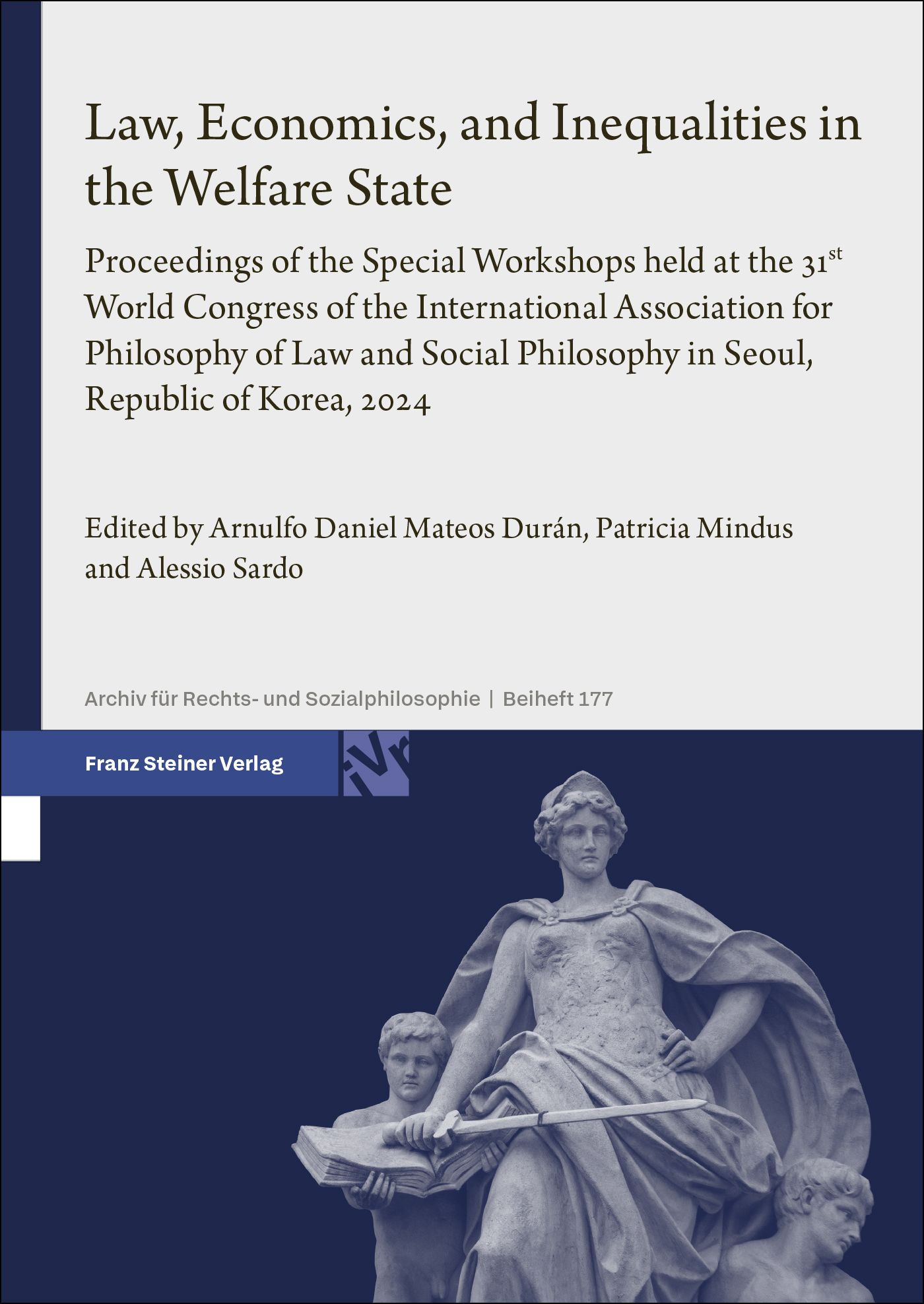 Law, Economics, and Inequalities in the Welfare State
Proceedings of the Special Workshops held at the 31st World Congress of the International Association for Philosophy of Law and Social Philosophy in Seoul, Republic of Korea, 2024
 Legal Pluralism and the Tajik Experience of Xinjiang
Between Custom and the Chinese State: An Ethnographic Perspective
 Legal Unification through Case Law?
Supreme Courts and the Emergence of Uniform Law in the Modern Era
Volume 242
 Liturgia semper reformanda
Adaptations and accommodations in the liturgy in light of canon 838 of the Code of Canon Law


 The Documentation of Historical Facts in Trial Judgments of the International Criminal Court
A Constitutional Theory of International Criminal Proceedings
Volume 66
 The EPPO/OLAF Compendium of National Procedures: Estonia
Desktop codes on the procedural law of the Member States with annotations by national experts
 The EPPO/OLAF Compendium of National Procedures: Greece
Desktop codes on the procedural law of the Member States with annotations by national experts
 The EPPO/OLAF Compendium of National Procedures: Italy
Desktop codes on the procedural law of the Member States with annotations by national experts

 The Right to Regulate of Developing Countries in International Investment Law
A Contextual Approach to International Investment Agreements
Volume 11


 Linguistic and Cultural Dynamics in a Frontier Society
New Perspectives on Northeastern Bavaria and Western Bohemia in the Early Middle Ages
Volume 9
 The Law of the International Civil Service
Institutional Law and Practice in International Organisations

 “Aktenzeichen XY … ungelöst”, Facebook und Co.
Chancen und Risiken der Einbeziehung der Öffentlichkeit in das strafprozessuale Ermittlungsverfahren
Volume 476
 “Das Grundgesetz ist unsere Leitkultur”
Eine verfassungsrechtliche und -theoretische Annäherung an die Gleichsetzung von Grundgesetz und Leitkultur
Volume 1595
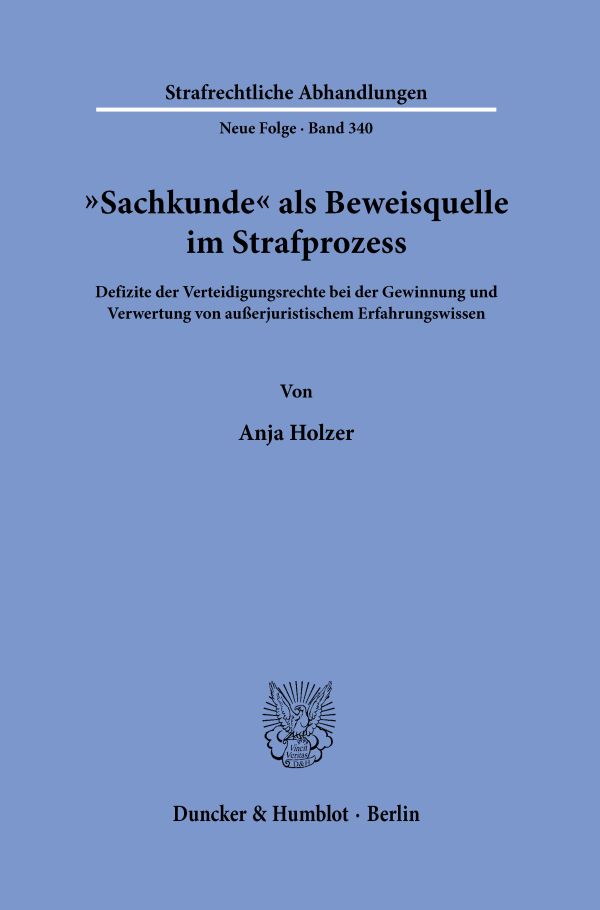 “Sachkunde” als Beweisquelle im Strafprozess
Defizite der Verteidigungsrechte bei der Gewinnung und Verwertung von außerjuristischem Erfahrungswissen
Volume 340
