
Geheime Daten
Staatlicher Datenzugang und grundrechtlicher Geschäftsgeheimnisschutz
By (author) Nik R. Roeingh

Paperback (Published)
(July 2026)
ISBN: 9783162006530
6.1 x 9.13 inches
Price: $149.00
In stock
Data are the lifeblood of modern governance. But when that data sits in private hands, how far may the state reach? Nik R. Roeingh develops a constitutional framework for inclusive data use in the tension between the common good and secrecy.
The dissertation examines the legal framework governing state data access rights vis-à-vis private companies (business-to-government data sharing), with a particular focus on the fundamental rights protection of trade secrets. It starts from the observation that data-driven governmental decision-making is a key prerequisite for rational public-interest policy. At the same time, in the data society, a substantial share of highly granular data is stored in the silos of private companies. This data covers central areas of public responsibility – such as mobility, health, the environment, energy, and disaster management. Due to economic incentive structures, companies retain it on a de facto exclusive basis. This gives rise to an asymmetric data landscape in which the state’s informational and intervention capacities are structurally limited. The author contrasts this finding with a doctrinal analysis of the conditions under which the state may access privately held data. takes this finding as the occasion for a doctrinal analysis of the conditions under which the state may access privately held data. At its core lies the tension between the public interest in evidence-based decision-making and state innovation policy on the one hand, and the fundamental rights protection of economic freedoms on the other.Trade secrets participate in the protection afforded by economic fundamental rights; unconditional state access is therefore precluded. Against this background, the author clarifies fundamental constitutional and administrative law questions concerning state data access rights. Economic approaches are additionally drawn upon to assess the impact of data access rights on innovation, competition, and the data economy.The dissertation analyses existing and emerging national and European regulatory approaches – in particular the Data Act – and develops criteria for designing state data access rights in conformity with fundamental rights. It demonstrates how the tension between the public interest in data access and private interests in data secrecy can be legally balanced, thereby contributing to the doctrinal classification of business-to-government data sharing within European digital and data law.
Prolegomena
A. Der Zugang zu Daten als Elementarbaustein eines intelligenten Staates - B. Der staatliche Zugang zu Daten als Eingriff in die unternehmerische Geheimsphäre - C. Ziel der Untersuchung - D. Gang der Untersuchung
Kapitel 1: Das Phänomen Business-to-Government-Data-Sharing
A. Data - Daten als Zugangsobjekt - B. Government - Der Staat als Zugangsberechtigter - C. Business - Private Unternehmen als Zugangsverpflichtete
Kapitel 2: Die Datafizierung des Geschäftsgeheimnisschutzes
A. Historische und wettbewerbliche Dimensionen wirtschaftlich motivierter Geheimhaltung von Informationen - C. Geheimnisrechtliche Trennungslinien - D. Daten als Geschäftsgeheimnisse
Kapitel 3: Der staatliche Zugang zu geheimen Daten als materielle Grundrechtsbeschränkung
A. Grundrechtsbetroffenheit des zugangsverpflichteten Unternehmens - B. Der staatliche Zugang zu geheimen Daten als Eingriff - C. Grundrechtliche Rechtfertigung des staatlichen Zugangs zu geheimen Daten
Zusammenfassung
A. (Rechts-)Ökonomische Einordnung von Daten als Zugangsobjekt - B. Daten als Grundlage und Ziel staatlicher Steuerung - C. Restriktionsmechanismen staatlicher Datenzugänge - D. Vom dualistischen zum monistischen Geschäftsgeheimnisbegriff - E. Die Datafizierung des Geschäftsgeheimnisses - F. Grundrechtsdimensionen des Geheimnisschutzes - G. Eingriffsqualität des staatlichen Zugangs zu geheimen Daten - H. Grundrechtliche Rechtfertigung des staatlichen Zugangs zu geheimen Daten - I. Gemeinsame europäische Datenräume als demokratische Wissensermächtigungsstrategie
Born 1996; studied law in Leipzig and Münster; First State Examination in 2021 (Higher Regional Court of Hamm); visiting researcher (chercheur invité) at Université Paris 1 Panthéon-Sorbonne in 2023; 2022-24 German University of Administrative Sciences Speyer; 2024-26 University of the Bundeswehr Munich; PhD in 2026; legal clerkship (Referendariat) at the Kammergericht Berlin; research fellow at the National Research Institute for Public Administration Germany.
- By (author) Nik R. Roeingh
Other Titles in this Series
 Verhaltenssteuerung durch Brain-Computer-Interfaces
Rechtliche Herausforderungen des Einsatzes kommerzieller Neurotechnologien in Vertragsverhaltnissen
Volume 24

 Strukturierter Parteivortrag im digital geführten Zivilprozess
Richterliche Verfahrensleitung und Sanktionierung parteiseitigen Fehlverhaltens

 Dezentrale autonome Organisationen (DAOs) und Gesellschaftsrecht
Zum Spannungsverhaltnis Blockchain-basierter und juristischer Regeln
Volume 14

 Blockchain im Wertpapierbereich
Rechtsfragen der Nutzung von Distributed Ledger Technology (DLT) bei Wertpapieren, ihrem Handel, ihrer Abwicklung und ihrer Verwahrung
Volume 4
 Rechtssubjektivität für Künstliche Intelligenz
Eine Untersuchung von Zuerkennungsgründen für die "ePerson"

 Wertpapierrecht der Security Token Offerings
Koharenz von Zivil- und Aufsichtsrecht im europaischen Mehrebenensystem
Volume 15

 Das elektronische Konnossement
Umsetzung der Anforderungen aus 516 Abs. 2 HGB durch funktionsaquivalente Blockchain-Token
Volume 5
 Stablecoins und Aufsichtsrecht
Die Regulierung von E-Geld-Token der MiCAR zwischen Buchgeld, E-Geld und Geldmarktfonds


 Die Regulierung von OTT-Kommunikationsdiensten
Eine rechtliche Analyse von Over-the-Top-Kommunikationsdiensten unter besonderer Berucksichtigung des sich wandelnden Telekommunikationsrechtsrahmens
Volume 6
 Gewaltenteilung im digitalen Staat
Verfassungsrechtliche Maßgaben an die Digitalisierung der Dritten Gewalt

 Die bilanzrechtliche Abbildung von Blockchain-basierten Zahlungsmitteln
Eine Untersuchung nach Handelsrecht und IFRS
Volume 17

 Legal Tech und das Anwaltsmonopol
Die Zulassigkeit von Rechtsdienstleistungen im nationalen, europaischen und internationalen Kontext
Volume 7
 Der personalisiert angebahnte (unerwünschte) Vertrag
Zivilrechtliche Grenzen von Data Driven Exploitative Advertising


 Das Internationale Privatrecht digitaler Werte
Kollisionsrechtliche Interessen bei der Digitalisierung von Vermogenswerten
Volume 29


 Decentralised Autonomous Organisation (DAO) Regulation
Principles and Perspectives for the Future
Volume 30
Similar Books
 East Meets West: Justice, Law, and Politics
The 13th Kobe Lecture and the 2nd IVR Japan International Conference, Chiba, September 2023
 False Friends in Comparative Law
Advantages and Risks of Legal Transplants in Civil Law – the Polish-German Perspective

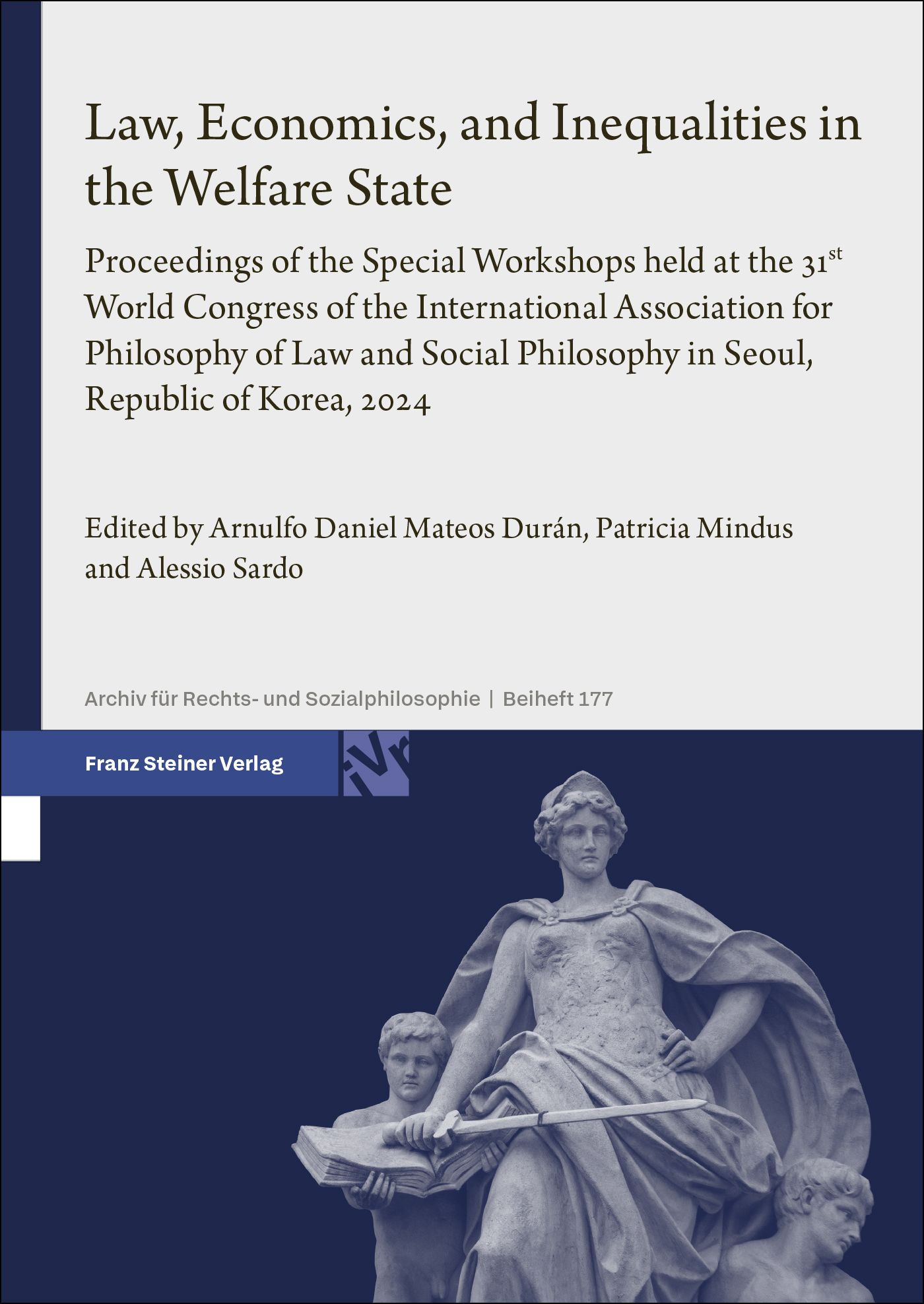 Law, Economics, and Inequalities in the Welfare State
Proceedings of the Special Workshops held at the 31st World Congress of the International Association for Philosophy of Law and Social Philosophy in Seoul, Republic of Korea, 2024
 Legal Pluralism and the Tajik Experience of Xinjiang
Between Custom and the Chinese State: An Ethnographic Perspective
 Liturgia semper reformanda
Adaptations and accommodations in the liturgy in light of canon 838 of the Code of Canon Law


 The EPPO/OLAF Compendium of National Procedures: Estonia
Desktop codes on the procedural law of the Member States with annotations by national experts
 The EPPO/OLAF Compendium of National Procedures: Greece
Desktop codes on the procedural law of the Member States with annotations by national experts
 The EPPO/OLAF Compendium of National Procedures: Italy
Desktop codes on the procedural law of the Member States with annotations by national experts
 The Right to Regulate of Developing Countries in International Investment Law
A Contextual Approach to International Investment Agreements
Volume 11


 Restoring the Rule of Law in Poland
Codification Commission for the System of the Judiciary and the Prosecutor’s Office Draft Projects for Status of Judges

 (Bloß) symbolische Rechtsetzung
Eine interdisziplinäre Untersuchung der deutschen Glücksspielregulierung auf ihre funktionelle und symbolische Wirkung
 Abwendung sozialrechtlicher Vermögenssanktionen als Abrechnungsbetrug?
Zur Übertragbarkeit der Ausklammerung geldwerter staatlicher Sanktionen aus dem Vermögensbegriff auf den Vergütungsausschluss in der vertragsärztlichen Versorgung
 Active Space Debris Removal
Rechte und Pflichten der Staaten im Kontext der aktiven Weltraumabfallbeseitigung
Volume 268

 Annäherungen an das japanische Recht
Festschrift für Heinrich Menkhaus zum 70. Geburtstag
Volume 245
 Artikel 102 AEUV und Nachhaltigkeit
Eine juristisch-ökonomische Analyse der Berücksichtigungsfähigkeit von Nachhaltigkeitsbelangen im Rahmen der Missbrauchsaufsicht
 Ausforschung und Rechtsdurchsetzung im Unionsprivatrecht
Herleitung und Ausgestaltung eines allgemeinen unionsrechtlichen Informationsrechts




 Britische Verfassungsgerichtsbarkeit
Modellbegründung aus Anlass der graduellen Selbstermächtigung während der Brexit-Krise


 Credit Default Swap-Aktivismus
Eine ökonomische Analyse und rechtliche Bewertung der Einflussnahme von Credit Default Swap-Investoren auf Unternehmen


 Das grundrechtliche Vorrangprinzip
Der Freiheitsschutz des Grundgesetzes im europäischen Grundrechtsverbund

 Das rechtliche Erbe Österreichs im polnischen Verwaltungsverfahren
Zum 100-jährigen Jubiläum des Allgemeinen Verwaltungsverfahrensgesetzes (AVG 1925–2025)
 Das rechtsgeschäftliche Surrogat im Rechtsvergleich
Eine Untersuchung zum Herausgabeanspruch nach deutschem und englischem Recht unter besonderer Berücksichtigung des Tracing
 Das Rheinische Recht
Neue Perspektiven auf die Geschichte des französischen Rechts an Rhein und Mosel, ca. 1750 bis 1900