
Jewish Lore in Manichaean Cosmogony
Studies in the Book of Giants Traditions
by John C Reeves
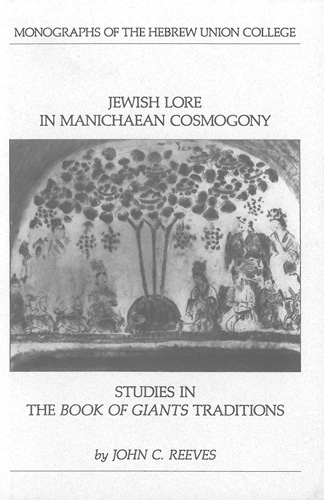
A work entitled the “Book of Giants” figures in every list of the Manichaean “canon” preserved from antiquity. Both the nature of this work and the intellectual baggage of the third-century Persian prophet to whom it is ascribed remained unknown to scholars until 1943, when fragments of several Middle Iranian versions of the Book of Giants were published by W. B. Henning. Twenty-eight years later, at Qumran, J. T. Milik discovered several copies of a fragmentary Aramaic work which is unquestionably the precursor of the later Manichaean recension. One other important work, Mani’s “autobiography,” the so-called Cologne Mani Codex, was brought to scholarly attention in 1970 with evidence that Mani spent his youth among the Elchasaites, a Judeo-Christian sect that observed the Sabbath, strict dietary laws, and rigorous purification practices. Although leading Orientalists of the nineteenth and twentieth centuries have consistently stressed the Iranian component in Mani’s thought, Reeves argues, in the light of evidence drawn from the above-mentioned discoveries and from a rich panorama of other textual sources, that the fundamental structure of Manichaean cosmogony is ultimately indebted to Jewish exegetical expansions of Genesis 6:1-4. Reeves begins with an examination of the ancient testimonies about the contents of Mani’s Book of Giants. Then, using documents from Second Temple Judaism, classical Gnostic literature, Christian and Muslim heresiological reports, Syriac texts, and Manichaean writings, he provides a detailed analysis of both the Qumran and Manichaean rescensions of the work, demonstrating additional interdependencies and suggesting new narrative arrangements. He addresses a series of quotations from an unnamed Manichaean source found in a paschal homily of the sixth-century Monophysite patriarch Severus of Antioch and a narrative from Thoeodore bar Konai. In sum, Reeves demonstrates that the motifs of Jewish Enochic literature, in particular those of the story of the Watchers and Giants, form the skeletal structure of Mani’s cosmological teachings, and that Chapters 1 to 11 of Genesis fertilized Near Eastern thought, even to the borders of India and China.
- By (author) John C. Reeves
Other Titles in this Series


 Modernism and Cultural Transfer
Gabriel Preil and the Tradition of Jewish Literary Bilingualism
Volume 10




 My Dear Daughter
Rabbi Benjamin Slonik and the Education of Jewish Women in Sixteenth-Century Poland
Volume 33



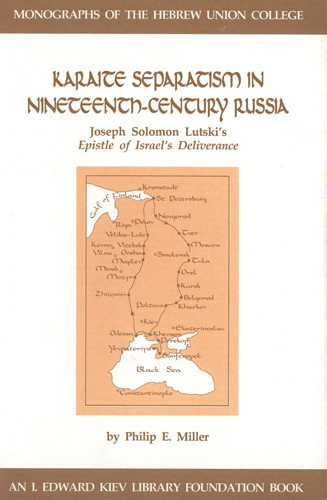 Karaite Separatism in Nineteenth-Century Russia
Joseph Solomon Lutski's Epistle of Israel's Deliverance
Volume 16
 Remember Amalek!
Vengeance, Zealotry, and Group Destruction in the Bible according to Philo, Pseudo-Philo, and Josephus
Volume 31




Similar Books

 A Companion to Christianity and Sport in Europe and North America (19th-21st centuries)
Volume 1: Western and Eastern Europe
 A Connecting Polemic in the Medieval Mediterranean
The Correspondence of Leo III and ʿUmar II
Volume 6





 Ars Prophetica
Theology in the Poetry of Twentieth-Century Hebrew Poets Avraham Halfi, Shin Shalom, Amir Gilboa, and T. Carmi
 As Messianism Turns to Heresy
The Regenstein Chair Lectures On Lurianic Kabbalah and Shabbatai Tzevi at Hebrew Union College - Cincinnati


 Creating the Woman in Antiquity
Proceedings of the 16th Melammu Workshop, Innsbruck, 2–3 June 2022
Volume 13
 Cultic Kisses
Fruitful Encounters Between Deities and Humans. Festschrift for Angelika Berlejung on the Occasion of Her 65th Birthday
 De/colonizing Theologies
Glocal Histories, Contemporary Challenges, Theoretical Reflections
Volume 4
 Drunk the Potion, No Whit Charmed
The Doctrine of Pure and Perfect Souls from Iamblichus to Damascius







