
Guidance, Not Governance
Rabbi Solomon B. Freehof and Reform Responsa
by Joan S. Friedman

Solomon Bennett Freehof (1892-1990) was one of America’s most distinguished, influential, and beloved rabbis. This book analyses Freehof’s views on a number of crucial issues that illustrate the evolution of American Reform Judaism.
Solomon Bennett Freehof (1892-1990) was one of America’s most distinguished, influential, and beloved rabbis. Ordained at Hebrew Union College in 1915, he was of the generation of rabbis from east European immigrant backgrounds who moved Reform Judaism away from its classical form toward a renewed appreciation of traditional practices. Freehof himself was less interested in restoring discarded rituals than in demonstrating how the Reform approach to Jewish religious practice was rooted in the Jewish legal tradition (halakhah). Opposed to any attempt to create a code of Reform practice, he nevertheless called for Reform Judaism to turn to the halakhah, not in order to adhere to codified law, but to be guided in ritual and in all areas of life by its values and its ethical insights. For Reform Jews, Jewish law was to offer “guidance, not governance,” and this guidance was to be provided through the writing of responsa, individual rulings based on legal precedent, written by an organized rabbinic authority in response to questions about real-life situations. After World War II, the earlier consensus about what constituted proper observance in a Reform context vanished as the children of east European immigrants flocked to new Reform synagogues in new suburbs, bringing with them a more traditional sensibility. Even before Freehof was named chairman of the Central Conference of American Rabbis Responsa Committee in 1956, his colleagues began turning to him for guidance, especially in the situations Freehof recognized as inevitably arising from living in an open society where the boundaries between what was Jewish and what was not were ambiguous or blurred. Over nearly five decades, he answered several thousand inquiries regarding Jewish practice, the plurality of which concerned the tensions Jews experienced in navigating this open society-questions concerning mixed marriage, Jewish status, non-Jewish participation in the synagogue, conversion, and so on-and published several hundred of these in eight volumes of Reform responsa. In her pioneering study, Friedman analyzes Freehof’s responsa on a select number of crucial issues that illustrate the evolution of American Reform Judaism. She also discusses the deeper issues with which the movement struggled, and continues to struggle, in its attempt to meet the ever-changing challenges of the present while preserving both individual autonomy and faithfulness to the Jewish tradition.
- By (author) Joan S. Friedman
Other Titles in this Series



 Modernism and Cultural Transfer
Gabriel Preil and the Tradition of Jewish Literary Bilingualism
Volume 10




 My Dear Daughter
Rabbi Benjamin Slonik and the Education of Jewish Women in Sixteenth-Century Poland
Volume 33


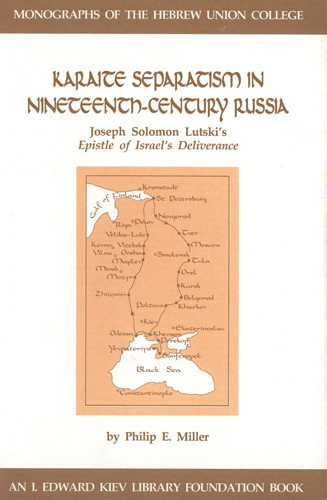 Karaite Separatism in Nineteenth-Century Russia
Joseph Solomon Lutski's Epistle of Israel's Deliverance
Volume 16


 Remember Amalek!
Vengeance, Zealotry, and Group Destruction in the Bible according to Philo, Pseudo-Philo, and Josephus
Volume 31


Similar Books

 A Companion to Christianity and Sport in Europe and North America (19th-21st centuries)
Volume 1: Western and Eastern Europe
 A Connecting Polemic in the Medieval Mediterranean
The Correspondence of Leo III and ʿUmar II
Volume 6





 Ars Prophetica
Theology in the Poetry of Twentieth-Century Hebrew Poets Avraham Halfi, Shin Shalom, Amir Gilboa, and T. Carmi
 As Messianism Turns to Heresy
The Regenstein Chair Lectures On Lurianic Kabbalah and Shabbatai Tzevi at Hebrew Union College - Cincinnati


 Creating the Woman in Antiquity
Proceedings of the 16th Melammu Workshop, Innsbruck, 2–3 June 2022
Volume 13
 Cultic Kisses
Fruitful Encounters Between Deities and Humans. Festschrift for Angelika Berlejung on the Occasion of Her 65th Birthday
 De/colonizing Theologies
Glocal Histories, Contemporary Challenges, Theoretical Reflections
Volume 4
 Drunk the Potion, No Whit Charmed
The Doctrine of Pure and Perfect Souls from Iamblichus to Damascius







