
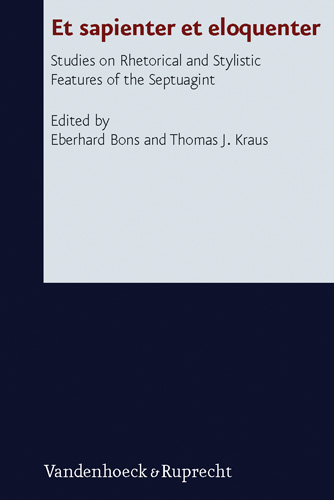
Et sapienter et eloquenter
Studies on Rhetorical and Stylistic Features of the Septuagint
Contributions by Jennifer M. Dines Contributions by Knut Usener Contributions by Katrin Hauspie Contributions by Jan Joosten Contributions by Alexis Léonas Edited by Eberhard Bons Edited by Thomas J. Kraus
Hardback (Published)
(July 2011)
ISBN: 9783525532614
6.34 x 9.33 inches
Price: $150.00
In stock
Untersuchungen zu stilistischen und rhetorischen Besonderheiten einzelner Bücher der Septuaginta.
As the ancient Greek version of the Old Testament the Septuagint is probably the first great translation project of Greco-Roman antiquity. Together with the Septuagint text the religion and culture of ancient Judaism came to the fore of a Greek speaking audience, which did not have any access to the holy scriptures of the Jews in Hebrew. That translation project also manifested a transfer of religious, social, and anthropological categories and concepts of Semitic origin to another cultural world of language and science that itself was shaped by Hellenism. Over the last years the Septuagint has gradually edged closer into the interest of Biblical scholars and into the centre of historical and philological research. In the course of this main attention has not only been paid to further particulars of its origination in Alexandria but also on various linguistic specifics and distinctive features with regards to content of the Greek Bible. The question, however, which has hardly been studied so far, is to what extent the Greek translation of the Bible consists of stylistic and rhetorical elements that are not present in the Hebrew source text. Did the translators made use of their rhetoric and stylistic skills to give their translations a distinctive ornatus? Can we, according to Augustine, rightly claim that not only the authors of the Biblical texts but also the translators knew to formulate et eloquenter et sapienter, i.e. in an eloquent and wise manner? This issue, neglected in current research, is taken up in this collected volume. Seven scholars investigate into stylistic and rhetorical elements present in various books of the Bible (e.g., Psalms, Amos, and Solomon’s Book of Wisdom) and establish a field of work that deserves to receive more attention in the future. Contributors are Eberhard Bons, Jennifer M. Dines, Katrin Hauspie, Jan Joosten, Thomas J. Kraus, A. Leonas, and K. Usener.
- Contributions by Jennifer M. Dines
- Contributions by Knut Usener
- Contributions by Katrin Hauspie
- Contributions by Jan Joosten
- Contributions by Alexis Léonas
- Edited by Eberhard Bons
- Edited by Thomas J. Kraus
Other Titles in this Series
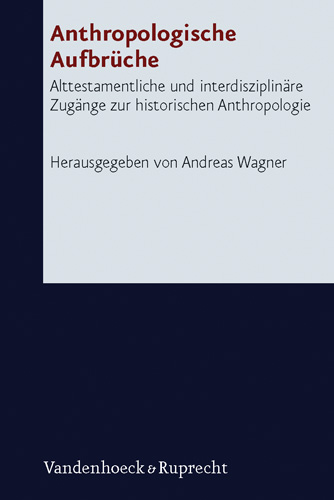 Anthropologische Aufbrüche
Alttestamentliche und interdisziplinäre Zugänge zur historischen Anthropologie
 Heiliges Land und Nähe Gottes
Wandlungen alttestamentlicher Landvorstellungen in frühjüdischen und neutestamentlichen Schriften

 Expanding Ezekiel
The Hermeneutics of Scribal Addition in the Ancient Text Witnesses of the Book of Ezekiel




 Fremdlinge im eigenen Land
Zur Entstehung und Intention der priesterlichen Passagen der Vätergeschichte

 The Meaning of the Letter of Aristeas
In light of biblical interpretation and grammatical tradition, and with reference to its historical context


 A Theocentric Interpretation of הדעת טוב ורע
The Knowledge of Good and Evil as the Knowledge for Administering Reward and Punishment
 Creation, Tabernacle, and Sabbath
The Sabbath Frame of Exodus 31:12-17; 35:1-3 in Exegetical and Theological Perspective

 Zwischen Landnahme und Königtum
Literarkritische und redaktionsgeschichtliche Untersuchungen zum Anfang und Ende der deuteronomistischen Richtererzählungen

 Der zweite Korintherbrief
Literarische Gestalt - historische Situation - theologische Argumentation. Festschrift zum 70. Geburtstag von Dietrich-Alex Koch



Similar Books


 Apocrypha, Magic, Liturgy
The Multiple Identities of Coptic Prayers in Late Antique and Early Islamic Egypt
 Athanasius of Alexandria, Epistula ad episcopos Aegypti et Libyae
Old Slavonic Version and English Translation
Volume 261



 Contesting Labeled Identities
The Sociology of Gentilics in Biblical and Northwest Semitic Literature
 Cyril of Alexandria’s Christological Exegesis
Explorations of Partitive Exegesis in the Dialogues on the Trinity
Volume 70

 Epiphanies of the Divine in the Septuagint and the New Testament
Fifth International Symposium of the Corpus Judaeo-Hellenisticum Novi Testamenti (CJHNT), 14-17 May 2015, Nottingham


 Extracanonical Traditions and the Holy Land
Texts, Rituals, and Material Culture in Late Antique Palestine
 From Joseph to Jesus
The Joseph Narrative as a Compositional Template from Old Greek Esther to the Gospel of Luke
Volume 125





 Nicholas of Lyra’s Commentaries on the Gospels of Matthew and Luke
Franciscan Exegesis in a Time of Crisis
 Paradise Lost in Transmission
The Return to Eden in the Apocalypse of Peter within Its Ethiopic and Early Christian Contexts



 Punning in Odd or Elegant Constructions in Jeremiah
The Convergence of Linguistics, Rhetoric, and Textuality in the Hebrew Text of Jeremiah

 Reformed Covenantal Eudaimonism
Wilhelmus à Brakel (1635–1711) on Highest Good, Virtue, and Law
Volume 87