
Esthetique des fins dernieres
by Christiaan L. Hart Nibbrig and translated by Francoise L'Homer-Lebleu, founded by Liliane Brion-Guerry

“Plot,” writes Peter Brooks, “is so basic to our very experience of reading, and indeed to our articulation of experience in general, that criticism has often passed it over in silence…” (Reading for the Plot, xi). Finding the Plot both explores and helps to redress this critical neglect. The book brings together an international group of scholars to address the nature, effects and specific pleasures of consuming stories. If the central focus is on France and popular literary fiction, the book’s scope – like contemporary fiction itself – observes no national frontiers, and extends across a variety of media. The book addresses both the empirical question of which genres and types of text have been and are most “popular,” and the theoretical questions of how plots work, what pleasures they offer to readers, and why it matters that the plot should not be lost.
Qu’est-ce que la mort ? Qu’est-ce donc que ” cette chose ultime qui nous rattrape tous ” et dont nous ne savons rien ? Valeur limite, point de discontinuite, rupture, franchissement de frontiere, cessation d’etre, no man’s land, blanc sans contenu, absence la mort, si l’on en croit Kant est ” un concept vide “. Mais si la mort echappe a la raison, elle a en revanche depuis toujours inspire ecrivains et artistes qui, faute de pouvoir la definir, se sont essayes a la representer dans leurs oeuvres. C’est a une reflexion sur la mort et les manieres de la representer que nous invite Christiaan L. Hart Nibbrig. Au fil de sept chapitres richement illustres (par des reproductions de tableaux, de gravures, de statues, de publicites, de planches de bandes dessinees ou encore de partitions musicales), il nous entraine a la suite de grands maitres – et d’autres plus modestes – qui tous, depuis Homere jusqu’a Tardi, ont ” tente avec art et artifice, de faire voir la mort a l’oeuvre “. Cette Esthetique des fins dernieres n’est pas pour autant une danse macabre. Il s’agit bien plutot d’une invitation a vivre, a creer, a entrer, que ce soit comme lecteur, spectateur, auditeur, ou comme acteur, dans la ronde de tous ceux-la qui au-dela de la mort, font aux vivants l’offrande de ce qu’ils ont cree, les invitant par la-meme a vivre. Christiaan L. Hart Nibbrig, germaniste et comparatiste, est professeur honoraire a l’universite de Lausanne. Il est l’auteur d’une douzaine d’ouvrages, publies pour la plupart chez Suhrkamp, dont Rhetorik des Schweigens (1981), Warum lesen ? (1983), Die Auferstehung des Korpers im Text (1985), Spiegelschrift. Spekulationen uber Malerei und Literatur (1987) et Geisterstimmen (2001), qui a ete publie en francais sous le titre Voix fantomes (2008).
"L'ouvrage ne contient pas de table de matieres. Le texte est divise en sept grandes parties numerotees. Chacun de ces parties contient douze sous-chapitres numerotes de I a XII en chiffres romains.Le dernier sous-chapitre du chapitre 7 est pour sa part numerote XII/1. Il s'agit d'un chapitre vide, d'une page blanche mis a part les chiffres romains, ceci conformement a la these soutenue par l'auteur a la fin de son chapitre introductif : Non, elle n'existe pas, si ce n'est comme point mort autour duquel tourne depuis toujours le carrousel des interpretations qu'en donne la representation esthetique, axe de la vie, et encore et toujours.
"
- By (author) Christiaan L Hart Nibbrig
- Translated by Francoise L’Homer-Lebleu
- Founded by Liliane Brion-Guerry
Other Titles in this Series


 Apercus sur l’art du jardin paysager assortis d’une Description detaillee du parc de Muskau
Volume 39


 Le Savoir de Palladio
'Architecture, metaphysique et politique dans la Venise du Cinquecinto, precede du Commentaire au De Architectura de Vitruve par Mgr Daniele Barbaro, patriarche d'Aquilee'
Volume 20


Similar Books
 A Collaborative Tapestry in Honour of Shirley Ann Brown / Une fresque brodée en l’honneur de Shirley Ann Brown
The Bayeux Tapestry Seen by her Colleagues and Friends / La Tapisserie de Bayeux vue par ses collègues et amis


 Balthasar Caymox of Nuremberg
Early Modern German Print Publishers: Popular Prints of the Seventeenth Century


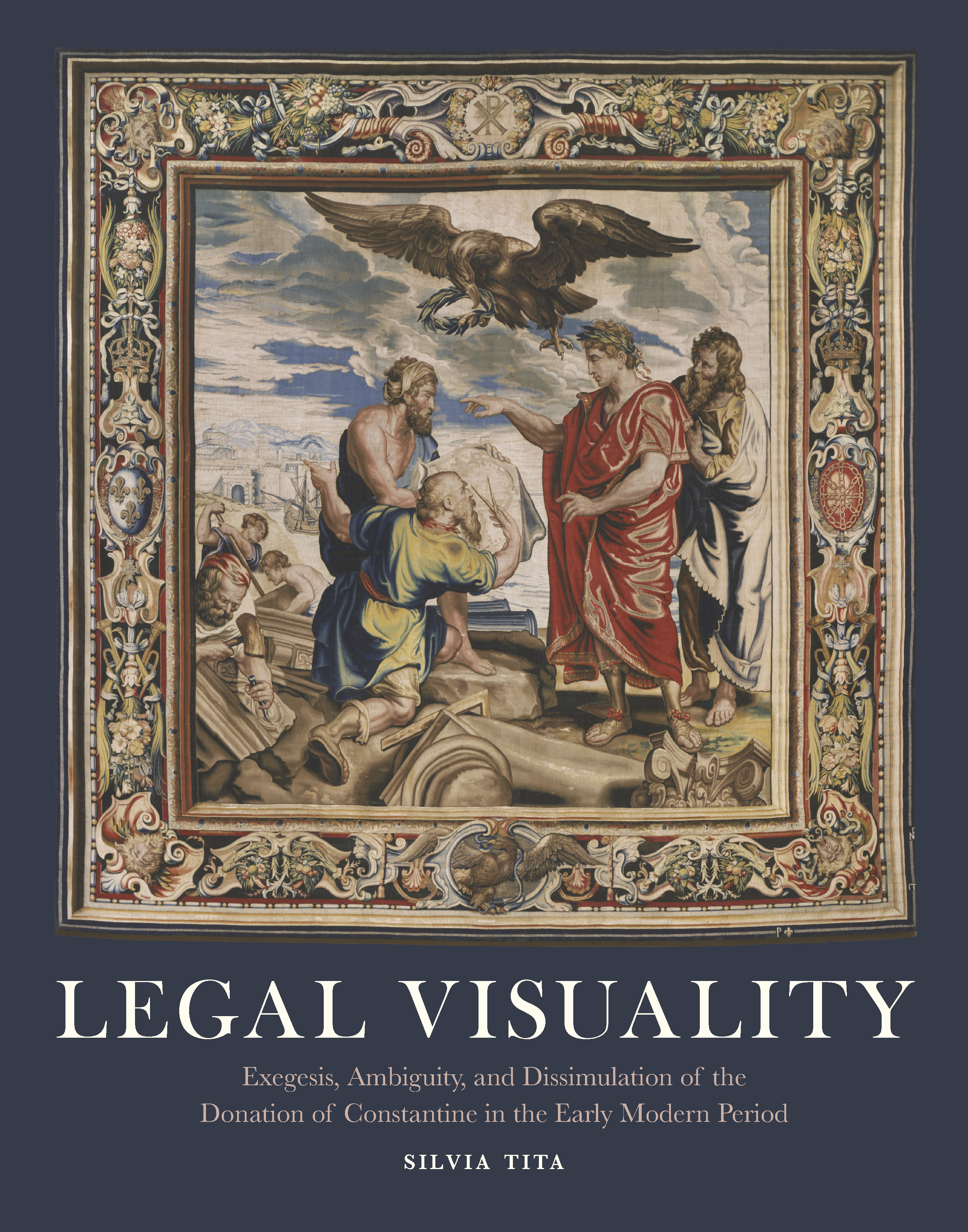 Legal Visuality
Exegesis, Ambiguity, and Dissimulation of the Donation of Constantine in the Early Modern Period
 Monastic Manuscripts from the Eastern Mediterranean (Sinai, Jerusalem, Antioch)
Production, Use, and Contexts
 Naples as Laboratory / Laboratorium Neapel
Style Options, Artistic Rivalry and Self Fashioning in Neapolitan Baroque Painting / Plurale Stilbildung, Kunstlerkonkurrenz und Self Fashioning in der neapolitanischen Barockmalerei
 Nurturing the Elite
Representations of Drinking, Eating, and Religious Vessels in Palmyrene Funerary Iconography
Volume 13


 Portraying the Individual in the Roman East
Local–Imperial Entanglements in Sculpture, Mosaics, and Paintings (First–Fourth Centuries AD)
Volume 18


 Technical Studies of Asian Art
Proceedings of the Seventh Forbes Symposium at the Freer Gallery of Art


 Tricks of the Medieval Trades
The Trinity Encyclopedia, a collection of 14th century English craft recipes
 Venice Reimagined
The Resurgence of View Painting in Venice after the Fall of the Serenissima between 1797 and 1866


 Women’s Legacies in Natural Studies, Health, and Liberal Arts
Proceedings of the Second Annual International Women in the Arts Conference
Volume 4
 Writing in the Church of the Nativity in Bethlehem
Inscription and Graffiti in a Multilingual and Multigraphic Perspective
Volume 45


