
Das severische Vexillationskastell Myd(—) und die spätantiken castra Madensia / Gheriat el-Garbia am limes Tripolitanus (Libyen)
II Ausgrabungen und Untersuchungen im Kastell, im Steinbruch, in den Heiligtümern und am Beobachtungsturm 2009-2010
By (author) Michael Mackensen

Hardback (Published)
(November 2024)
ISBN: 9783752006919
8.31 x 11.69 inches
Price: $177.00
In stock
Das Kastell Myd(—) ist das größte der von legionaren Arbeitsvexillationen aus Lambaesis (Ostalgerien) unter Kaiser Septimius Severus im Jahr 201 fertig gestellten neuen Kastelle an der weit nach Süden vorgeschobenen Grenze Tripolitaniens. Es liegt am Übergang von der Halb- zur Steinwüste oberhalb einer großen Oase. Die Ausgrabungen konzentrierten sich auf die vier, teilweise bis 10 m hoch erhaltenen Tore des Kastells und das Stabsgebäude. Nach Aufgabe des Kastells um 275/280 ist eine neuerliche Nutzung nach Instandsetzungsarbeiten im späten 4. und der ersten Hälfte des 5. Jahrhunderts von großer Bedeutung. Das Kastell ist mit den in der Notitia Dignitatum Occ. 31, 30 genannten castra Madensia identifizierbar.
The Roman fort of Gheriat el-Garbia is located 280 km south of Tripoli in the pre-desert, above an oasis, on the central route into the Fezzan. Along with Bu Ngem and Ghadames, it is the largest of the new vexillation forts of the limes Tripolitanus that were advanced far to the south under emperor Septimius Severus. At the latest by autumn AD 201 its defences were finished by a detachment (vexillatio) of Legio III Augusta from Lambaesis (Algeria). The task of the garrison was to control and secure the transport routes as well as to monitor the (semi-)nomadic autochthonous tribes. Within the framework of an interdisciplinary project of the Archaeology of the Roman Provinces at the University of Munich, funded by the DFG Excellence Initiative, four campaigns were carried out in 2009 and 2010. The focus was laid on surveys and excavations within the fort, which was overbuilt by a Berber village, in the quarries and in one of the sanctuaries. In addition to scientific investigation methods (geodesy, geophysics, archaeometry, radiocarbon analyses), terrestrial 3D laser scanning was used. The first volume with the research history of the Tripolitanian frontier zone, the archaeological survey with architectural elements, inscriptions and much pottery was published in 2021. This second volume presents the investigation of the defences of the 2.25 ha fort used from 199/201 to 275/280, whose ancient place-name Myd(—) is recorded in an inscription. The new reconstruction of the Severan porta praetoria with the towers preserved up to 10 m high is of significance far beyond the region. In addition, there is documentation of the remaining three gates, two intermediate towers (up to 8 m high) and the northern corner tower as well as the excavation of the headquarters building. The fortifications of the Severan vexillation forts – from Castellum Dimmidi to Gholaia/Bu Ngem – are analyzed comparatively and the layout of Myd(—)/Gheriat el-Garbia with its interior buildings is reconstructed. An unexpected discovery was a late Antique reoccupation of the fort, which had not been used by Rome for about a century. A military unit of limitanei, the milites munifices, was garrisoned there from 380/390 until the middle of the 5th century. The fort can be identified with the castra Madensia mentioned in the Notitia Dignitatum occ. XXXI 30. Coins and radiocarbon dates have been crucial for dating the repairs of the fortifications and the remodelled headquarters building. Investigations of closed deposits with small finds, pottery and ostraca as well as macrobotanical and archaeozoological remains provide important insights into the provisioning, diet and living habits of a late Antique garrison on the Tripolitanian limes.
Michael Mackensen (*1949) studied Archaeology of the Roman Provinces, Prehistory and Ancient History at Munich, Freiburg and Oxford from 1969 until 1977. After his MA (1974), PhD (1977) and a travel scholarship granted by the German Archaeological Institute/DAI (1977/78) he participated in excavations of the DAI at Carthage (Tunisia) and Resafa (Syria). From 1982 to 1994 he was research assistant at the Bavarian Academy of Sciences conducting excavations in Bavaria (e. g. Nersingen, Kellmünz) and a survey project at El Mahrine (Tunisia). In 1991 he submitted his habilitation thesis and then became Professor for Archaeology of the Roman Provinces at the Ludwig-Maximilians University of Munich in 1994. He carried out various field projects in Bavaria (2001–2007 Burghöfe), Tunisia (1998/99 Chemtou), Egypt (2001/02 Deir el-Bakhît; 2005–2017 Nag al-Hagar) and Libya (2009/10 Gheriat el-Garbia, LMUexcellent-Project limes Tripolitanus). In 1989 he was allocated with the Kurt-Bittel-Preis für Süddeutsche Altertumskunde, in 2010 with the Preis für gute Lehre des Freistaats Bayern and in 2013 with the LMU Lehrinnovationspreis. In March 2015 he was retired.
- By (author) Michael Mackensen
«C’est une monographie qui présente non seulement un point de vue complet sur l’archéologie du site,<br/>mais aussi une réflexion historique globale sur l’occupation militaire des marges désertiques de l’Empire, de l’époque sévérienne au ve siecle de notre ère. [...] Cet ouvrage publié sous la direction de M. Mackensen offre aux archéologues et aux historiens, de manière incontestable, une synthèse importante et désormais incontournable, éditée de manière impeccable. Toutes les bibliothèques spécialisées se doivent de l’acquérir.»<br/><br/>By Prof. Dr. Michel Reddé<br/>In: Topoi (vol. 27/2, 2024)<br/><br/>~~~~~~~~~~~~~~~~~~~~~~~~~~~~~~<br/><br/>„This fascinating book can only be considered as a prime example of German scholarship and is highly recommended for everyone interested in Roman military architecture or the history of the southern Tripolitanian border region in general.“<br/><br/>By Dr. Christof Flügel <br/>In: Libyan Studies (2026, 1-2)
—
Other Titles in this Series
 Italische Terra Sigillata aus Iuvavum/Salzburg
Untersuchungen zur Siedlungs- und Handelsgeschichte des augusteischen vicus und des municipium Claudium Iuvavum
 Der römische Militärplatz Submuntorium/Burghöfe an der oberen Donau
Archäologische Untersuchungen im spätrömischen Kastell und Vicus 2001 bis 2007
 Das severische Vexillationskastell Myd(—) / Gheriat el-Garbia am limes Tripolitanus (Libyen)
I Forschungsgeschichte, Vermessung, Prospektionen und Funde 2009-2010

 Death and Burial in the Near East from Roman to Islamic Times
Research in Syria, Lebanon, Jordan and Egypt

 Spätantikes Kleidungszubehör aus Nordafrika I
Trägerkreis, Mobilität und Ethnos im Spiegel der Funde der spätesten römischen Kaiserzeit und der vandalischen Zeit

 Der mittelalterliche Burgstall Turenberc/Druisheim
Archäologische Untersuchungen 2001 bis 2007 am römischen Militärplatz Submuntorium/Burghöfe an der oberen Donau

 Italische und nordafrikanische Lampen des 1. bis 5. Jahrhunderts
Römische Lampen der Sammlung K. Wilhelm

 Relief- und stempelverzierte nordafrikanische Sigillata des späten 2. bis 6. Jahrhunderts
Römisches Tafelgeschirr der Sammlung K. Wilhelm
Similar Books
 A Collaborative Tapestry in Honour of Shirley Ann Brown / Une fresque brodée en l’honneur de Shirley Ann Brown
The Bayeux Tapestry Seen by her Colleagues and Friends / La Tapisserie de Bayeux vue par ses collègues et amis





 Archaeological Excavations at Irmis Rka: An Investigation of a Multi-Layered Settlement in Southwest Georgia
Results from the 2020 Season: Early Bronze Age to Medieval Occupations


 Balthasar Caymox of Nuremberg
Early Modern German Print Publishers: Popular Prints of the Seventeenth Century


 Catuvellaunia and Rome: Economic and Political Relations during the Final Decades Pre-conquest
The Role of Grain from Southeastern Britain and Its Potential for Maintenance of the Roman Military along the Frontier on the Rhine
 Colour Concept “Secoli bui” a colori
Codici cromatici e architetture dipinte nell’età tardoantica e medievale


 Crossing Disciplines in the Study of Archaeology and Prehistoric Art: Insights from the Sahara and Mediterranean Africa
Proceedings of the XX UISPP World Congress (5–9 September 2023, Timișoara, Romania) Volume / Session 18
 Crossing Sacred Landscapes
Contacts and Continuities in the Desert Cults and Beliefs of Ancient Northern Arabia and the Arid Southern Levant
 Cuneiform Artefacts from Archaeological Contexts: New Research on Ancient Iraq
Proceedings of a Conference Held at the Bavarian Academy of Sciences and Humanities, July 4–5, 2024
Volume 2


 ENTANGLED AFRICA
Intra-African Relations Between Rain Forest and Mediterranean from Around 4,000 BCE to 1,500 CE



 Exploring Prehistoric Pottery in Japan
A Study of Organic Inclusions, Adhering Materials, and Impressions of Woven Items


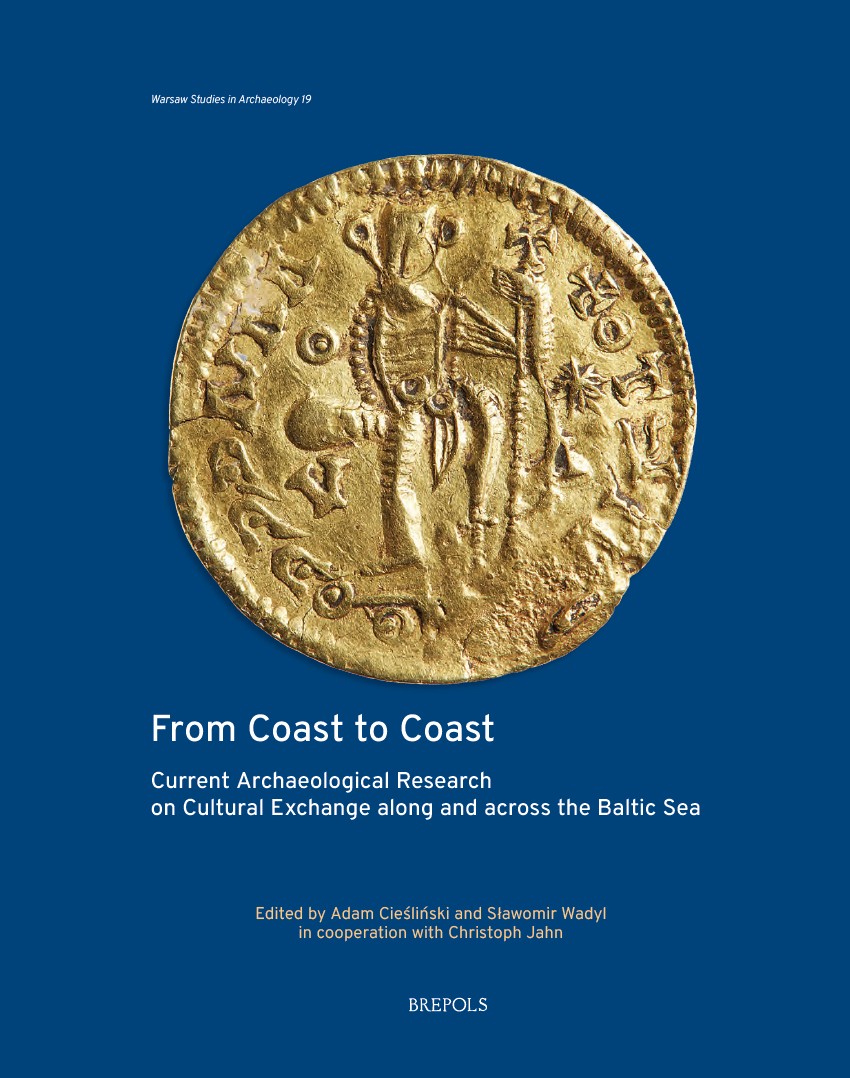 From Coast to Coast
Current Archaeological Research on Cultural Exchange along and across the Baltic Sea
Volume 19
 Frontiers of the Roman Empire: The Frontier of the Roman Province of Raetia
Grenzen des Römischen Reiches: Die Grenze der Römischen Provinz Raetien
 Gold, Silver and Glass: Power Networks, Cultural Identities, Technology Transfers and Agency across the Old World (7th Century BC – 1st Century AD)
Proceedings of a Conference Held at the British Museum, 16–18 June 2023
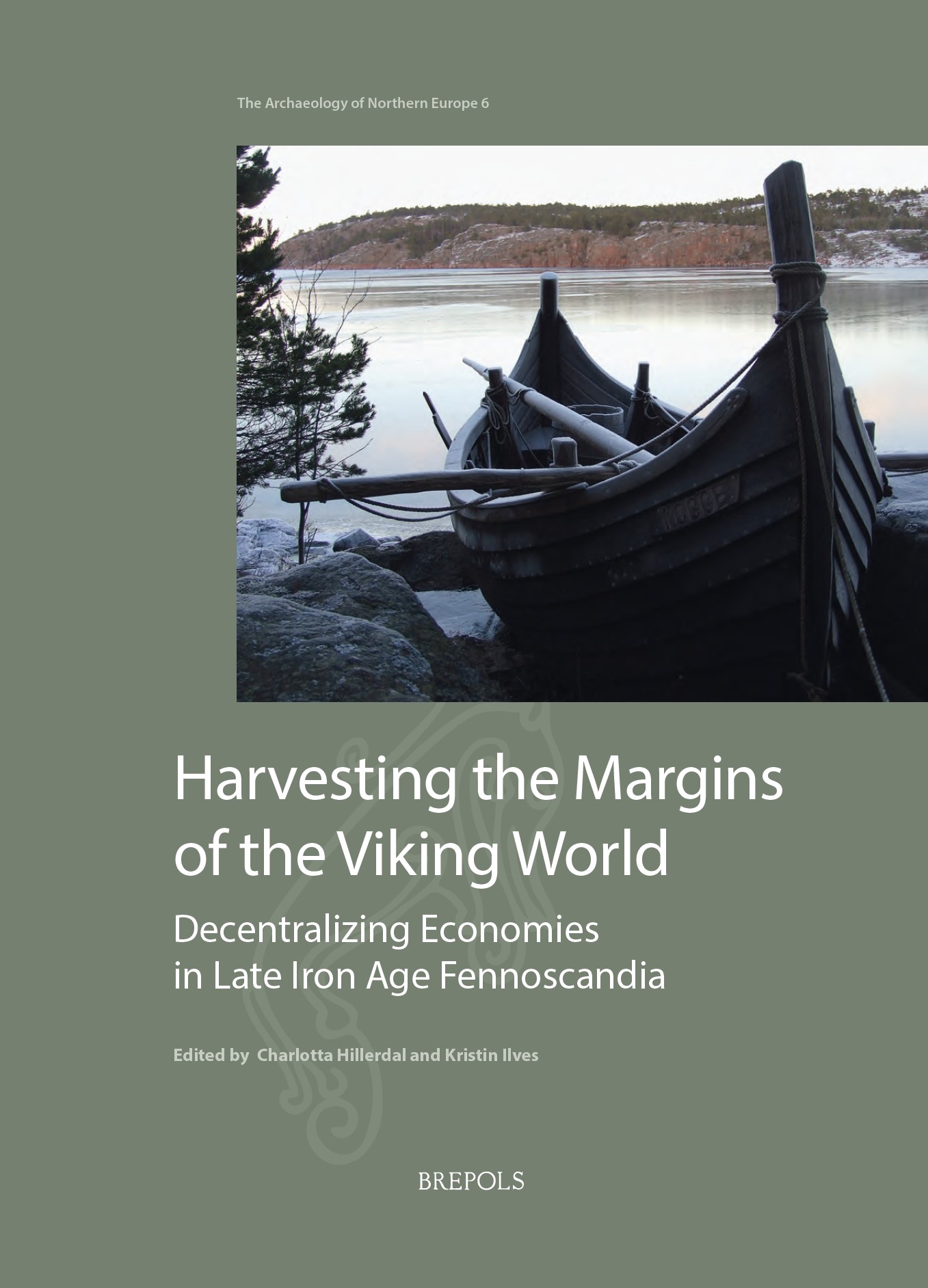 Harvesting the Margins of the Viking World
Decentralizing Economies in Late Iron Age Fennoscandia
Volume 6


 Images of Anonymous Women
A Semiotic Approach to Image-Text Relations in Interpretation of Ancient Near Eastern Art and the Hebrew Bible
Volume 310
