
Armed Memory
Agency and Peasant Revolts in Central and Southern Europe (1450–1700)
Contributions by Peter Blickle Contributions by Katalin Péter Contributions by Zoltàn Csepregi Contributions by Marco Gentile Contributions by Giorgio Politi Contributions by Martin Rothkegel Contributions by Natasa Stefanec Contributions by Márton Szilágyi Contributions by Márta Fata Contributions by Pál Ács Contributions by László Szörényi Contributions by Gabriella Erdélyi Contributions by Gergely Tóth Contributions by Farkas Gábor Kiss Contributions by Erzsébet Tatai Edited by Gabriella Erdélyi Associate editor Günter Frank Associate editor Ute Lotz-Heumann Associate editor Barbara Mahlmann-Bauer Associate editor Johannes Schilling Associate editor Günther Wassilowsky Associate editor Siegrid Westphal Associate editor Tarald Rasmussen Associate editor Mathijs Lamberigts Associate editor Bruce Gordon Associate editor David M. Whitford

Hardback (Published)
(December 2015)
ISBN: 9783525550977
6.34 x 9.33 inches
Price: $188.00
In stock
The perspective of the rebels uncovers the everyday faces of revolts.
The edited volume aims to re-contextualize revolts in early modern Central and Southern Europe (Hungary, Croatia, Czech Lands, Austria, Germany, Italy) by adopting the interdisciplinary and comparative methods of social and cultural history. Instead of structural explanations like the model of state-building versus popular resistance, it wishes to put back the peasants themselves to the historical narratives of revolts. Peasants appear in the book as active agents fighting or bargaining for freedom, which was a practical issue for them. Nonetheless, the language of lord-peasant negotiation was that of religion, just as official punishments used Christian symbols. The approach of revolts as the events of collective violence also highlights the experiences and memories of participants. How did individuals and groups use remembering and forgetting as a means of forging an identity for themselves? Instead of the narratives of the powerful that became the normative stories of history, the perspective of the rebels uncovers the everyday faces of revolts more forcibly. Finally, contributors examine how later narrators used the rebels for their own purposes, in other words the subsequent representation of the revolts and their leaders in image, literature and historiography comes to the fore. The volume aims to overcome disciplinary boundaries by bringing together historians and scholars of related disciplines including the history of literature, the visual arts and anthropology. The central contention of the volume — the cultural imprint of peasant revolts — is fully addressed, thereby filling a conspicuous gap in the currently available literature.
Gabriella Erdelyi, PhD, is senior research fellow at the Hungarian Academy of Sciences in Budapest.
- Contributions by Peter Blickle
- Contributions by Katalin Péter
- Contributions by Zoltan Csepregi
- Contributions by Marco Gentile
- Contributions by Giorgio Politi
- Contributions by Martin Rothkegel
- Contributions by Natasa Stefanec
- Contributions by Márton Szilágyi
- Contributions by Márta Fata
- Contributions by Pál Ács
- Contributions by László Szörényi
- Contributions by Gabriella Erdélyi
- Contributions by Gergely Tóth
- Contributions by Farkas Gábor Kiss
- Contributions by Erzsébet Tatai
- Edited by Gabriella Erdélyi
- Associate editor Günter Frank
- Associate editor Ute Lotz-Heumann
- Associate editor Barbara Mahlmann-Bauer
- Associate editor Johannes Schilling
- Associate editor Günther Wassilowsky
- Associate editor Siegrid Westphal
- Associate editor Tarald Rasmussen
- Associate editor Mathijs Lamberigts
- Associate editor Bruce Gordon
- Associate editor David M. Whitford
Other Titles in this Series
 The Doctrine of Election in Reformed Perspective
Historical and Theological Investigations of the Synod of Dordt 1618–1619
 Sebastian Castellio (1515–1563) – Dissidenz und Toleranz
Beiträge zu einer internationalen Tagung auf dem Monte Verità in Ascona 2015


 Was there a Lutheran Metaphysics?
The interpretation of communicatio idiomatum in Early Modern Lutheranism

 Petrus Dathenus und der Heidelberger Katechismus
Eine traditionsgeschichtliche Untersuchung zum konfessionellen Wandel in der Kurpfalz um 1563

 Word of God, words of men
Translations, inspirations, transmissions of the Bible in the Polish-Lithuanian Commonwealth in the Renaissance
 The Council of Trent: Reform and Controversy in Europe and Beyond (1545-1700)
Vol. 1: Between Trent, Rome and Wittenberg
 Der Erlebnisraum Lutherstadt Wittenberg
Genese, Entwicklung und Bestand eines protestantischen Erinnerungsortes
 Ringen um den einen Gott
Eine politische Geschichte des Antitrinitarismus in Siebenbürgen im 16. Jahrhundert
 Protestant Majorities and Minorities in Early Modern Europe
Confessional Boundaries and Contested Identities
 The Irenic Calvinism of Daniel Kalaj (d. 1681)
A Study in the History and Theology of the Polish-Lithuanian Reformation
 Common Man, Society and Religion in the 16th century/Gemeiner Mann, Gesellschaft und Religion im 16. Jahrhundert
Piety, morality and discipline in the Carpathian Basin/Frömmigkeit, Moral und Sozialdisziplinierung im Karpatenbogen


 The Council of Trent: Reform and Controversy in Europe and Beyond (1545-1700)
Vol. 2: Between Bishops and Princes

 The Holy Crown and the Hungarian Estates
Constructing Early Modern Identity in the Kingdom of Hungary


 Managing Melancholy
Dynamics of theology, medicine and law in early modern Nordic Lutheran societies

 Die politischen Gesetze des Mose als Vorbild
Entstehung und Einflüsse der politia-judaica-Literatur in der Frühen Neuzeit
Similar Books
 Beyond Sovereign Courts
Agents and Practices in Early Modern Spanish and Habsburg Diplomacy
Volume 3
 Councils, Conflicts, Correspondence
Urban Diplomacy in Reval (Tallinn) and Lübeck (c. 1470–1570)
Volume 67

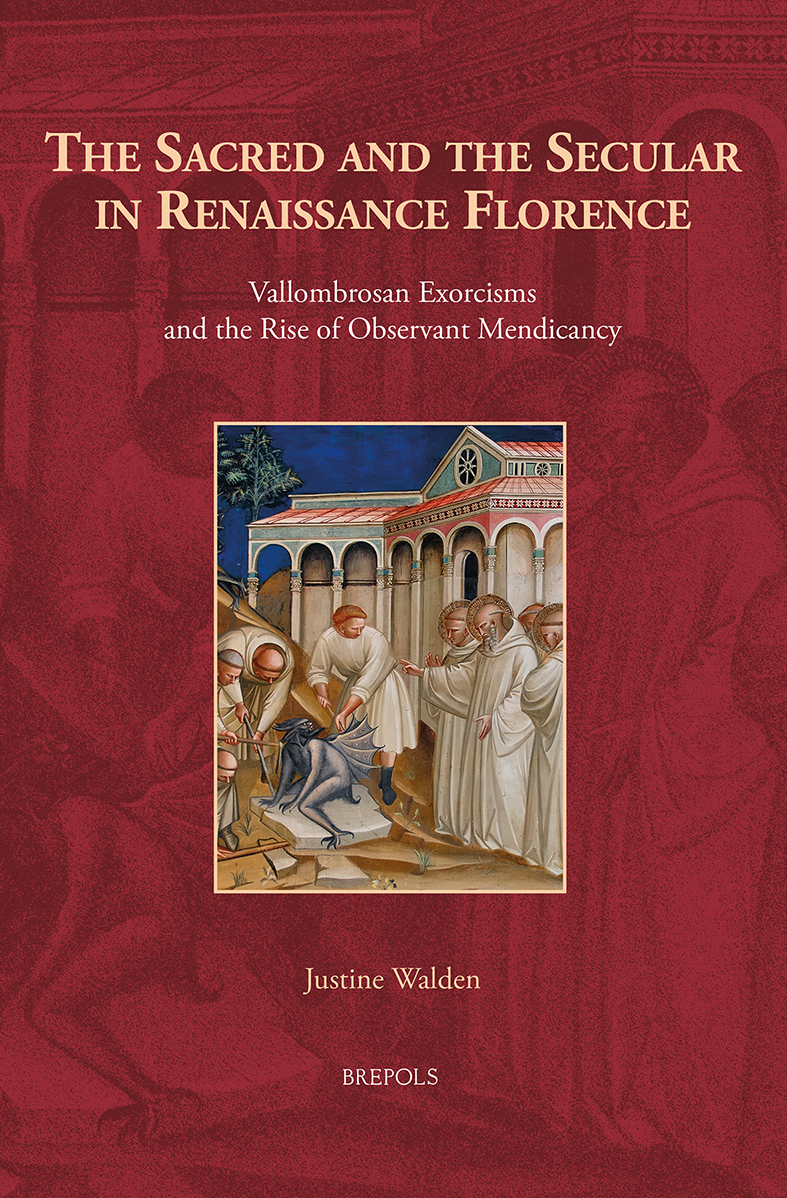 The Sacred and the Secular in Renaissance Florence
Vallombrosan Exorcisms and the Rise of Observant Mendicancy
Volume 31


 Networking through Biography
Constructing Intellectual Junctions in Antiquity, the Renaissance and the Arabo-Islamic World
Volume 19


 L’amore, le armi, le stelle
Basinio da Parma and the Humanists at Sigismondo Malatesta's Court
Volume 6


 On the steps of the throne
The King's family and its political and cultural role in the Spanish monarchy (16th-18th centuries)
Volume 1


 Bildung, Mobilität und Wissenstransfer
Studien zum schlesisch-oberlausitzischen Kulturraum in nachreformatorischer Zeit


 Dichtung als Wissenschaft und Unterrichtsgegenstand
Zur Poetik im fruhen italienischen Humanismus (von Petrarca bis Battista Guarino)
Volume 25

 Forschen und Übersetzen
Translation im (früh)modernen Wissenschaftssystem am Beispiel Frankreichs (1600–1815)
