
Afterlife of Antiquity
Anton Springer (1825-1891) on the Classical Tradition
By (author) H. Lamers

This essay deals with the early history of the notion of an ‘afterlife of antiquity’ as a metaphor for thinking about antiquity’s continued presence in later periods. Nachleben der Antike is often associated with Aby Warburg and Renaissance art but was first applied to the classical tradition of the Middle Ages by the Czech-German historian Anton Heinrich Springer (1825-1891). His provocative essay on the subject, first published in 1862, is a very early attempt to emancipate the classical tradition from strait-laced classicism and to see it as a historical problem. Springer’s approach anticipated some important later trends in understanding antiquity’s continued presence and significance. Afterlife of Antiquity returns something of the original resonance to Springer’s idea and sheds light on its significance in the history of scholarship. Recognizing some of the theoretical tensions inherent in Springer’s discussion, the current work examines how the notion of an afterlife of antiquity was embedded in the author’s wider interest in artistic tradition and how he used it as a polemical concept targeting both anti-classicizing Romanticist and traditional humanist views of medieval culture. This issue of Studies in Iconology also includes the first English translation of Springer’s Das Nachleben der Antike im Mittelalter, a largely forgotten classic of humanities scholarship, read and admired by Aby Warburg and Erwin Panofsky.
This essay deals with the early history of the notion of an ‘afterlife of antiquity’ as a metaphor for thinking about antiquity’s continued presence in later periods. Nachleben der Antike is often associated with Aby Warburg and Renaissance art but was first applied to the classical tradition of the Middle Ages by the Czech-German historian Anton Heinrich Springer (1825-1891). His provocative essay on the subject, first published in 1862, is a very early attempt to emancipate the classical tradition from strait-laced classicism and to see it as a historical problem. Springer’s approach anticipated some important later trends in understanding antiquity’s continued presence and significance. Afterlife of Antiquity returns something of the original resonance to Springer’s idea and sheds light on its significance in the history of scholarship. Recognizing some of the theoretical tensions inherent in Springer’s discussion, the current work examines how the notion of an afterlife of antiquity was embedded in the author’s wider interest in artistic tradition and how he used it as a polemical concept targeting both anti-classicizing Romanticist and traditional humanist views of medieval culture. This issue of Studies in Iconology also includes the first English translation of Springer’s Das Nachleben der Antike im Mittelalter, a largely forgotten classic of humanities scholarship, read and admired by Aby Warburg and Erwin Panofsky.
- By (author) H. Lamers
Other Titles in this Series

 In Response to Echo
Beyond Mimesis or Dissolution as Scopic Regime (with Special Attention to Camouflage)
Volume 6



 Signed ‘PAN’
Erwin Panofsky's (1892-1968) "The History of Art as a Humanistic Discipline" (Princeton, 1938)
Volume 18

 Late Medieval Enclosed Gardens of the Low Countries
Contributions to Gender and Artistic Expression
Volume 2



 The Right Moment
Essays Offered to Barbara Baert, Laureate of the 2016 Francqui Prize in Human Sciences, on the Occasion of the Celebratory Symposium at the Francqui Foundation, Brussels, 18-19 October 2018
Volume 20






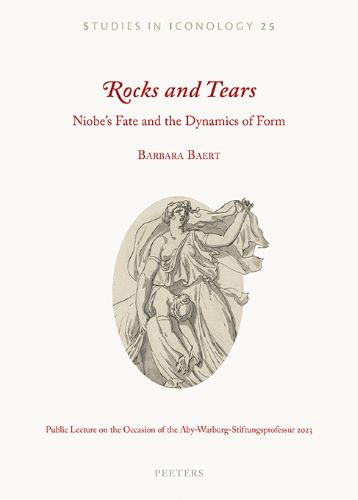 Rocks and Tears
Niobe's Fate and the Dynamics of Form. Lecture on the Occasion of the Aby-Warburg-Stiftungsprofessur 2023
Volume 25
 Nymph. Motif, Phantom, Affect. Part II
Aby Warburg's (1866-1929) Butterflies as Art Historical Paradigms
Volume 4
Similar Books

 A Collaborative Tapestry in Honour of Shirley Ann Brown / Une fresque brodée en l’honneur de Shirley Ann Brown
The Bayeux Tapestry Seen by her Colleagues and Friends / La Tapisserie de Bayeux vue par ses collègues et amis
 A Companion to Christianity and Sport in Europe and North America (19th-21st centuries)
Volume 1: Western and Eastern Europe
 A Connecting Polemic in the Medieval Mediterranean
The Correspondence of Leo III and ʿUmar II
Volume 6







 Ars Prophetica
Theology in the Poetry of Twentieth-Century Hebrew Poets Avraham Halfi, Shin Shalom, Amir Gilboa, and T. Carmi

 As Messianism Turns to Heresy
The Regenstein Chair Lectures On Lurianic Kabbalah and Shabbatai Tzevi at Hebrew Union College - Cincinnati

 Balthasar Caymox of Nuremberg
Early Modern German Print Publishers: Popular Prints of the Seventeenth Century


 Creating the Woman in Antiquity
Proceedings of the 16th Melammu Workshop, Innsbruck, 2–3 June 2022
Volume 13
 Cultic Kisses
Fruitful Encounters Between Deities and Humans. Festschrift for Angelika Berlejung on the Occasion of Her 65th Birthday
 De/colonizing Theologies
Glocal Histories, Contemporary Challenges, Theoretical Reflections
Volume 4

 Drunk the Potion, No Whit Charmed
The Doctrine of Pure and Perfect Souls from Iamblichus to Damascius

