
Kairos or Occasion as Paradigm in the Visual Medium
'Nachleben', Iconography, Hermeneutics
by B. Baert

The meaning of tearing and splitting as a life-, love- and wisdom-generating event (for example, the tearing of the temple curtain) is profoundly rooted in the visual and literary ‘bodies’ of ancient and Christian thought. The primordial cosmogonic split is always sudden, is always sharp (like a knife), appears as a flash (sudden and all encompassing) and is experienced through the whole bodily sensorium (in shivering, bliss, sigh, wind, breath). The split is the epiphany of radical change, revolution and the transition beyond. The Greek deity Kairos embodies this mystery. The reach of Kairos can be detected in the theory of rhetoric (Sophists vs. Aristotle (385-322 BC)), in humanistic politics, in postmodern theology and in contemporary time-management. Iconographical studies have treated Kairos’s Nachleben in Byzantine and Latin visual traditions where the god is conflated with Fortuna and Occasio. This essay addresses the impact of Kairos and its iconographic Nachleben from a literary and historical perspective, and further considers Kairos as a new art historical paradigm. Indeed, Kairos can offer us alternative hermeneutics to reconceive the image as chronotopos, as epiphany and as intercession.
The meaning of tearing and splitting as a life-, love- and wisdom-generating event (for example, the tearing of the temple curtain) is profoundly rooted in the visual and literary ‘bodies’ of ancient and Christian thought. The primordial cosmogonic split is always sudden, is always sharp (like a knife), appears as a flash (sudden and all encompassing) and is experienced through the whole bodily sensorium (in shivering, bliss, sigh, wind, breath). The split is the epiphany of radical change, revolution and the transition beyond. The Greek deity Kairos embodies this mystery. The reach of Kairos can be detected in the theory of rhetoric (Sophists vs. Aristotle (385-322 BC)), in humanistic politics, in postmodern theology and in contemporary time-management. Iconographical studies have treated Kairos’s Nachleben in Byzantine and Latin visual traditions where the god is conflated with Fortuna and Occasio. This essay addresses the impact of Kairos and its iconographic Nachleben from a literary and historical perspective, and further considers Kairos as a new art historical paradigm. Indeed, Kairos can offer us alternative hermeneutics to reconceive the image as chronotopos, as epiphany and as intercession.
- By (author) B Baert
Other Titles in this Series
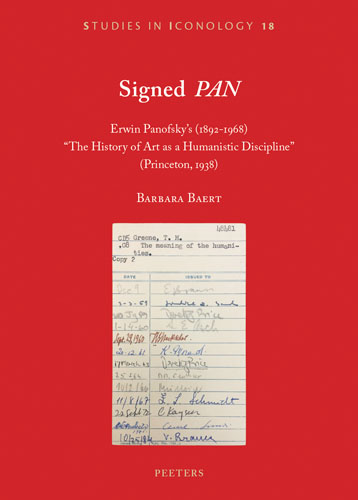 Signed ‘PAN’
Erwin Panofsky's (1892-1968) "The History of Art as a Humanistic Discipline" (Princeton, 1938)
Volume 18

 Late Medieval Enclosed Gardens of the Low Countries
Contributions to Gender and Artistic Expression
Volume 2


 The Right Moment
Essays Offered to Barbara Baert, Laureate of the 2016 Francqui Prize in Human Sciences, on the Occasion of the Celebratory Symposium at the Francqui Foundation, Brussels, 18-19 October 2018
Volume 20




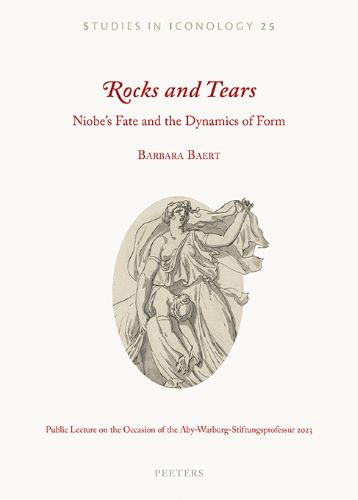 Rocks and Tears
Niobe's Fate and the Dynamics of Form. Lecture on the Occasion of the Aby-Warburg-Stiftungsprofessur 2023
Volume 25
 Nymph. Motif, Phantom, Affect. Part II
Aby Warburg's (1866-1929) Butterflies as Art Historical Paradigms
Volume 4
 In Response to Echo
Beyond Mimesis or Dissolution as Scopic Regime (with Special Attention to Camouflage)
Volume 6


Similar Books
 A Collaborative Tapestry in Honour of Shirley Ann Brown / Une fresque brodée en l’honneur de Shirley Ann Brown
The Bayeux Tapestry Seen by her Colleagues and Friends / La Tapisserie de Bayeux vue par ses collègues et amis



 Balthasar Caymox of Nuremberg
Early Modern German Print Publishers: Popular Prints of the Seventeenth Century


 ENTANGLED AFRICA
Intra-African Relations Between Rain Forest and Mediterranean from Around 4,000 BCE to 1,500 CE


 Gold, Silver and Glass: Power Networks, Cultural Identities, Technology Transfers and Agency across the Old World (7th Century BC – 1st Century AD)
Proceedings of a Conference Held at the British Museum, 16–18 June 2023


 Legal Visuality
Exegesis, Ambiguity, and Dissimulation of the Donation of Constantine in the Early Modern Period
 Listening to the Swan Song
More-than-Human Beings and Sounds in Literature and Culture Through the Ages


 Monastic Manuscripts from the Eastern Mediterranean (Sinai, Jerusalem, Antioch)
Production, Use, and Contexts

 Naples as Laboratory / Laboratorium Neapel
Style Options, Artistic Rivalry and Self Fashioning in Neapolitan Baroque Painting / Plurale Stilbildung, Kunstlerkonkurrenz und Self Fashioning in der neapolitanischen Barockmalerei

 Nurturing the Elite
Representations of Drinking, Eating, and Religious Vessels in Palmyrene Funerary Iconography
Volume 13


 Portraying the Individual in the Roman East
Local–Imperial Entanglements in Sculpture, Mosaics, and Paintings (First–Fourth Centuries AD)
Volume 18


 Technical Studies of Asian Art
Proceedings of the Seventh Forbes Symposium at the Freer Gallery of Art


