
A Great Voice that Did Not Cease
The Growth of the Rabbinic Canon and Its Interpretation
by Michael Chernick

The growth of the rabbinic canon may be best described as a hermeneutical endeavor. Michael Chernick demonstrates how hermeneutical methods helped the Rabbis confront the difficulties that arose when logical and interpretative problems appeared in scriptural and, later, rabbinic texts. Given the Rabbis’ theological, literary, and rhetorical attitudes, these reading strategies were adopted to obviate the problem the texts presented. After all, the Rabbis of different generations viewed these texts as revealed communications produced by a perfect Author. Chernick analyzes and illustrates six midrashic hermeneutics in great detail: outright midrashic resolutions of contradictions in Scripture, distinguishing between what constitutes true scriptural proof and what is merely a support text, a midrashic hermeneutic that transfers the rules of one rubric to another, two hermeneutics that limit interpretive extensions of halakhot, and the claim that two redundant pentateuchal rubrics are needed to ward off incorrect analogies. He highlights the significant changes that occurred in rabbinic legal hermeneutics from the tannaitic through post-amoraic strata of rabbinic literature-some 500 years at least-and shows how these changes attest to the persistence, continuity, and centrality of hermenutic method to the rabbinic interpretive process. Of particular significance is the connection Chernick makes between changes in hermeneutical practice and the changing revelatory status of the non-Pentateuchal parts of the Hebrew Bible and rabbinic legal discourse. His study draws its title from the traditional view of Sinaitic revelation, when God spoke to the assembled people with “a great voice that did not cease” (kol gadol velo yasaf, Deut 5:19). This view, Chernick believes, is at the core of rabbinic Judaism, the Judaism that claims to hear that great voice through the medium of interpretation.
- By (author) Michael Chernick
Other Titles in this Series


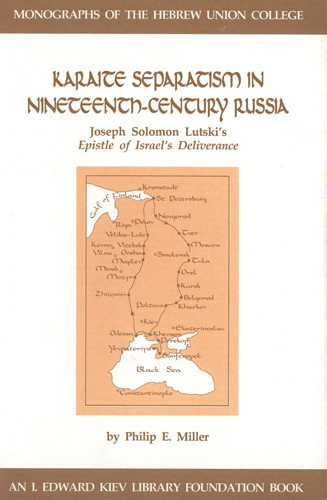 Karaite Separatism in Nineteenth-Century Russia
Joseph Solomon Lutski's Epistle of Israel's Deliverance
Volume 16
 Remember Amalek!
Vengeance, Zealotry, and Group Destruction in the Bible according to Philo, Pseudo-Philo, and Josephus
Volume 31





 Modernism and Cultural Transfer
Gabriel Preil and the Tradition of Jewish Literary Bilingualism
Volume 10



Similar Books

 A Companion to Christianity and Sport in Europe and North America (19th-21st centuries)
Volume 1: Western and Eastern Europe
 A Connecting Polemic in the Medieval Mediterranean
The Correspondence of Leo III and ʿUmar II
Volume 6





 Ars Prophetica
Theology in the Poetry of Twentieth-Century Hebrew Poets Avraham Halfi, Shin Shalom, Amir Gilboa, and T. Carmi
 As Messianism Turns to Heresy
The Regenstein Chair Lectures On Lurianic Kabbalah and Shabbatai Tzevi at Hebrew Union College - Cincinnati


 Creating the Woman in Antiquity
Proceedings of the 16th Melammu Workshop, Innsbruck, 2–3 June 2022
Volume 13
 Cultic Kisses
Fruitful Encounters Between Deities and Humans. Festschrift for Angelika Berlejung on the Occasion of Her 65th Birthday
 De/colonizing Theologies
Glocal Histories, Contemporary Challenges, Theoretical Reflections
Volume 4
 Drunk the Potion, No Whit Charmed
The Doctrine of Pure and Perfect Souls from Iamblichus to Damascius







