
A Life in Norfolk’s Archaeology: 1950-2016
Archaeology in an arable landscape
By (author) Peter Wade-Martins

Hardback (Published)
(November 2017)
ISBN: 9781784916572
5.75 x 8.31 inches
Price: $50.00
In stock
A personal history of Peter Wade-Martins archaeological endeavour in Norfolk set within a national context. It covers the writer’s early experiences as a volunteer, the rise of field archaeology as a profession and efforts to conserve archaeological heritage.
This is a history of archaeological endeavour in Norfolk set within a national context. It covers the writer’s early experiences as a volunteer, the rise of field archaeology as a profession and efforts to conserve the archaeological heritage against the tide of destruction prevalent in the countryside up to the 1980s when there was not even a right of access to record sites before they were lost. Now developers often have to pay for an excavation before they can obtain planning consent. The book features progress with archaeology conservation as well as the growth of rescue archaeology as a profession both in towns and in the countryside. Many of the most important discoveries made by aerial photography, rescue excavations and metal detecting from the 1970s onwards are illustrated. The last section covers the recent growth of the Norfolk Archaeological Trust as an owner of some of the most iconic rural sites in Norfolk. The book concludes with a discussion of some issues facing British field archaeology today.
Norfolk Firsts ;
Time line of key events most of which feature in the Book ;
Chapter 1: Introduction ;
Chapter 2: The Early Years ;
Chapter 3: Excavating Deserted Medieval Villages ;
Chapter 4: The Launditch Hundred Project, 1967-71 ;
Chapter 5: North Elmham Park: The Excavation of a High-Status Anglo-Saxon and Early Medieval Settlement, 1967-72 ;
Chapter 6: Chance Finds ;
Chapter 7: Societies ;
Chapter 8: Amateurs in Action ;
Chapter 9: Metal Detecting: ‘The Norfolk System’ ;
Chapter 10: Urban Surveys ;
Chapter 11: The ‘RESCUE’ Movement, The Scole Committee and Professional County Units ;
Chapter 12: A New County Service for Field Archaeology, 1973-1999 ;
Chapter 13: Key Norfolk Archaeological Unit Projects ;
Chapter 14: The Story of ‘East Anglian Archaeology’ ;
Chapter 15: County-based Conservation Projects ;
Chapter 16: National Conservation Initiatives ;
Chapter 17: Some Rescue Excavations, 1972-92 ;
Chapter 18: Clearing the Publication Backlog from the Past, 1977-97 ;
Chapter 19: Re-structuring Field Archaeology in Norfolk, 1991 ;
Chapter 20: Time to Move On ;
Chapter 21: The Norfolk Archaeological Trust: a property-owning conservation trust ;
Chapter 22: Caistor St Edmund Roman Town ;
Chapter 23: Burgh Castle ‘Saxon Shore’ Roman Fort ;
Chapter 24: Two Monasteries ;
Chapter 25: Other Recent Acquisitions ;
Chapter 26: The Future Role of the Norfolk Archaeological Trust ;
Chapter 27: A Time to Reflect ;
Appendix 1: Alan Davison’s publications ;
Appendix 2: Summary of progress set out in the 1996 Five-year Development Plan for Archaeology in the Norfolk Museums Service ;
Appendix 3: List of those archaeologists who attended the February 1970 Barford meeting which represented the start of the RESCUE movement ;
Bibliography ;
Index
Peter Wade-Martins obtained a PhD studying the evidence for the history of rural settlement in Norfolk from the Anglo- Saxon period through the Middle Ages up to the enclosures. This involved what was then a new technique of collecting sherds of pottery off ploughed fields and from that evidence working out where people lived in a parish at different periods from the seventh to the nineteenth centuries. He also excavated two deserted villages revealing evidence for the first time about village life in Norfolk in the Middle Ages. He followed this by excavating a high-status Anglo- Saxon settlement at North Elmham, where it was possible to work out the plans of Anglo-Saxon timber buildings from patterns left by their post-holes in the subsoil.
Then, as County Field Archaeologist for Norfolk from 1973 to 1999, he organised and ran a county service for field archaeology developing a Sites and Monuments Record, an aerial photography programme, which made many startling discoveries, and a series of rescue excavations on a wide range of sites from prehistoric to medieval. His passion for countryside conservation led him to organise a number of ground-breaking conservation projects often trying to move a lot faster than English Heritage seemed willing to go.
Having retired early as County Field Archaeologist in 1999, he became the first Director of the Norfolk Archaeological Trust where he was instrumental in raising funds to buy an Iron Age fort, most of the Roman town at Caistor near Norwich, the remarkably well preserved Roman fort at Burgh Castle, a medieval castle and a complete monastery. All of them have been opened to the public. His one regret was that he didn’t have the opportunity to buy a deserted medieval village for the Archaeological Trust as well.
His other countryside interests include writing books on the decline and revival of the Manx mountain sheep, The Manx Loghtan Story (1990), the decline and eventual extinction of the old Norfolk Horn sheep, Black Faces (1993) and, with others, a two-volume work on Britishmade toy farm vehicles Farming in Miniature (2013 and 2014). His particular interest here has been to see how farm machinery familiar to each generation of farmers has been represented by contemporary toy makers. Other interests have included the creation of a photo archive of some 3,000 pictures of crofting life on the Isle of Eigg in the Inner Hebrides where his family have been regular visitors. He has also kept a flock of sheep since 1978.
- By (author) Peter Wade-Martins
'What a life in Norfolk's archaeology! The book is destined to become an essential archaeological reference and to join other classics of archaeological autobiography, among them Sir Mortimer Wheeler's Still Digging and Philip Rahtz's Living Archaeology. An absolute must-read.' - Edward Biddulph (2018): Current Archaeology
Nominated for the Current Archaeology Book of the Year Award 2019
—
Other Titles in this Series


 A History of the Congress of Roman Frontier Studies 1949-2022
A Retrospective to mark the 25th Congress in Nijmegen
 Aleksei P. Okladnikov: The Great Explorer of the Past. Volume I
A biography of a Soviet archaeologist (1900s - 1950s)

 Well Met! Friends and Travelling Companions of Rev. Thomas Bowles
Journals of Travels in Egypt, Petra and the Near East, 1854


 Lost Worlds of Ancient and Modern Greece
Gilbert Bagnani: The Adventures of a Young Italo-Canadian Archaeologist in Greece, 1921-1924


 Aleksei P. Okladnikov: The Great Explorer of the Past. Volume 2
A biography of a Soviet archaeologist (1960s – 1980s)
 Connecting the Dots: Counting, Writing, and the Beginnings of Civilization
The Secret Lives of Clay Tokens: A Memoir

Similar Books


 Archaeological Excavations at Irmis Rka: An Investigation of a Multi-Layered Settlement in Southwest Georgia
Results from the 2020 Season: Early Bronze Age to Medieval Occupations


 Catuvellaunia and Rome: Economic and Political Relations during the Final Decades Pre-conquest
The Role of Grain from Southeastern Britain and Its Potential for Maintenance of the Roman Military along the Frontier on the Rhine
 Colour Concept “Secoli bui” a colori
Codici cromatici e architetture dipinte nell’età tardoantica e medievale
 Crossing Disciplines in the Study of Archaeology and Prehistoric Art: Insights from the Sahara and Mediterranean Africa
Proceedings of the XX UISPP World Congress (5–9 September 2023, Timișoara, Romania) Volume / Session 18
 Crossing Sacred Landscapes
Contacts and Continuities in the Desert Cults and Beliefs of Ancient Northern Arabia and the Arid Southern Levant
 Cuneiform Artefacts from Archaeological Contexts: New Research on Ancient Iraq
Proceedings of a Conference Held at the Bavarian Academy of Sciences and Humanities, July 4–5, 2024
Volume 2

 ENTANGLED AFRICA
Intra-African Relations Between Rain Forest and Mediterranean from Around 4,000 BCE to 1,500 CE


 Exploring Prehistoric Pottery in Japan
A Study of Organic Inclusions, Adhering Materials, and Impressions of Woven Items

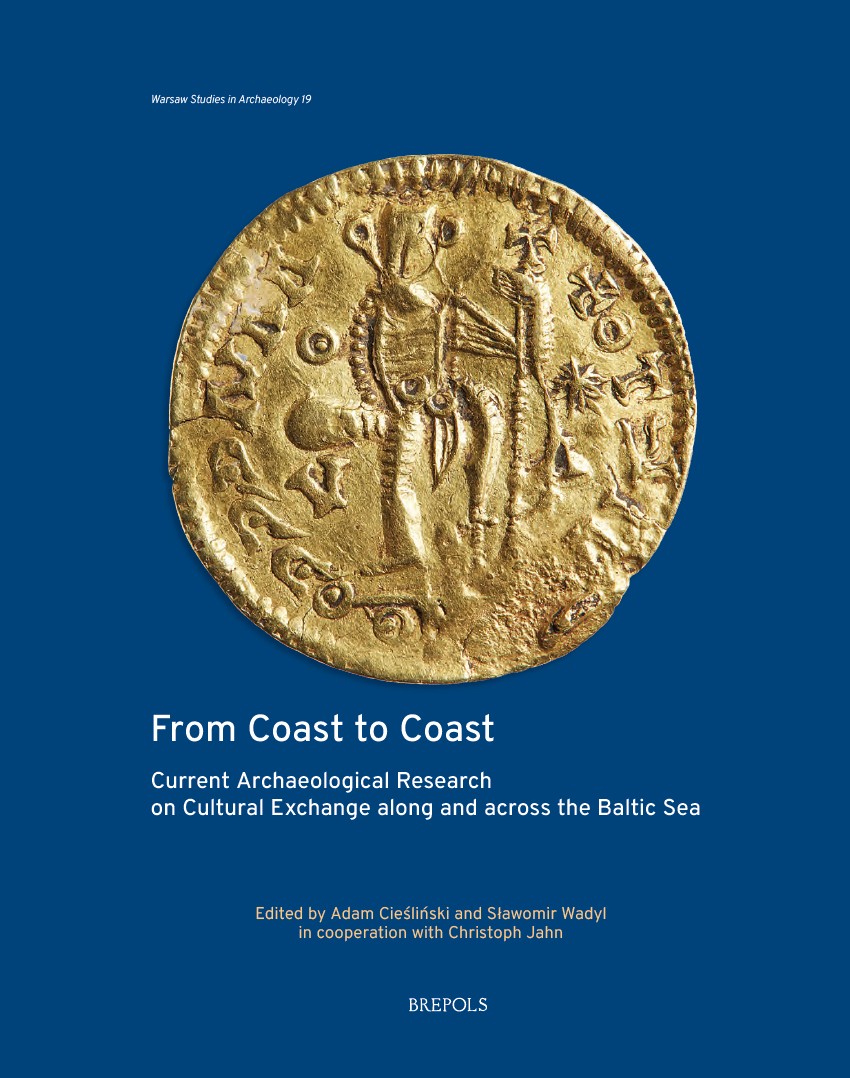 From Coast to Coast
Current Archaeological Research on Cultural Exchange along and across the Baltic Sea
Volume 19
 Frontiers of the Roman Empire: The Frontier of the Roman Province of Raetia
Grenzen des Römischen Reiches: Die Grenze der Römischen Provinz Raetien
 Gold, Silver and Glass: Power Networks, Cultural Identities, Technology Transfers and Agency across the Old World (7th Century BC – 1st Century AD)
Proceedings of a Conference Held at the British Museum, 16–18 June 2023
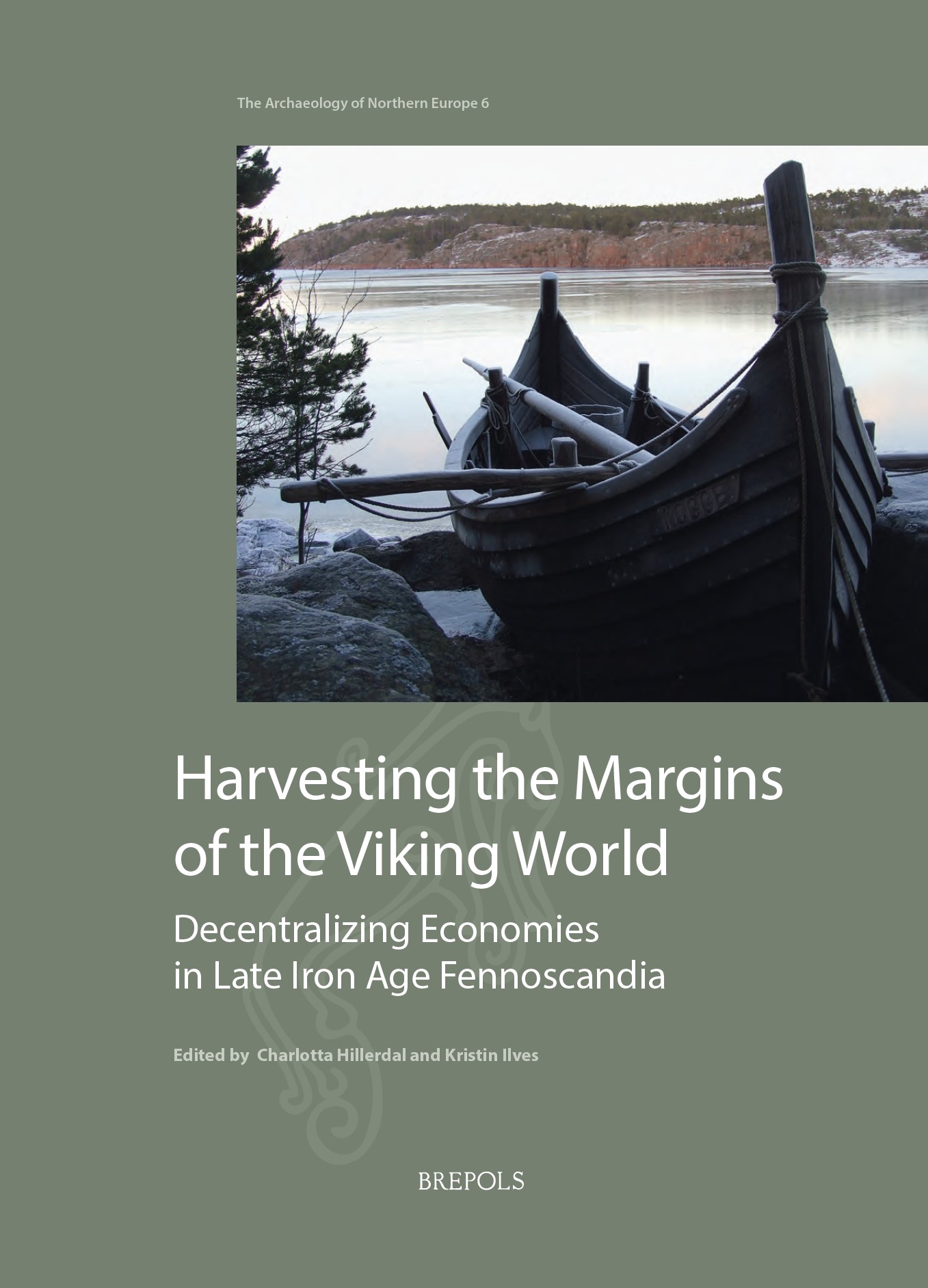 Harvesting the Margins of the Viking World
Decentralizing Economies in Late Iron Age Fennoscandia
Volume 6
 Images of Anonymous Women
A Semiotic Approach to Image-Text Relations in Interpretation of Ancient Near Eastern Art and the Hebrew Bible
Volume 310

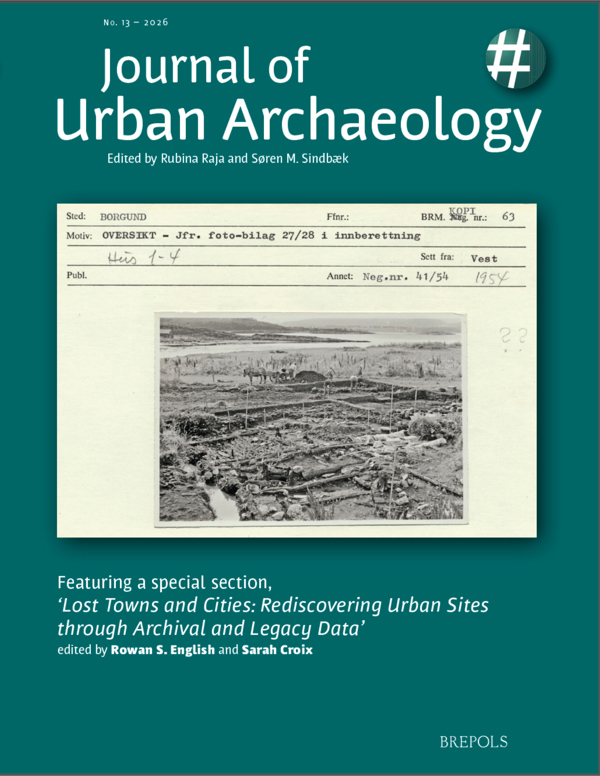 Journal of Urban Archaeology 13 (2026)
Featuring a special section, ‘Lost Towns and Cities: Rediscovering Urban Sites through Archival and Legacy Data’


 Making and Meaning in the Bronze and Iron Ages
Chronology, Landscapes and Societies across Europe. Proceedings from the METALAGES2024 Colloquium (Florence, 23 October 2024)

 Medieval Yeghegis, Armenia
History, Archaeology, Society. Local Multiplicities and Global Connections of a Rural Centre on the Silk Road(s)
 Mobility and Archaeogenetics in Central Asia
People – Goods – Ideas. 3rd International Conference on Central Asian Archaeology in Bern, 11th–13th January 2024
Volume 24


 Offa’s Dyke Journal: Volume 7 for 2025
A Journal for Linear Monuments, Frontiers and Borderlands Research


