
András Bodor and the History of Classical Studies in Transylvania in the 20th century
By (author) Csaba Szabo

Paperback (Published)
(December 2020)
ISBN: 9781789698343
6.1 x 9.25 inches
Price: $35.00
On back order
This volume focusses on the life and academic heritage of András Bodor (1915-1999), a classicist from Transylvania. Based on a large number of unpublished documents and the major works of Bodor, the book reconstructs the life of a classicist from the periphery of Europe, a region that changed many times during the 20th century.
András Bodor and the history of classical studies in Transylvania in the 20th century is the first comprehensive work focusing on the life of a classicist from Transylvania, presenting in detail the life and academic heritage of András Bodor (1915-1999). Based on 1348 newly identified letters, 209 photographs (including 25 portraits), András Bodor’s complete bibliography and his unpublished memoir from 1915-1959, the work offers also the first publication of Bodor’s academic correspondence (107 letters) and also extracts from his unpublished journal. Based on a large number of unpublished documents and the major works of Bodor, the book tries to reconstruct the life and academic heritage of a classicist from the periphery of Europe, a region that changed so many times over the long course of the 20th century. András Bodor appears as a student torn between theology and classical studies, a Transylvanian Hungarian who ended up at Oxford, a lecturer at the Hungarian University of Cluj, a researcher who had the idea of establishing a new school of classics, marginalised and compromising, a quiet teacher of the newly established Babeș-Bolyai University and also a senior professor engaged in education policy. The personality and work of Bodor is presented through the short history of classics in Transylvania, Romania, reflecting on the European and global changes of the discipline.
Introduction ;
Research history and sourcesAcknowledgementsThe life of András BodorFrom Suatu (Magyarszovát) to Oxford: the beginnings (1915-1937)The Oxford YearsFrom Theology to ClassicsIn the Service of UniversitiesThe so-called ‘Geto-Dacian’ PeriodRoman History, Art and ReligionThe History of Ancient Napoca ;
Ancient SlaveryResearch history and sourcesAcknowledgementsThe life of András BodorFrom Suatu (Magyarszovát) to Oxford: the beginnings (1915-1937)The Oxford YearsFrom Theology to ClassicsIn the Service of UniversitiesThe so-called ‘Geto-Dacian’ PeriodRoman History, Art and ReligionThe History of Ancient Napoca ;
Ancient Slavery
Csaba Szabó (1987) is an assistant lecturer at the University of Lucian Blaga, Sibiu (Romania) and research fellow of the University of Szeged (Hungary). His current research is focusing on Roman religious communication and space sacralisation in the Danubian provinces, history of archaeology and classics in Transyslvania, and public archaeology in Romania.
- By (author) Csaba Szabo
'Archaeopress's Archaeological Lives series is an excellent innovation. I look forward to reading more.' – James Hargrave (2023): Ancient West and East 22
—
'Archaeopress's Archaeological Lives series is an excellent innovation. I look forward to reading more.' – James Hargrave (2023): Ancient West and East 22
—
Other Titles in this Series


 Aleksei P. Okladnikov: The Great Explorer of the Past. Volume I
A biography of a Soviet archaeologist (1900s - 1950s)

 A History of the Congress of Roman Frontier Studies 1949-2022
A Retrospective to mark the 25th Congress in Nijmegen


 Well Met! Friends and Travelling Companions of Rev. Thomas Bowles
Journals of Travels in Egypt, Petra and the Near East, 1854


 Lost Worlds of Ancient and Modern Greece
Gilbert Bagnani: The Adventures of a Young Italo-Canadian Archaeologist in Greece, 1921-1924


 Aleksei P. Okladnikov: The Great Explorer of the Past. Volume 2
A biography of a Soviet archaeologist (1960s – 1980s)


 Connecting the Dots: Counting, Writing, and the Beginnings of Civilization
The Secret Lives of Clay Tokens: A Memoir

Similar Books


 Contesting Labeled Identities
The Sociology of Gentilics in Biblical and Northwest Semitic Literature

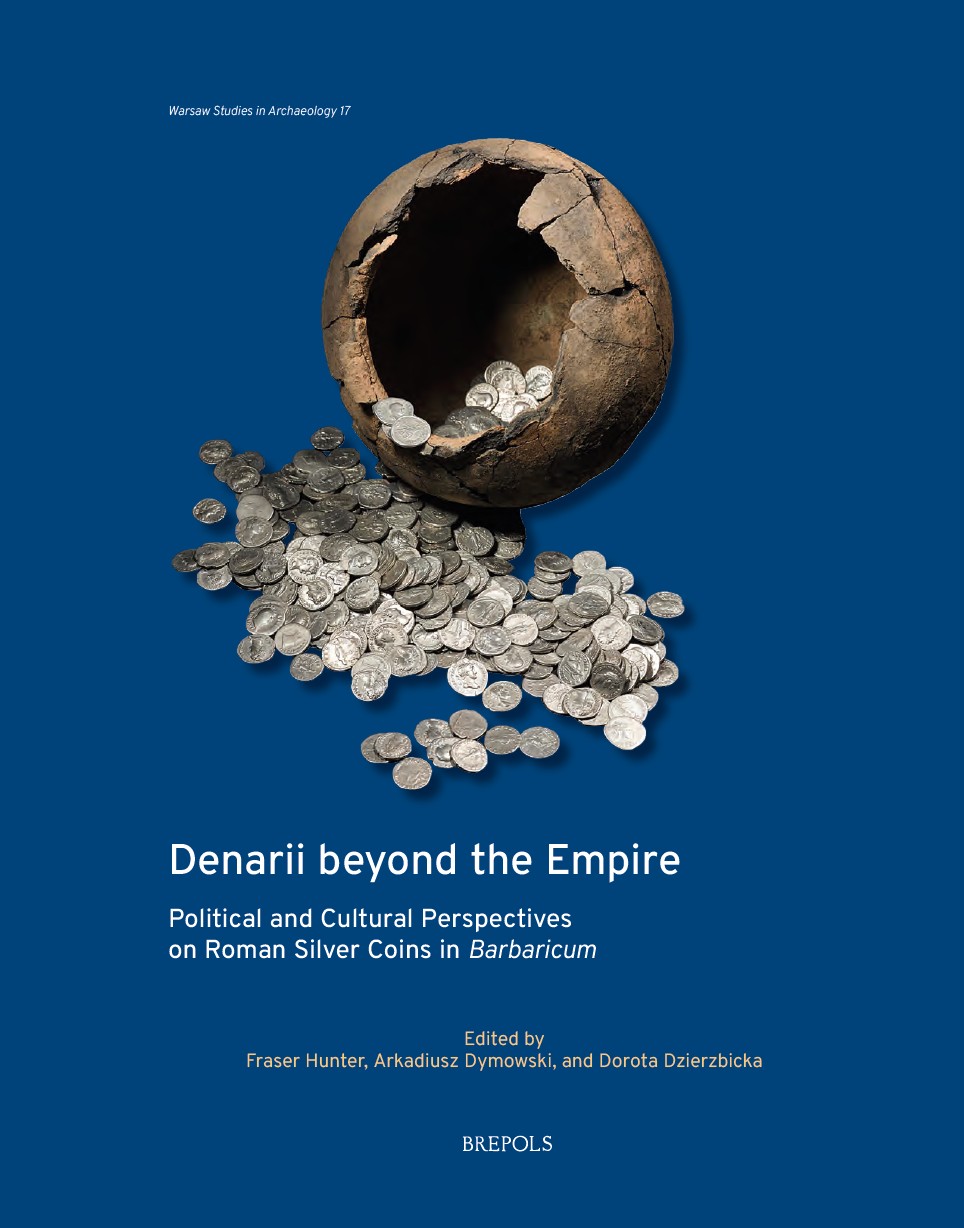 Denarii beyond the Empire
Political and Cultural Perspectives on Roman Silver Coins in Barbaricum
Volume 17
 Drunk the Potion, No Whit Charmed
The Doctrine of Pure and Perfect Souls from Iamblichus to Damascius

 Epigraphic “Shades” from Hellenistic Thrace
Contextualizing Inscriptions in Greek from Thracian Tombs

 Epiphanies of the Divine in the Septuagint and the New Testament
Fifth International Symposium of the Corpus Judaeo-Hellenisticum Novi Testamenti (CJHNT), 14-17 May 2015, Nottingham


 Gold, Silver and Glass: Power Networks, Cultural Identities, Technology Transfers and Agency across the Old World (7th Century BC – 1st Century AD)
Proceedings of a Conference Held at the British Museum, 16–18 June 2023
 Language and Power in the Roman Empire and Early India
Hierarchy, Ambiguity, and the Art of Reading the Signs in Cosmopolitan Cultures
 Late Antique villae in the Balkans (3rd–7th c. AD): Current Research Questions and Perspectives
HAEMUS Companion to the Late Antique Balkans 1
Volume 4


 Nurturing the Elite
Representations of Drinking, Eating, and Religious Vessels in Palmyrene Funerary Iconography
Volume 13





 Roman Copies, Collecting, and Culture in the Bay of Naples and Beyond
Papers in Honor of Eugene J. Dwyer



 The Compositional History of the Book of Kings
An Analysis of the Evaluative Frameworks in 1 Kings 14–2 Kings 25


