
Religious and Laity in Western Europe, 1000-1400
Interaction, Negotiation, and Power
Edited by Emilia Jamroziak Edited by Janet E Burton

This volume examines forms of interaction between monastic or mendicant communities and lay people in the high Middle Ages in Britain, France, the Low Countries, and Scandinavia. The nineteen papers explore these issues in geographically and chronologically diverse settings in a way that no English-language collection has yet attempted. It brings together the latest research from established as well as younger historians. The first section, ‘Patrons and Benefactors: power, fashion, and mutual expectations’, examines lay involvement in foundations, the rights held by patrons, and how they used these powers as well as networks of relationships with broader groups of benefactors. The authors demonstrate how changing fashions shaped the fortunes of particular orders and houses and explore how power relations between different types of patrons and benefactors – royal figures, kinship, and other social groupings – affected the mutual expectations of the various parties. The second section of the volume, entitled ‘Lay and Religious: negotiation, influence, and utility’, shows how lay people’s ideas of the role of religious houses could impact upon their patronage of, and support for, monastic or mendicant institutions. Conversely, religious communities offered multi-faceted benefits – practical, intellectual, or spiritual – for the secular world. The book concludes by focusing on the rapid growth of confraternities, their relation to their urban mendicant and monastic contexts, and how the role and forms of confraternities evolved in the late medieval period.
This volume examines forms of interaction between monastic or mendicant communities and lay people in the high Middle Ages in Britain, France, the Low Countries, and Scandinavia. The nineteen papers explore these issues in geographically and chronologically diverse settings in a way that no English-language collection has yet attempted. It brings together the latest research from established as well as younger historians. The first section, ‘Patrons and Benefactors: power, fashion, and mutual expectations’, examines lay involvement in foundations, the rights held by patrons, and how they used these powers as well as networks of relationships with broader groups of benefactors. The authors demonstrate how changing fashions shaped the fortunes of particular orders and houses and explore how power relations between different types of patrons and benefactors – royal figures, kinship, and other social groupings – affected the mutual expectations of the various parties. The second section of the volume, entitled ‘Lay and Religious: negotiation, influence, and utility’, shows how lay people’s ideas of the role of religious houses could impact upon their patronage of, and support for, monastic or mendicant institutions. Conversely, religious communities offered multi-faceted benefits – practical, intellectual, or spiritual – for the secular world. The book concludes by focusing on the rapid growth of confraternities, their relation to their urban mendicant and monastic contexts, and how the role and forms of confraternities evolved in the late medieval period.
- Edited by Emilia Jamroziak
- Edited by Janet E Burton
Other Titles in this Series


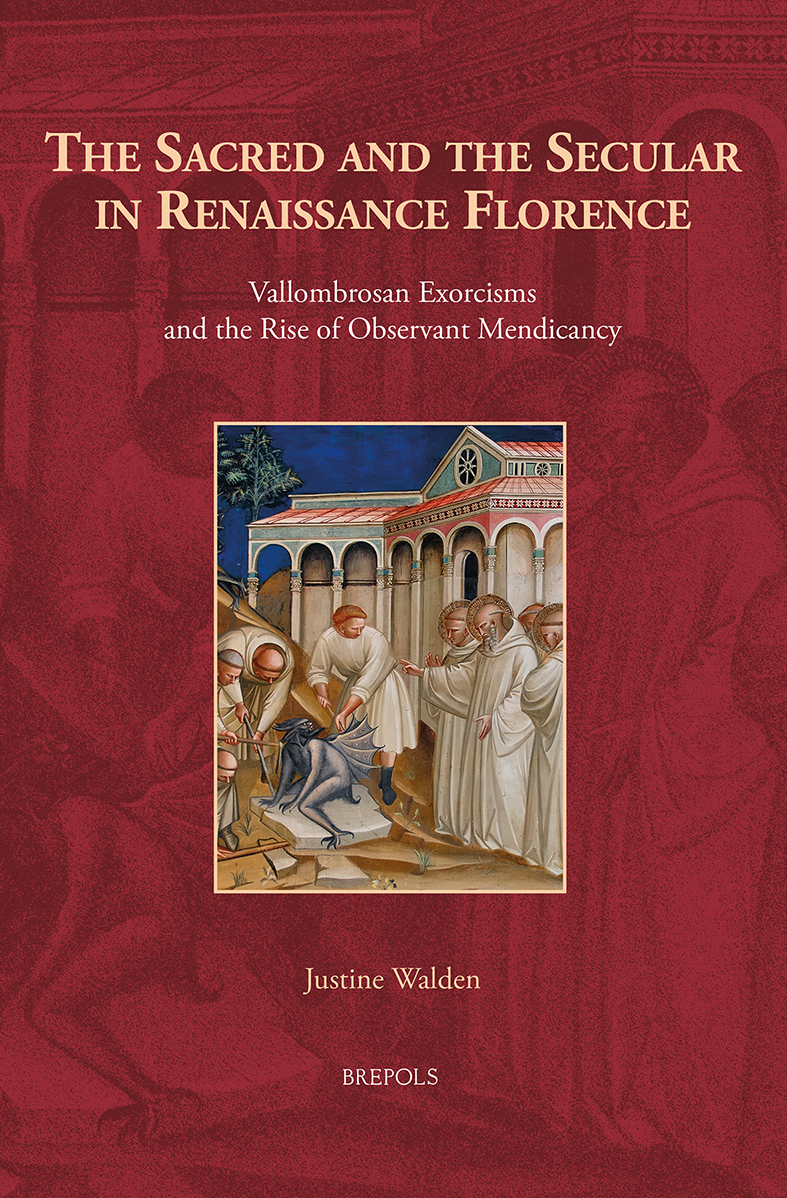 The Sacred and the Secular in Renaissance Florence
Vallombrosan Exorcisms and the Rise of Observant Mendicancy
Volume 31

 Careers and Opportunities at the Roman Curia, 1300-1500
A Socio-Economic History of Papal Administration
Volume 29
 Orthodoxy and Controversy in Twelfth-Century Religious Discourse
Peter Lombard's 'Sentences' and the Development of Theology
Volume 8

 Nature, Virtue, and the Boundaries of Encyclopaedic Knowledge
The Tropological Universe of Alexander Neckam (1157-1217)
Volume 13


 Mulieres Religiosae
Shaping Female Spiritual Authority in the Medieval and Early Modern Periods
Volume 12


 Gendered Identities in Bernard of Clairvaux’s ‘Sermons on the Song of Songs’
Performing the Bride
Volume 15

 Witchcraft, Superstition, and Observant Franciscan Preachers
Pastoral Approach and Intellectual Debate in Renaissance Milan
Volume 18
 Communities of Learning
Networks and the Shaping of Intellectual Identity in Europe, 1100-1500
Volume 9


 Confraternity, Mendicant Orders, and Salvation in the Middle Ages
The Contribution of the Hungarian Sources (c.1270-c.1530)
Volume 23


Similar Books
 A Collaborative Tapestry in Honour of Shirley Ann Brown / Une fresque brodée en l’honneur de Shirley Ann Brown
The Bayeux Tapestry Seen by her Colleagues and Friends / La Tapisserie de Bayeux vue par ses collègues et amis

 Behind the Scenes of Medieval Roofs
An Overview of the Roofing Systems of Italian Churches
Volume 90








 Innovation and Medieval Communities
The Circulation of Ideas and Practices in and out of the Town (1200-1500)
Volume 63
 John Dunstaple Reading Boethius
John Dunstaple’s Annotations to Boethius’s “De institutione musica” in the Manuscript Oxford, Corpus Christi College Library, MS 118
 Linguistic and Cultural Dynamics in a Frontier Society
New Perspectives on Northeastern Bavaria and Western Bohemia in the Early Middle Ages
Volume 9

 Medieval Debates on Foreknowledge: Future Contingents, Prophecy, and Divination
Acts of the XXVII Annual Colloquium of the SIEPM, Trento 12-15 September 2023
Volume 31
 Medieval Yeghegis, Armenia
History, Archaeology, Society. Local Multiplicities and Global Connections of a Rural Centre on the Silk Road(s)




 Power and Women in Southeast and Central Europe in Late Medieval and Early Modern Period (1300-1600)
Volume 10



 The Anglo-Norman Bible’s Books of Kings, a Critical Edition
(BL Royal 1 C III, fols 234r-274v)
Volume 37


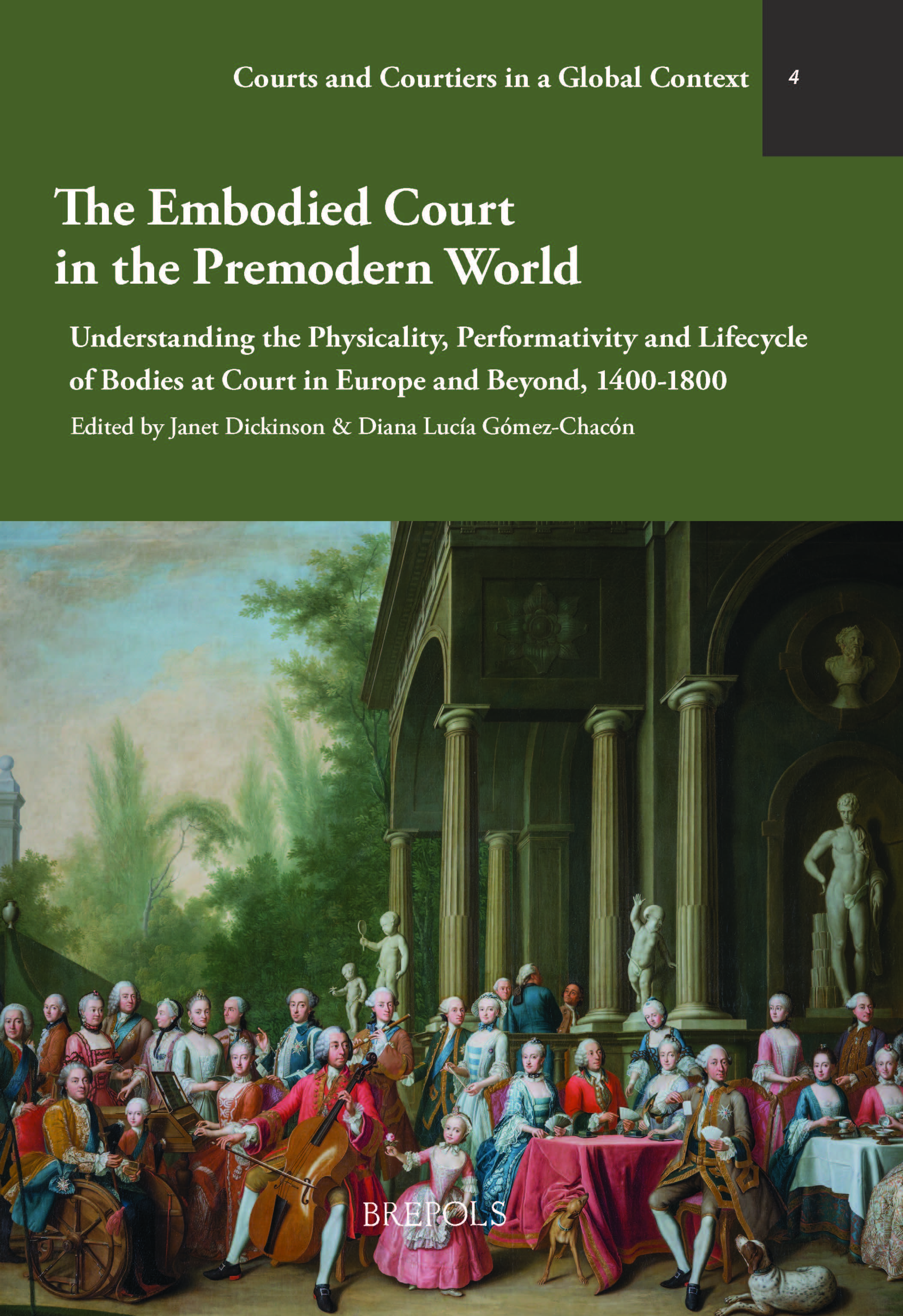 The Embodied Court in the Premodern World
Understanding the Physicality, Performativity and Lifecycle of Bodies at Court in Europe and Beyond, 1400-1800
Volume 4


 The Middle English ‘Medicines for Horses’
Edited from the Manuscript formerly at Kensington Palace, HRH Duke of Gloucester MS s.n. (olim York House MS 45)
Volume 69
