
Attische Grabbezirke klassischer Zeit
by Jan Breder

Hardback (Published)
(October 2013)
ISBN: 9783447068680
8.31 x 11.65 inches
Price: $98.00
On back order
The Attic burial districts started to develop around 430 BC. These conglomerates of architecture, burial sites and burial offerings, sacrificial sites and stelae belonged to the long-standing Greek sepulchral tradition. The design of the interior of the burial districts is of particular interest, begging the question as to whether the burial grounds were laid out as terraces or whether they were walled-in spaces, which allow us to come to conclusions as to whether funerals or later memorial rites took place within the districts or literally on top of them. With reference to the burial districts, Jan Breder uses this study to address the question of whether certain types of buildings held an intrinsic meaning beyond their actual functionality. German text.
Um 430 v.Chr. setzten die attischen Grabbezirke ein. Diese Komplexe aus Architektur, Bestattung mit Beigaben, Opferstellen und Stelenausstattung standen im Kontext der langen griechischen Sepulkraltradition. Besonders interessant ist der Aspekt der Gestaltung des Innenraumes der Grabbezirke, also die Frage, ob die Grabanlagen terrassenartig hoch verfullt waren oder nach einer Umfriedung den Bestattungsplatz umschlossen, woraus sich erkennen lasst, ob Bestattungen oder spatere Gedachtnisriten innerhalb des Grabbezirks oder auf dessen Oberflache stattfanden. Jan Breder untersucht in seiner Studie am Gegenstand der Grabbezirke die Frage, ob bestimmten Bauformen eine inhaltliche Bedeutung immanent war, die uber ihre reine Funktionalitat hinausging. Die Analyse von Konstruktion und Wandaufbau zeigt, dass die Umfassungsmauern der Grabbezirke denen von Heiligtumern entsprachen, durch ihr spezifisches Erscheinungsbild evozierten sie die Konnotation als “Temenos” und boten den Hinterbliebenen die Moglichkeit, die Grabstatte im Habitus einer Kultstatte zu prasentieren. Auch in der Ausstattung der Grabbezirke mit Stelen und Marmorgefassen lassen sich sakralisierende Elemente beobachten, zudem wurden seit langem etablierte Objekte der Grabpflege wie Lekythen in den Grabbezirksfassaden in Marmor monumentalisiert. Breder stellt uberzeugend dar, dass sich als Beweggrund fur die Gestaltung der Grabbezirke auf eine dauerhafte Darstellung der als Nomizomena bezeichneten Totenriten schliessen lasst.
- By (author) Jan Breder
Other Titles in this Series
 Rule as En-Actment
On the Lower Court of Justice at Luneburg Town Hall and the Archetype of Sacral Legitimation of Rulership
Volume 79

 Vectigalia nervos esse rei publicae
Die indirekten Steuern in der Romischen Kaiserzeit von Augustus bis Diokletian
Volume 26


 Antike Wirtschaft und ihre kulturelle Pragung / The Cultural Shaping of the Ancient Economy
Volume 98


 Josef Wiesehofer. Iran – Zentralasien – Mittelmeer
Gesammelte Schriften Teil I: Studien zur Geschichte der Achaimeniden
Volume 159


 Strafe und Strafrecht in den antiken Welten
Unter Berucksichtigung von Todesstrafe, Hinrichtung und peinlicher Befragung
Volume 51
 Hathorsaulen und Hathorpfeiler
Altagyptische Architekturelemente vom Neuen Reich bis zur Spatantike
Volume 8


 Rechtssemantik und forensische Rhetorik
Untersuchungen zu Wortschatz, Stil und Grammatik der Sprache koptischer Rechtsurkunden
Volume 20
 Gottesdiener und Kamelzuchter
Das Alltags- und Sozialleben der Sobek-Priester im kaiserzeitlichen Fayum
Volume 144
 Ships of the Desert and Ships of the Sea
Palmyra in the World Trade of the First Three Centuries CE
Volume 101

 Staatsvertrage, Volkerrecht und Diplomatie im Alten Orient und in der griechisch-romischen Antike
Volume 40

 Volker Losemann – Antike und Nationalsozialismus
Gesammelte Schriften zur Wissenschafts- und Rezeptionsgeschichte II
Volume 160


Similar Books


 Caesar’s Visions and Impact on the Roman Empire
Revisiting the Archaeological and Historical Record of the 40s BC
Volume 2

 Construction Processes in Historical Western Societies (5th c. BC – 10th c. AD)
Case Studies on Techniques, Models, and Costs


 Etruscan and Roman Hellenistic Anatomical ex votos
Reassessing Popular Religious Expressions in Central Italy
Volume 8




 Invisible Labour in Antiquity
Visualizing Obscure Work in the Ancient Mediterannean and West Asia
Volume 1

 Late Antique villae in the Balkans (3rd–7th c. AD): Current Research Questions and Perspectives
HAEMUS Companion to the Late Antique Balkans 1
Volume 4





 Portraying the Individual in the Roman East
Local–Imperial Entanglements in Sculpture, Mosaics, and Paintings (First–Fourth Centuries AD)
Volume 18


 Roman Copies, Collecting, and Culture in the Bay of Naples and Beyond
Papers in Honor of Eugene J. Dwyer
 Small Worlds and Relational Agencies: Local Societies in Early Medieval Iberia
Pequeños mundos y Agencias relacionales: Sociedades locales altomedievales en la Península Ibérica
 SOMA 2023: Proceedings of the 24th Symposium on Mediterranean Archaeology
Ideas that Travelled by the Sea, Udine, 2-4 February, 2023


 The Iron Age Pottery from Tell Atchana / Ancient Alalakh
A Typological and Functional Analysis
Volume 8



 Writing in the Church of the Nativity in Bethlehem
Inscription and Graffiti in a Multilingual and Multigraphic Perspective
Volume 45
 Zooarchaeology of Ancient Greek Sanctuaries in Southwestern Sicily
Faunal Analysis from Selinus and Akragas as Evidence of Differences in the Treatment of Animals for Ritual Purposes
 Alabaster
An Interdisciplinary Study of the Sources and Uses of Calcite Alabaster in Antiquity
Volume 5

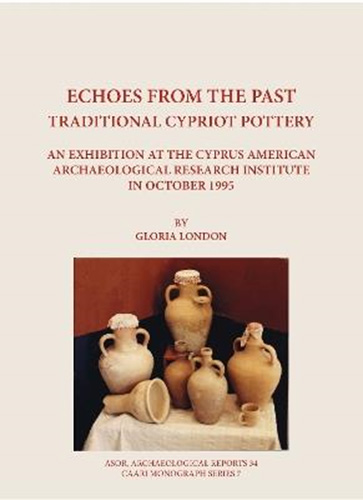 Echoes from the Past: Traditional Cypriot Pottery
An Exhibition at the Cyprus American Archaeological Research Institute in October 1995