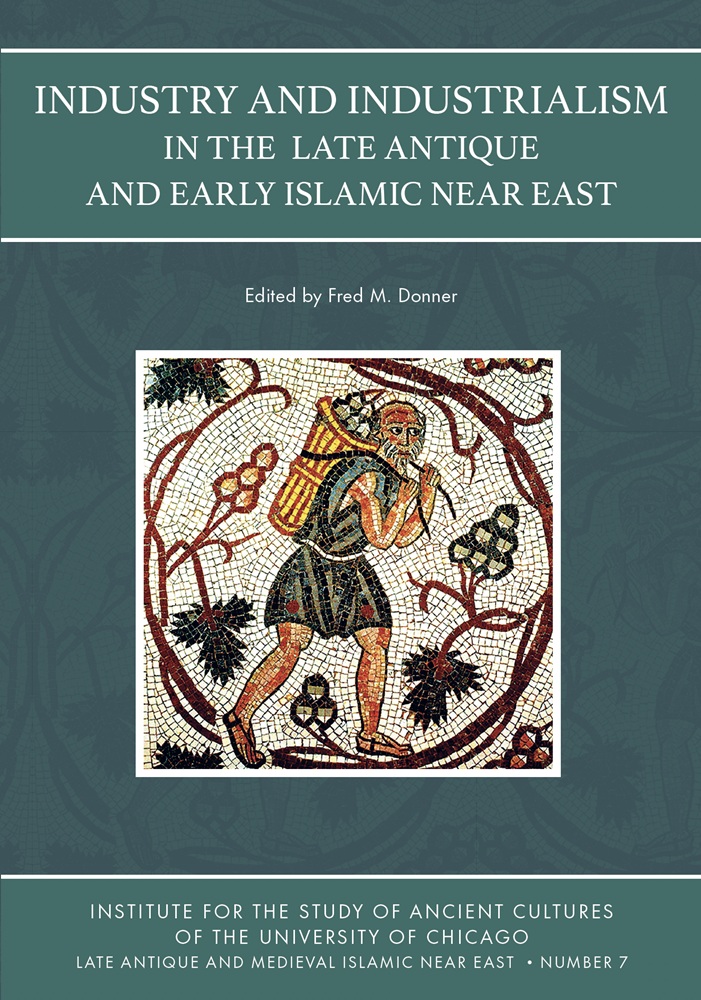
Goliath’s Legacy
Philistines and Hebrews in Biblical Times, Translated from Polish by Maria Kantor
by Lukasz Niesiolowski-Spano, translated by Maria Kantor

Hardback (Published)
(February 2016)
ISBN: 9783447103466
6.65 x 9.49 inches
Price: $95.00
In stock
In the 12th century BCE revolutionary changes and major population movements took place in the eastern Mediterranean. One element of this complex process was the appearance of the warlike Sea Peoples on the coast of the Middle East. Among the groups that we know of the most important seem to be Philistines. It is no accident that the name of the region – Palestine – comes precisely from this ethnonym. The book examines the impact of the Sea Peoples, especially the Philistines, on the local population, and on the Hebrews in particular. To determine the chronological sequence, the first part presents the biblical narrative in a synthetic way, and thus the Philistines’ role in the history of Israel and Judah. These considerations complement the study of geography, in which toponyms are discussed to establish a range of the Philistines’ impact. Concerning the likely duration of an impact of the Philistines on the Hebrews, two periods were suggested: the early Iron Age (ca. 1150-900 BCE) and the domination of Assyria (ca. 750-650 BCE). The second part of the book discusses the culture of the Hebrews, known from the Bible, which may have its roots in the Philistines’ heritage. These phenomena are divided into thematic groups. The impact of the Philistines on the Hebrews was much larger than previously thought, and it was not connected only with Judah’s and Israel’s response to the presence of a hostile neighbor. Several components of Hebrew culture and some literary motifs in the Bible seem to derive specifically from the Philistines’ culture.
In the 12th century BCE revolutionary changes and major population movements took place in the eastern Mediterranean. One element of this complex process was the appearance of the warlike Sea Peoples on the coast of the Middle East. Among the groups that we know of the most important seem to be Philistines. It is no accident that the name of the region – Palestine – comes precisely from this ethnonym. The book examines the impact of the Sea Peoples, especially the Philistines, on the local population, and on the Hebrews in particular. To determine the chronological sequence, the first part presents the biblical narrative in a synthetic way, and thus the Philistines’ role in the history of Israel and Judah. These considerations complement the study of geography, in which toponyms are discussed to establish a range of the Philistines’ impact. Concerning the likely duration of an impact of the Philistines on the Hebrews, two periods were suggested: the early Iron Age (ca. 1150-900 BCE) and the domination of Assyria (ca. 750-650 BCE). The second part of the book discusses the culture of the Hebrews, known from the Bible, which may have its roots in the Philistines’ heritage. These phenomena are divided into thematic groups. The impact of the Philistines on the Hebrews was much larger than previously thought, and it was not connected only with Judah’s and Israel’s response to the presence of a hostile neighbor. Several components of Hebrew culture and some literary motifs in the Bible seem to derive specifically from the Philistines’ culture.
- By (author) Lukasz Niesiolowski-Spano
- Translated by Maria Kantor
"[This] is a book that points in new directions and with which scholarship on the Philistines will need to engage in the coming years." --Carl S. Ehrlich, York University, Review of Biblical Literature 7.6.2017
—
Other Titles in this Series
 Sanctuaries and the Power of Consumption
Networking and the Formation of Elites in the Archaic Western Mediterranean World. Proceedings of the International Conference in Innsbruck, 20th-23rd March 2012
Volume 92
 Der Orient und die Anfange Europas
Kulturelle Beziehungen von der Spaten Bronzezeit bis zur Fruhen Eisenzeit
Volume 42


 Der Althistoriker Franz Hampl zwischen Nationalsozialismus und Demokratie
Kontinuitat und Wandel im Fach Alte Geschichte

 Die Waffengraber der agaischen Bronzezeit
Waffenbeigaben, soziale Selbstdarstellung und Adelsethos in der minoisch-mykenischen Kultur
Volume 52


 Das Charisma der Konige
Zur Konzeption des altorientalischen Konigtums im Hinblick auf Urartu
Volume 84
 Die Personennamen des Alten Reiches
Altagyptische Onomastik unter lexikographischen und sozio-kulturellen Aspekten
Volume 28
 Mensch und Umwelt im Spiegel der Zeit
Aspekte geoarchaologischer Forschungen im ostlichen Mittelmeer
Volume 1

 Teichos
Vom endneolithischen Wehrdorf zum spatosmanischen Tambouri: 5000 Jahre Festungswesen in Attika
Volume 151


 Zwischen Entwurf und Produkt
Die griechisch-romischen Gipsformen aus Agypten im Museum August Kestner, Hannover. Mit einer CD-Rom der abgebildeten Museumsobjekte
Volume 44
 Attika – Archaologie einer ‘zentralen’ Kulturlandschaft
Akten der internationalen Tagung vom 18.-20. Mai 2007 in Marburg
Volume 37

 Change, Continuity, and Connectivity
North-Eastern Mediterranean at the turn of the Bronze Age and in the early Iron Age
 Studien zur lex rivi Hiberiensis
Zur Rechtsdurchsetzung innerhalb einer Bewasserungsgemeinschaft im 2. Jh. n. Chr.
 The Letter
Law, State, Society and the Epistolary Format in the Ancient World Proceedings of a Colloquium held at the American Academy in Rome 28-30.9.2008
Volume 55.1
 Sie machen sich keinen Begriff von den Reizen solcher Nilfahrt
Der Briefwechsel zwischen Georg Ebers und Franz Overbeck (1867-1898)
Volume 56

 Kathegetes
Studies in Ancient History, Warfare and Art Presented to Nick Sekunda on his Seventieth Birthday
Volume 171
 Musik als Argument spatantiker Kirchenvater
Untersuchungen zu Laktanz, Euseb, Chrysostomos und Augustinus


Similar Books





 Athanasius of Alexandria, Epistula ad episcopos Aegypti et Libyae
Old Slavonic Version and English Translation
Volume 261

 Boğazköy Tablets in the Museum of Anatolian Civilizations (Bo 9032–Bo 9097)
Anadolu Medeniyetleri Müzesinde Bulunan Boğazköy Tabletleri (Bo 9032–Bo 9097)
Volume 4



 Connecting the Dots: Counting, Writing, and the Beginnings of Civilization
The Secret Lives of Clay Tokens: A Memoir
 Contesting Labeled Identities
The Sociology of Gentilics in Biblical and Northwest Semitic Literature

 Curating the Prehistoric Past
Studies on West Asian Archaeology and Beyond in Honour of Yoshihiro Nishiaki
 Cyril of Alexandria’s Christological Exegesis
Explorations of Partitive Exegesis in the Dialogues on the Trinity
Volume 70


 Epiphanies of the Divine in the Septuagint and the New Testament
Fifth International Symposium of the Corpus Judaeo-Hellenisticum Novi Testamenti (CJHNT), 14-17 May 2015, Nottingham


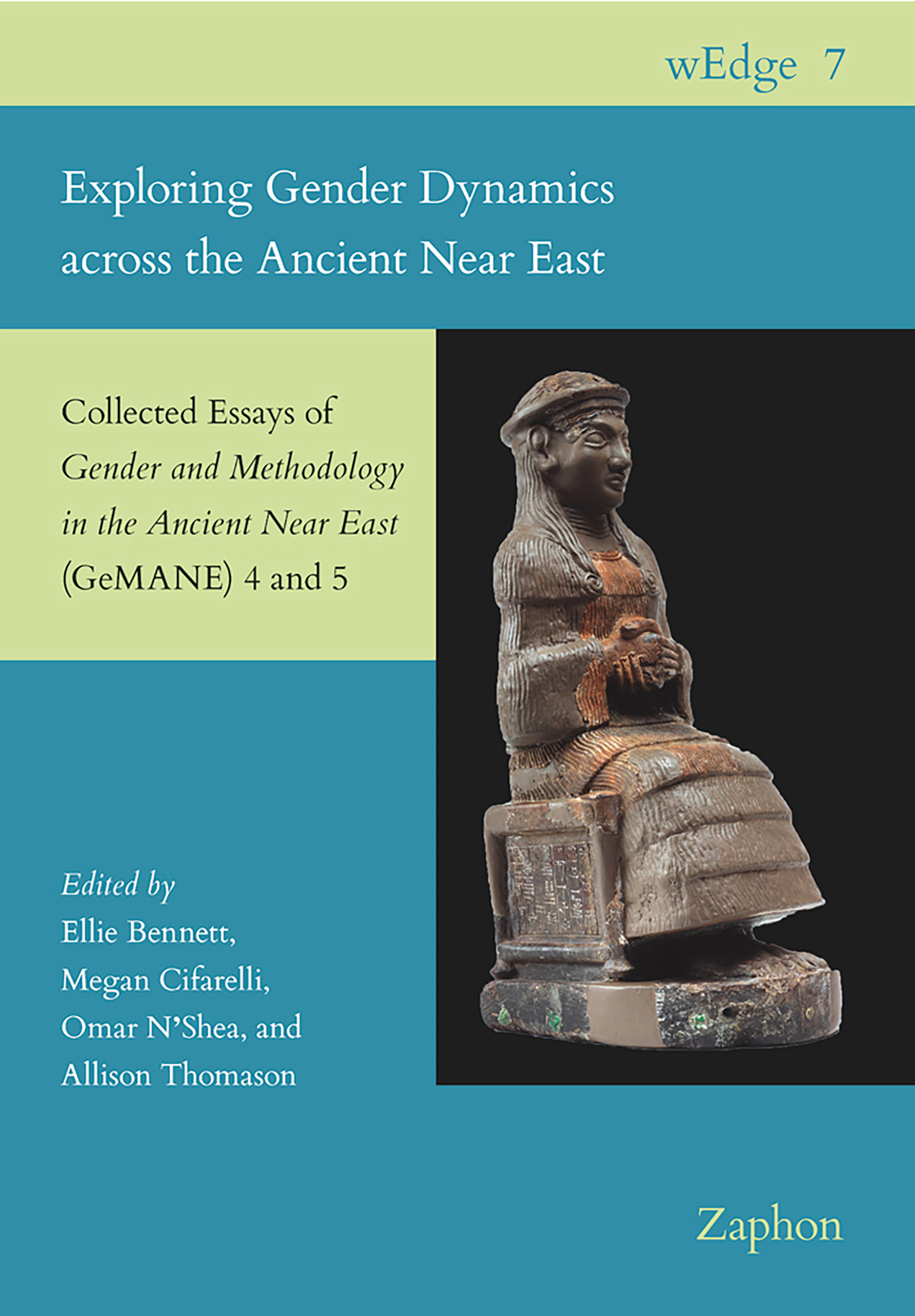 Exploring Gender Dynamics across the Ancient Near East
Collected Essays of Gender and Methodology in the Ancient Near East (GeMANE) 4 and 5
Volume 7
 Extracanonical Traditions and the Holy Land
Texts, Rituals, and Material Culture in Late Antique Palestine

 From Joseph to Jesus
The Joseph Narrative as a Compositional Template from Old Greek Esther to the Gospel of Luke
Volume 125


 Ḫattušaš utnē išḫameški
Hittite and Other Ancient Near Eastern Studies Presented to Piotr Taracha on the Occasion of His 65th Birthday