
Manuscript Communication
Visual and Textual Mechanics of Communication in Hagiographical Texts from the Southern Low Countries, 900-1200
By (author) Tjamke Snijders

Hardback (Published)
(December 2014)
ISBN: 9782503552941
6.1 x 9.17 inches
Price: $163.00
In stock
This study investigates how medieval abbeys in the Southern Low Countries used hagiographical manuscripts as a communicative tool. Four basic questions are addressed: How did layout influence a manuscript’s communicative potential? Was manuscript communication influenced by its composition? How did the flexibility of texts and manuscripts influence their communicative function? And how did the position of the monastery within the monastic landscape influence manuscript communication? Ranging from in-depth case studies to discussions of structure and agency in manuscript terminology and layout in the aftermath of New Philology, this book argues that the High Middle Ages witnessed a fundamental process of manuscript diversification and specialisation, which was at the basis of the thirteenth-century revolution in manuscript layout. This led twelfth-century monks to start conceptualising the manuscript as an object with fixed contents, which was to be used and copied as a whole. Consequently, the production and spread of saints’ lives became part of a process of ideological homogenisation among Benedictine monasteries and started a crucial development in medieval literacy. Awarded the Mgr. Charles De Clercq award from the Royal Flemish Academy of Belgium for Science and the Arts (2012) and the five-yearly Flemish Award for Historical Sciences of the Academische Stichting Leuven (2013).
This study investigates how medieval abbeys in the Southern Low Countries used hagiographical manuscripts as a communicative tool. Four basic questions are addressed: How did layout influence a manuscript’s communicative potential? Was manuscript communication influenced by its composition? How did the flexibility of texts and manuscripts influence their communicative function? And how did the position of the monastery within the monastic landscape influence manuscript communication? Ranging from in-depth case studies to discussions of structure and agency in manuscript terminology and layout in the aftermath of New Philology, this book argues that the High Middle Ages witnessed a fundamental process of manuscript diversification and specialisation, which was at the basis of the thirteenth-century revolution in manuscript layout. This led twelfth-century monks to start conceptualising the manuscript as an object with fixed contents, which was to be used and copied as a whole. Consequently, the production and spread of saints’ lives became part of a process of ideological homogenisation among Benedictine monasteries and started a crucial development in medieval literacy. Awarded the Mgr. Charles De Clercq award from the Royal Flemish Academy of Belgium for Science and the Arts (2012) and the five-yearly Flemish Award for Historical Sciences of the Academische Stichting Leuven (2013).
- By (author) Tjamke Snijders
Other Titles in this Series


 Epigraphic Literacy and Christian Identity
Modes of Written Discourse in the Newly Christian European North
Volume 4


 Ruling the Script in the Middle Ages
Formal Aspects of Written Communication (Books, Charters, and Inscriptions)
Volume 35

 Diplomatics in the Netherlands
The Use, Editing, and Study of Charters by Dutch Historians from the Middle Ages to the Present
Volume 63


 Sins of the Tongue in the Medieval West
Sinful, Unethical, and Criminal Words in Middle Dutch (1300-1550)
Volume 36


 Strategies of Writing
Studies on Text and Trust in the Middle Ages: Papers from Trust in Writing in the Middle Ages (Utrecht, 28-29 November 2002)
Volume 13


 Homo Legens
Styles et pratiques de lecture: Analyses comparees des traditions orales et ecrites au Moyen Age / Styles and Practices of Reading: Comparative Analyses of Oral and Written Traditions in the Middle Ages
Volume 26


 Looking Back from the Invention of Printing
Mothers and the Teaching of Reading in the Middle Ages
Volume 40
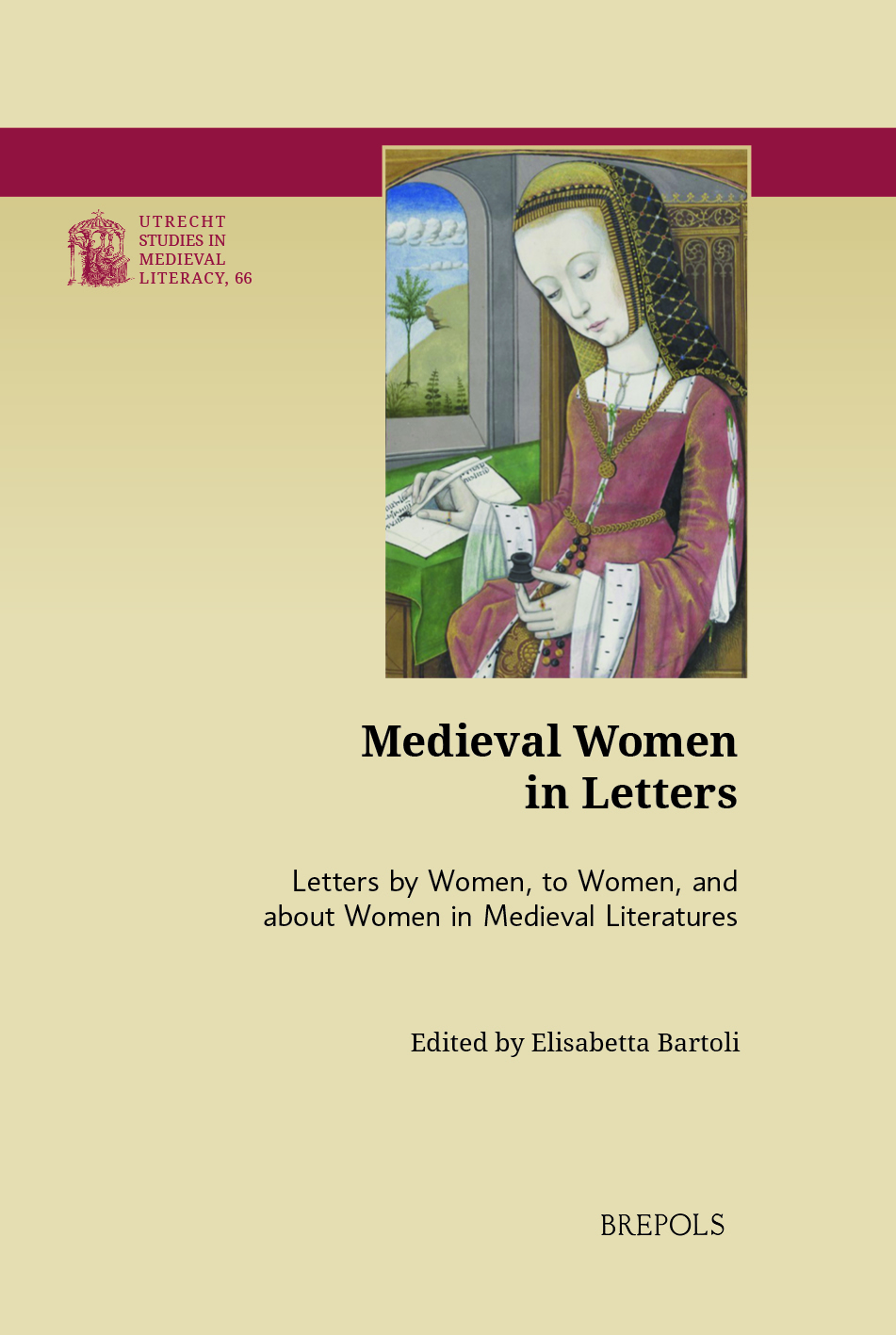 Medieval Women in Letters
Letters by Women, to Women, and about Women in Medieval Literatures
Volume 66

Similar Books
 ‘For You I Study, For You I Work, For You I Live, For You I Am Ready To Even Give My Life’
Essays in Honour of Francis (Frank) J Moloney, SDB
 A Collaborative Tapestry in Honour of Shirley Ann Brown / Une fresque brodée en l’honneur de Shirley Ann Brown
The Bayeux Tapestry Seen by her Colleagues and Friends / La Tapisserie de Bayeux vue par ses collègues et amis






 Ars Prophetica
Theology in the Poetry of Twentieth-Century Hebrew Poets Avraham Halfi, Shin Shalom, Amir Gilboa, and T. Carmi
 As Messianism Turns to Heresy
The Regenstein Chair Lectures On Lurianic Kabbalah and Shabbatai Tzevi at Hebrew Union College - Cincinnati

 Behind the Scenes of Medieval Roofs
An Overview of the Roofing Systems of Italian Churches
Volume 90


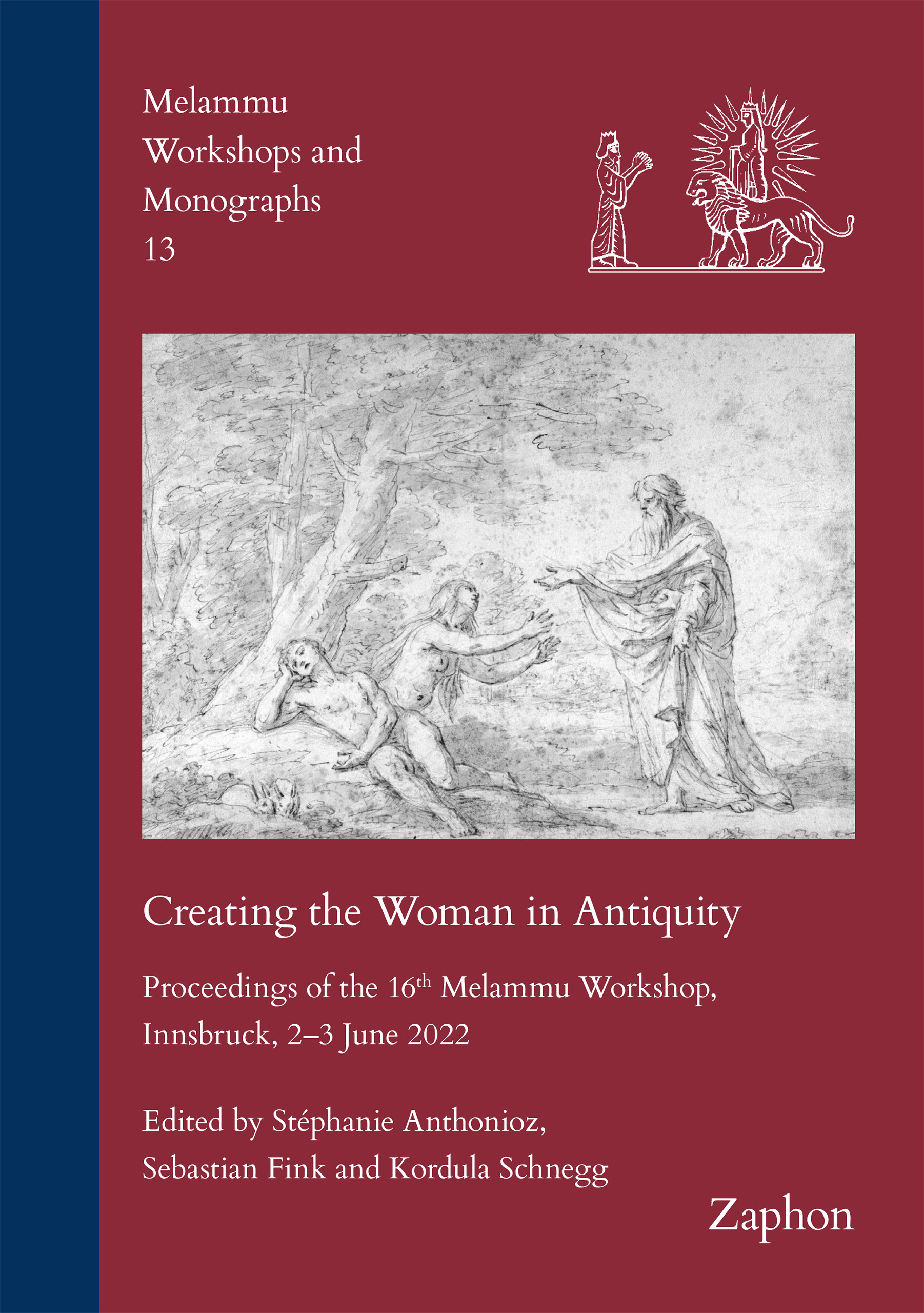 Creating the Woman in Antiquity
Proceedings of the 16th Melammu Workshop, Innsbruck, 2–3 June 2022
Volume 13


 Drunk the Potion, No Whit Charmed
The Doctrine of Pure and Perfect Souls from Iamblichus to Damascius




 Extracanonical Traditions and the Holy Land
Texts, Rituals, and Material Culture in Late Antique Palestine
 Fear, Fear of God, God-Fearers
Philological and Historical Perspectives on the World of Ancient Judaism and Christianity


