
Sins of the Tongue in the Medieval West
Sinful, Unethical, and Criminal Words in Middle Dutch (1300-1550)
By (author) Martine Veldhuizen

As modern medievalists have repeatedly established, harmful speech conduct (‘sins of the tongue’) aroused considerable interest among medieval authors. Lying, boasting, flattering, railing, backbiting, grumbling, false swearing, and garrulous and incendiary speech were but a few of the speech acts that provoked moral condemnation all
As modern medievalists have repeatedly established, harmful speech conduct (‘sins of the tongue’) aroused considerable interest among medieval authors. Lying, boasting, flattering, railing, backbiting, grumbling, false swearing, and garrulous and incendiary speech were but a few of the speech acts that provoked moral condemnation all over Western Europe from the thirteenth century onward. This study examines medieval notions of harmful speech conduct as reflected in Middle Dutch ecclesiastical, secular-ethical, and legal textual sources. According to these texts, the tongue was able to ‘break bones’ and inflict considerable damage on the speaker, on listeners, and on other relevant participants in speech situations. The book utilises two novel approaches. First, the subject is systematically explored in terms of three different types of behaviour in order to discover an overarching discourse: harmful speech as a sin, as moral misbehaviour, and as a crime. Second, ideas from modern language theory are used to analyse the textual sources. By adopting these two approaches, the book asserts that an overarching discourse of harmful speech can be found in the Middle Dutch ecclesiastical, secular-ethical, and legal domains, a discourse coined in this study as ‘the discourse of the untamed tongue’.
- By (author) Martine Veldhuizen
Other Titles in this Series


 Homo Legens
Styles et pratiques de lecture: Analyses comparees des traditions orales et ecrites au Moyen Age / Styles and Practices of Reading: Comparative Analyses of Oral and Written Traditions in the Middle Ages
Volume 26


 Looking Back from the Invention of Printing
Mothers and the Teaching of Reading in the Middle Ages
Volume 40
 Manuscript Communication
Visual and Textual Mechanics of Communication in Hagiographical Texts from the Southern Low Countries, 900-1200
Volume 32
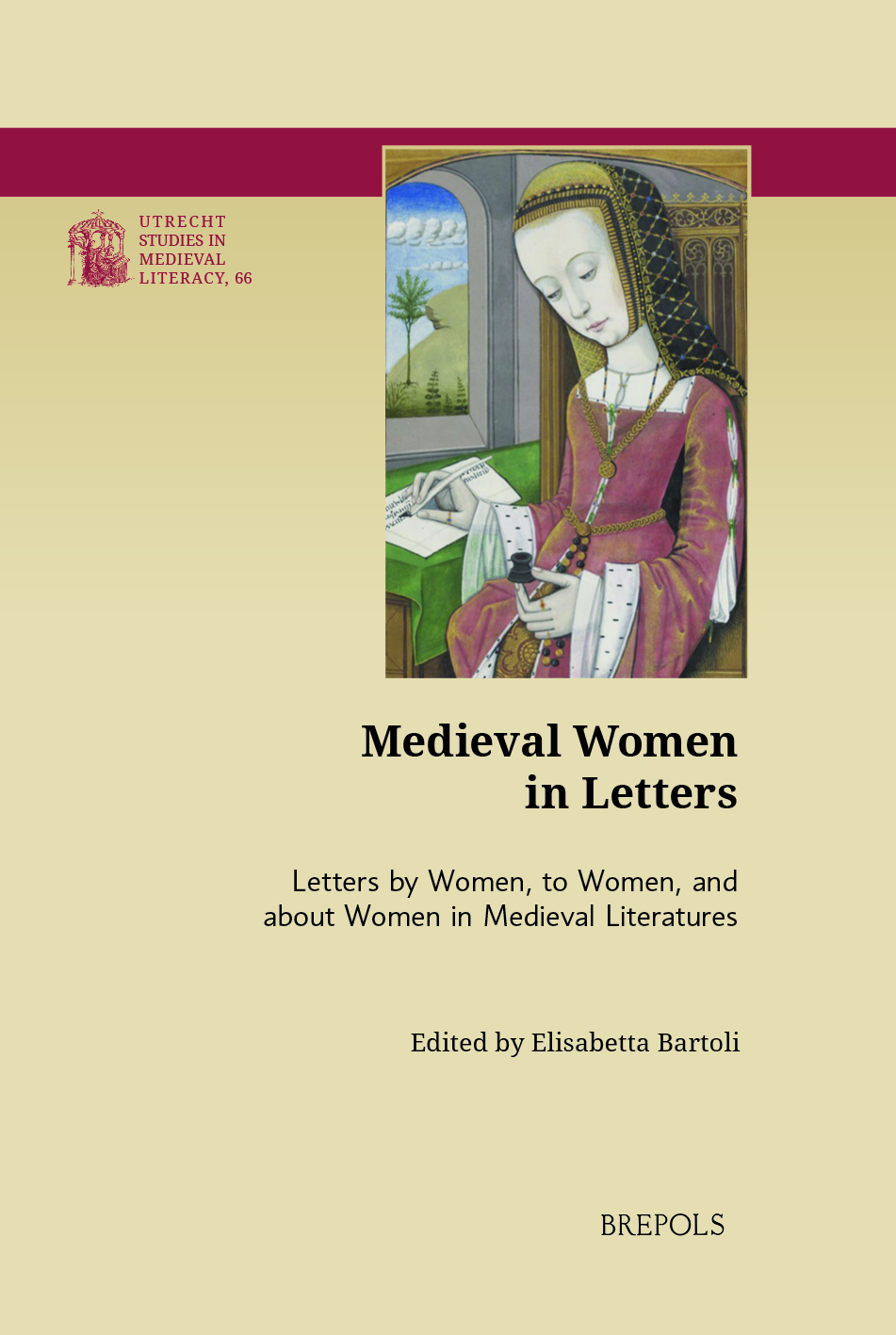 Medieval Women in Letters
Letters by Women, to Women, and about Women in Medieval Literatures
Volume 66


 Writing Names in Medieval Sacred Spaces
Inscriptions in the West, from Late Antiquity to the Early Middle Ages
Volume 56


 Literacy in Medieval and Early Modern Vilnius
Forms of Writing and Rhetorical Spaces in the City
Volume 55
 Orality and Literacy in the Middle Ages
Essays on a Conjunction and its Consequences in Honour of D. H. Green
Volume 12
 Documenting the Everyday in Medieval Europe
The Social Dimensions of a Writing Revolution, 1250-1350
Volume 42


 Understanding Monastic Practices of Oral Communication (Western Europe, tenth-thirteenth centuries)
Volume 21

 Seeing the Invisible in Late Antiquity and the Early Middle Ages
Papers from Verbal and Pictorial Imaging: Representing and Accessing Experience of the Invisible, 400-1000 (Utrecht, 11-13 December 2003)
Volume 14


 Reading Images and Texts
Medieval Images and Texts as Forms of Communication. Papers from the Third Utrecht Symposium on Medieval Literacy, Utrecht, 7-9 December 2000
Volume 8
Similar Books
 A Collaborative Tapestry in Honour of Shirley Ann Brown / Une fresque brodée en l’honneur de Shirley Ann Brown
The Bayeux Tapestry Seen by her Colleagues and Friends / La Tapisserie de Bayeux vue par ses collègues et amis




 Ars Prophetica
Theology in the Poetry of Twentieth-Century Hebrew Poets Avraham Halfi, Shin Shalom, Amir Gilboa, and T. Carmi
 Behind the Scenes of Medieval Roofs
An Overview of the Roofing Systems of Italian Churches
Volume 90


 Cahiers de littérature française
Les Métamorphoses du texte. Enjeux intertextuels et transpositions visuelles
Volume 25








 European Drama and Performance Studies
Dramatisations politiques. Théâtre, politique et idéologie au XIXe siècle (1806-1914)
Volume 27


 Innovation and Medieval Communities
The Circulation of Ideas and Practices in and out of the Town (1200-1500)
Volume 63
 John Dunstaple Reading Boethius
John Dunstaple’s Annotations to Boethius’s “De institutione musica” in the Manuscript Oxford, Corpus Christi College Library, MS 118


 LiCArC
Trauma et création artistique : l’engagement des artistes arabes dans des dynamiques de résiliences
Volume 14

 Linguistic and Cultural Dynamics in a Frontier Society
New Perspectives on Northeastern Bavaria and Western Bohemia in the Early Middle Ages
Volume 9


