
The Roles of Medieval Chanceries
Negotiating Rules of Political Communication
Edited by Christina Antenhofer Edited by Mark Mersiowsky

Explores processes of negotiating rules in medieval political communication through case studies which include the German, French, Italian, Tyrolian, and Gorizian chanceries, as well as diets.
Medieval (political) communication followed rules that were defined, negotiated, and altered in processes of exchange. Conflicts resulting from different communication practices, as well as forms of innovation, revolve around rules that are not self-evident. Political actors such as princes and cities, chanceries, secretaries, ambassadors, and councillors formed rules of political participation, which became visible in written documentation. These rules were both formed and negotiated via processes of communication (a practice-oriented understanding of political participation). Medieval chanceries can thus be understood as a vast field of experimentation where different solutions were tested, passed on, or discarded. This book explores communication practices in German, French, Italian, Tyrolian, and Gorizian chanceries, as well as at diets from the tenth to the sixteenth century. Its chapters examine royal, monastic, princely, and communal chanceries. For the early and high Middle Ages, a close analysis of documents will reconstruct negotiation and communication from within the documents themselves. For the later Middle Ages, focus will turn to the chancery, with the appearance of chancery orders and chancery annotations that provide explicit insight in communication between the chancellors, secretaries, and political authorities (princes or cities). The growing amount and variety of documents issued in the late Middle Ages allows us to retrace conflicts resulting from differing chancery practices as well as attempts to reorganise the chancery into a political instrument for the prince. The processes of political communication will be followed in three parts. Part I focuses on the rules within documents. Part II looks at administrative processes within specific chanceries, while Part III explores forms of exchange between the chancery and other political actors.
- Edited by Christina Antenhofer
- Edited by Mark Mersiowsky
Other Titles in this Series
 Epigraphic Literacy and Christian Identity
Modes of Written Discourse in the Newly Christian European North
Volume 4


 Sins of the Tongue in the Medieval West
Sinful, Unethical, and Criminal Words in Middle Dutch (1300-1550)
Volume 36

 Diplomatics in the Netherlands
The Use, Editing, and Study of Charters by Dutch Historians from the Middle Ages to the Present
Volume 63


 Strategies of Writing
Studies on Text and Trust in the Middle Ages: Papers from Trust in Writing in the Middle Ages (Utrecht, 28-29 November 2002)
Volume 13


 Looking Back from the Invention of Printing
Mothers and the Teaching of Reading in the Middle Ages
Volume 40


 Homo Legens
Styles et pratiques de lecture: Analyses comparees des traditions orales et ecrites au Moyen Age / Styles and Practices of Reading: Comparative Analyses of Oral and Written Traditions in the Middle Ages
Volume 26


 Manuscript Communication
Visual and Textual Mechanics of Communication in Hagiographical Texts from the Southern Low Countries, 900-1200
Volume 32
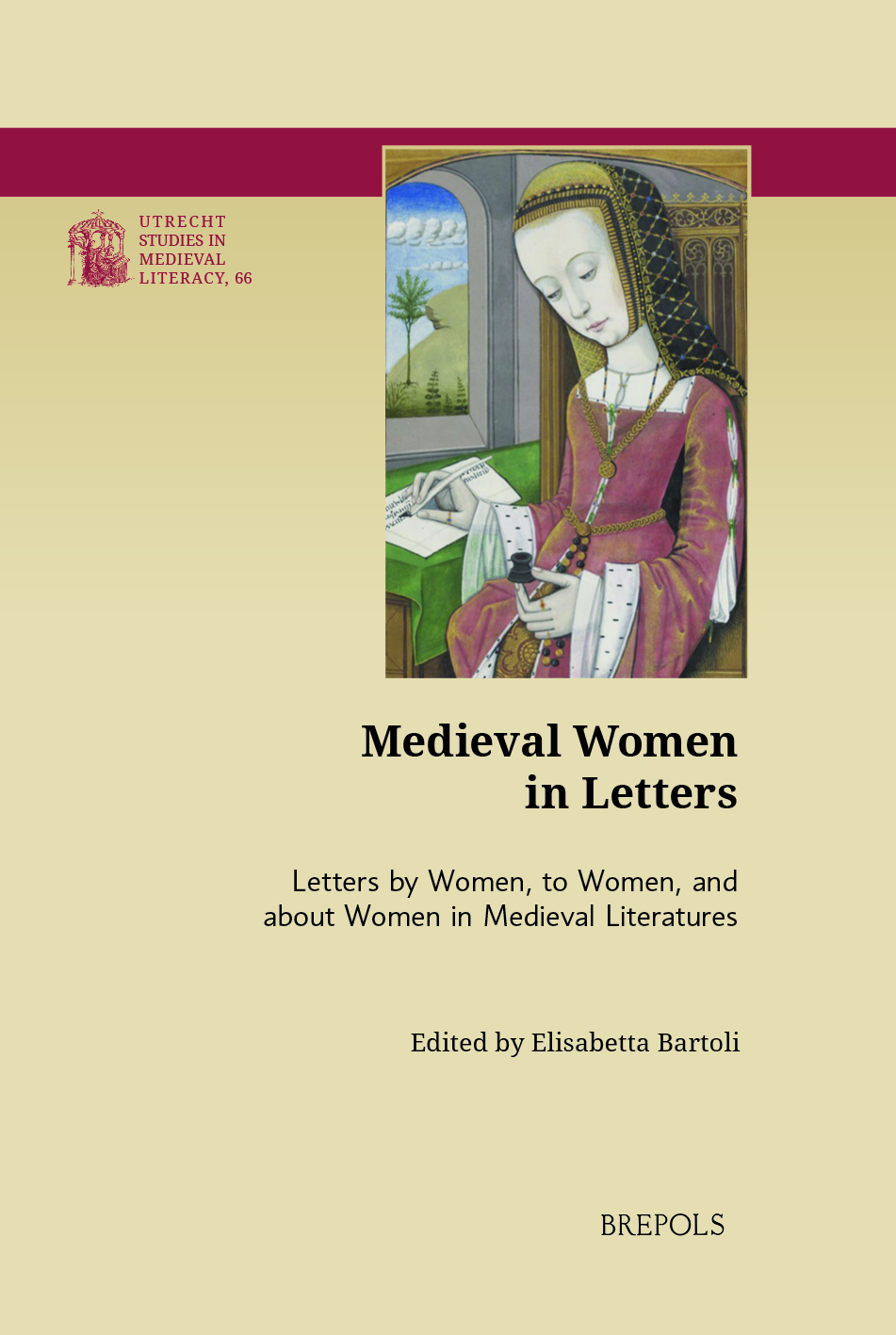 Medieval Women in Letters
Letters by Women, to Women, and about Women in Medieval Literatures
Volume 66


Similar Books
 A Collaborative Tapestry in Honour of Shirley Ann Brown / Une fresque brodée en l’honneur de Shirley Ann Brown
The Bayeux Tapestry Seen by her Colleagues and Friends / La Tapisserie de Bayeux vue par ses collègues et amis



 As Messianism Turns to Heresy
The Regenstein Chair Lectures On Lurianic Kabbalah and Shabbatai Tzevi at Hebrew Union College - Cincinnati
 Behind the Scenes of Medieval Roofs
An Overview of the Roofing Systems of Italian Churches
Volume 90
 Beyond Sovereign Courts
Agents and Practices in Early Modern Spanish and Habsburg Diplomacy
Volume 3








 Food Security under Armed Conflict
Global Knowledge Landscape and Public Attention to Social, Economic, and Humanitarian Dimensions


 Innovation and Medieval Communities
The Circulation of Ideas and Practices in and out of the Town (1200-1500)
Volume 63
 Innovationes Lovanienses: Arts, Law and Theology at the University of Louvain (1425–1797)
Studium Lovaniense: Learning across Borders, 2
Volume 18
 John Dunstaple Reading Boethius
John Dunstaple’s Annotations to Boethius’s “De institutione musica” in the Manuscript Oxford, Corpus Christi College Library, MS 118

 Linguistic and Cultural Dynamics in a Frontier Society
New Perspectives on Northeastern Bavaria and Western Bohemia in the Early Middle Ages
Volume 9

 Medieval Debates on Foreknowledge: Future Contingents, Prophecy, and Divination
Acts of the XXVII Annual Colloquium of the SIEPM, Trento 12-15 September 2023
Volume 31
 Medieval Yeghegis, Armenia
History, Archaeology, Society. Local Multiplicities and Global Connections of a Rural Centre on the Silk Road(s)



 Myths and Tales of the Inughuit
Erik Holtved's Polar Eskimo Texts Revised and Re-translated into Danish and English
Volume 475, 12



