
Who’s Who around Deir el-Medina
Untersuchungen zur Organisation, Prosopographie und Entwicklung des Versorgungspersonals für die Arbeitersiedlung und das Tal der Könige
By (author) K. Gabler
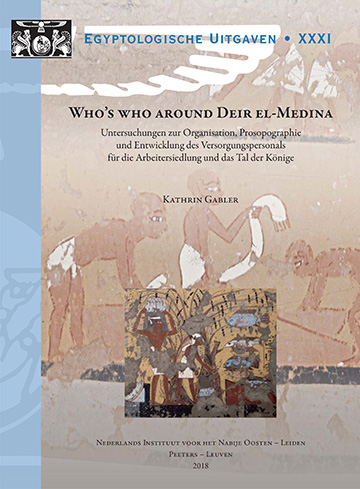
English summary: Who’s Who around Deir el-Medina for the first time examines the support personnel (smd.t) in the workers’ settlement, on the basis of a broad overview of all of the (potential) members and their activities. Drawing from around 1500 mostly hieratic administrative sources from the Ramesses period, around 600 men are identified, who belonged to 12 different occupational groups. The occupations identified can be divided into two main groups. While the work done by the loggers, wood choppers, water carriers and gypsum manufacturers (= Group 1) documented at Deir el-Medina required little prior training, the professions that made up group 2 (fishermen, gardeners, potters, launderers, confectioners and blacksmiths) and for which documentary evidence also exists in other parts of Egypt outside Deir el-Medina, required equipment, training and a degree of experience. Based on a diachronic account, for which information was also drawn from other periods and source categories, the study shows that the emergence of support personnel goes back to innovations introduced under Ramesses II. The simple tasks undertaken by Group 1, which had previously been managed internally, were outsourced to a team of service personnel which had been specifically set up for Deir el-Medina. These were then combined with the tasks already performed externally by Group 2. In order for this to work an organizational principle that was already normal for craftsmen and workers in other institutions needed to be adapted. Around three generations later, at the beginning of the 20th Dynasty, this occupational system led to the formation of a mature social structure, evident in the well documented reigns of Ramesses III and IV. This study presents a nuanced picture of Deir el-Medina, in which the diachronic approach taken enables us to observe changes and developments during the Ramesses Period. These in turn reveal the permanent transformation of occupational profiles in and around the workers’ settlement over a period of around 250 years. German description: Das Who’s who around Deir el-Medina behandelt das Versorgungspersonal (smd.t) der Arbeitersiedlung erstmals in Form einer Gesamtschau aller (potenziellen) Angehorigen und Tatigkeiten. In rund 1500 meist hieratischen administrativen Quellen aus der Ramessidenzeit konnten dabei gut 600 Manner ermittelt werden, die 12 verschiedenen Berufsgruppen angehorten. Die ermittelten Berufe sind zwei Hauptgruppen zuzuweisen. Wahrend die Arbeiten der spezifisch in Deir el-Medine belegten Holzbringer/-schneider, Wassertrager und Gipshersteller (= Gruppe 1) kaum Vorkenntnisse erforderten, waren fur die Ausubung der Berufe der Gruppe 2 (Fischer, Gartner, Topfer, Wascher, Konditoren und Schmiede), die auch auaerhalb Deir el-Medines in Agypten gut belegt sind, sowohl Ausrustung als auch Ausbildung und Erfahrung notwendig. Anhand einer diachronen Darstellung, zu deren Erarbeitung auch Informationen aus anderen Zeitstufen und Quellengattungen herangezogen wurden, zeigt die Studie, dass die Entstehung des Versorgungspersonals auf Neuerungen unter Ramses II. zuruckgeht: Die zuvor siedlungsintern geregelten einfachen Aufgaben der Gruppe 1 wurden in ein spezifisch fur Deir el-Medine eingerichtetes Versorgungspersonal ausgelagert und mit den extern ausgefuhrten Aufgaben der Gruppe 2 kombiniert. Dazu adaptierte man ein fur Handwerker und Arbeitskrafte anderer Institutionen bereits ubliches Organisationsprinzip. Dieses Arbeitssystem fuhrte rund drei Generationen spater, zu Beginn der 20. Dynastie, zur Ausbildung einer gewachsenen Sozialstruktur, die in den reich dokumentierten Regierungszeiten Ramses’ III. und IV. detailliert rekonstruiert werden kann. Dabei wurde deutlich, dass die Entstehung und die Zusammensetzung dieses Versorgungspersonals wahrend der 19. und 20. Dynastie wesentlich durch die geographische, administrative, soziale, politische und okonomische Entwicklung Deir el-Medines beeinflusst wurde, was das Versorgungspersonal zu einer flexiblen Gruppierung machte, deren Zusammensetzung, Anzahl und Arbeitsleistung mehrfach verandert und angepasst wurde. Die mehrheitlich aus Schriftquellen gewonnenen Ergebnisse lieaen sich mit Informationen zu den Nutzungsphasen des Dorfes, zu den Anlagen im Tal der Konige und im Tal der Koniginnen sowie zu den Millionenjahrhausern in Einklang bringen und mit dem Erhaltungszustand der Quellen korrelieren. Die Studie prasentiert ein differenziertes Bild Deir el-Medines, wobei die diachrone Betrachtung Veranderungen und Entwicklungen wahrend der Ramessidenzeit erkennen lasst, die einen stetigen Wandel innerhalb der Berufsbilder in und im Umfeld der Arbeitersiedlung uber einen Zeitraum von rund 250 Jahren offenbaren.
- By (author) K. Gabler
Other Titles in this Series
 The Workman’s Progress
Studies in the Village of Deir el-Medina and Other Documents from Western Thebes in Honour of Rob Demarée
Volume 28
 Egyptian. An Introduction to the Writing and Language of the Middle Kingdom
Volume I: Grammar, Syntax and Indexes. Volume II: Sign Lists, Exercises and Reading Texts
Volume 24
 The Libyan Period in Egypt
Historical and Cultural Studies into the 21st - 24th Dynasties: Proceedings of a Conference at Leiden University, 25-27 October 2007
Volume 23
 Pictograms or Pseudo Script?
Non-Textual Identity Marks in Practical Use in Ancient Egypt and Elsewhere. Proceedings of a Conference in Leiden, 19-20 December 2006
Volume 25
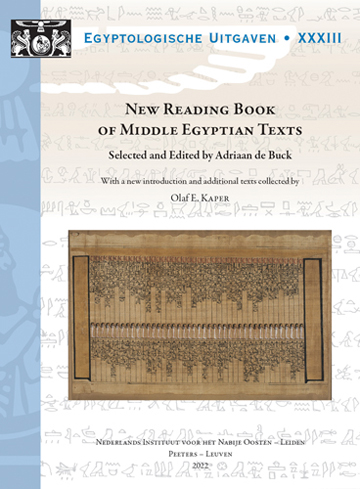 New Reading Book of Middle Egyptian Texts
Selected and Edited by Adriaan de Buck. With a New Introduction and Additional Texts Collected by Olaf E. Kaper
Volume 33
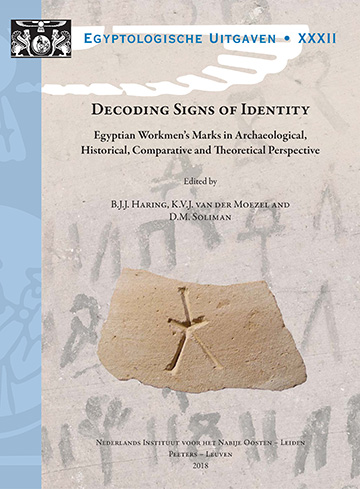 Decoding Signs of Identity
Egyptian Workmen's Marks in Archaeological, Historical, Comparative and Theoretical Perspective. Proceedings of a Conference in Leiden, 13-15 December 2013
Volume 32


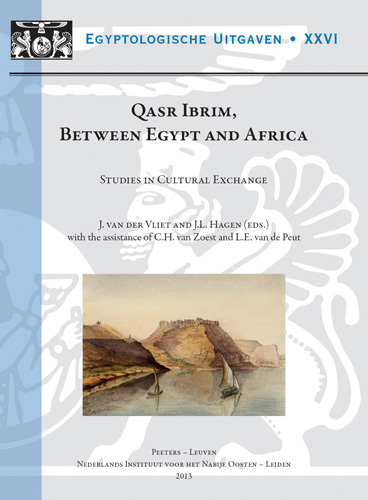 Qasr Ibrim, between Egypt and Africa
Studies in Cultural Exchange (NINO Symposium, Leiden, 11-12 December 2009)
Volume 26
 Interpretations of Sinuhe
Inspired by Two Passages (Proceedings of a Workshop held at Leiden University, 27-29 November 2009)
Volume 27
Similar Books




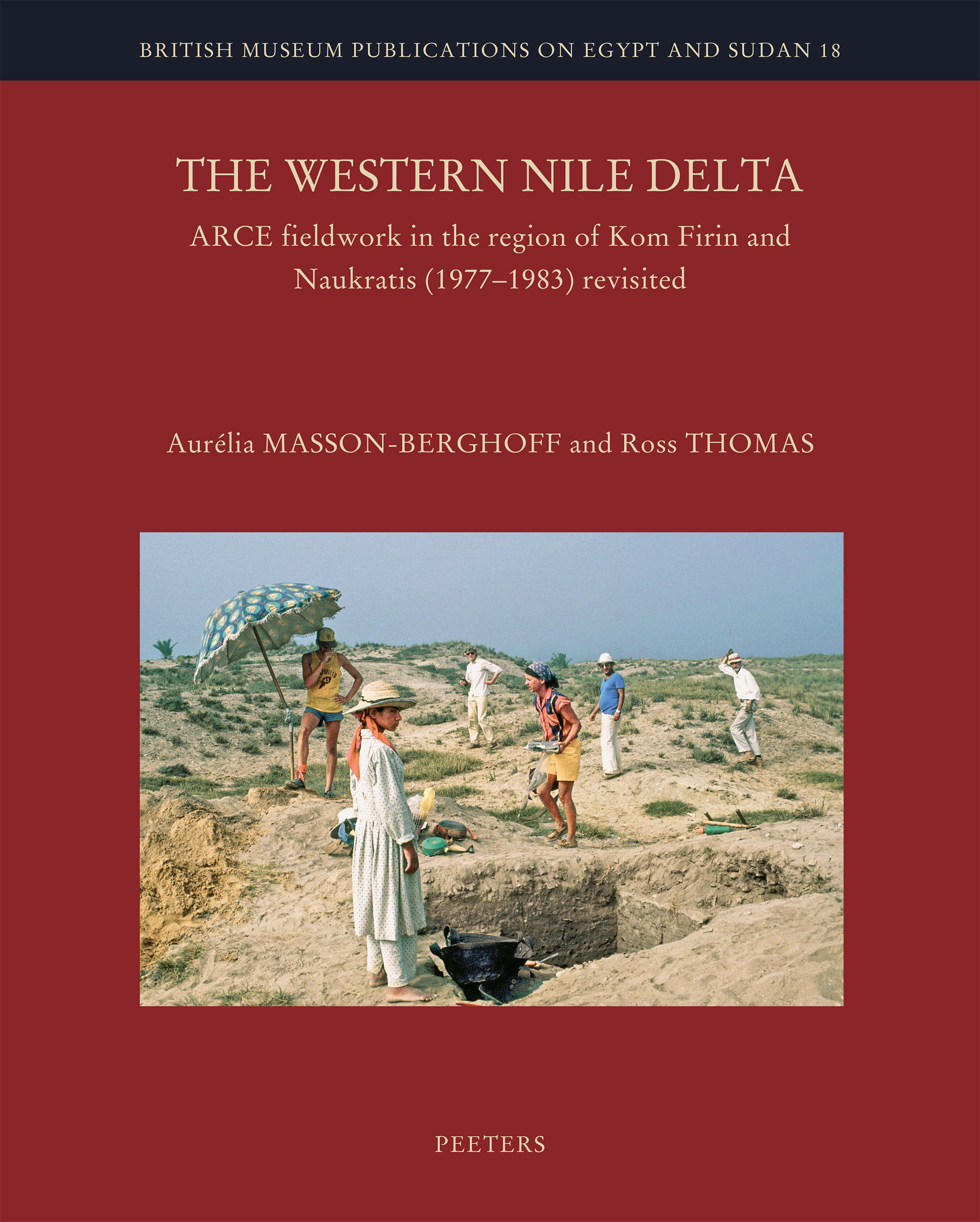 The Western Nile Delta
ARCE Fieldwork in the Region of Kom Firin and Naukratis (1977-1983) Revisited
 Archaeological Discoveries at the Temple of Ramesses II in Abydos
Vol. 2: Old Kingdom Wall, Papyri, Ostraca, and Leather Remains



 The Southern Room of Amun in the Temple of Hatshepsut
Volume 2: Studies on Decoration and Ritual Function
Volume 11

 Die Ägyptenworte im Ezechielbuch
Eine literarhistorische und religionsgeschichtliche Analyse von Ez 29–32
 Du côté de chez Zeus
Fouilles de la Mission archéologique française du désert Oriental à Abû Qurayya (Dios) et Bi’r Bayza (y inclus O.Dios I 1-67)
Volume 98
 La littérature de l’Égypte ancienne. Volume V
Nouvel Empire : XVIIIe dynastie. Eulogies et narrations royales, contes, enseignements et littérature d’idée
 Lehrreiche Literatur
Die didaktische Gestaltung von Plutarchs Quaestiones Graecae und Romanae und Gellius' Noctes Atticae

 Nouvelles perspectives sur le Traité anonyme du Codex Bruce. New Perspectives on the Untitled Treatise of the Bruce Codex
(Colloque international, Québec, Université Laval, 13 avril 2018)
Volume 11


 Ägypten und Levante XXXIV / Egypt and the Levant XXXIV (2024)
Internationale Zeitschrift für ägyptische Archäologie und deren Nachbargebiete / International Journal for Egyptian Archaeology and Related Disciplines

 Ancient Egypt in 50 Discoveries
Highlights from the first century of the Egypt Exploration Society
Volume 8
 Archaeological Discoveries at the Temple of Ramesses II in Abydos
Vol. 1: Magazines, Animal Burials, and Miscellanea
 Building an 18th Dynasty Tomb at Thebes
Construction Records from Mery's Funerary Complex (TT 95) in Context
Volume 4

 Current Research in Egyptology 2024
Proceedings of the Twenty-Fourth Annual Symposium, Jointly Organised by the University of Liverpool, Swansea University, University of Birmingham, University of Oxford, and University of Wales Trinity Saint David, 2–6 September 2024


 From Egypt to the Levant and Beyond
African Individuals and Groupsain Cuneiform Texts from the Late Bronze Age
Volume 133
 Kom al-Ahmer — Kom Wasit III
The Archaeology of Two Ptolemaic Districts in the Western Nile Delta, Egypt