
Vom Status pendens zum Satzsubjekt
Studien zur Topikalisierung in neueren semitischen Sprachen
by Werner Diem

Hardback (Published)
(January 2013)
ISBN: 9783447068291
6.65 x 9.45 inches
Price: $61.00
In stock
In his studies on topicalization in modern Semitic languages – topicalization meaning parts of sentences moved from their original position to a more prominent one for practical reasons in discourse – Werner Diem focuses on the status pendens. Status pendens is the term for the position of a noun extracted from its sentence, placed at the beginning of the sentence and substituted by a personal pronoun at its original spot. The status pendens is a common phenomenon in Semitic languages, and is regarded as a linguistically sophisticated device when used in writing. Given that the status pendens in Semitic languages has already been generally well covered, Diem now takes a closer look at the previously little-noticed phenomenon of the generalization of the status pendens, typical in newer Semitic languages. German text.
English summary: In his studies on topicalization in modern Semitic languages – topicalization meaning parts of sentences moved from their original position to a more prominent one for practical reasons in discourse – Werner Diem focuses on the status pendens. Status pendens is the term for the position of a noun extracted from its sentence, placed at the beginning of the sentence and substituted by a personal pronoun at its original spot. The status pendens is a common phenomenon in Semitic languages, and is regarded as a linguistically sophisticated device when used in writing. Given that the status pendens in Semitic languages has already been generally well covered, Diem now takes a closer look at the previously little-noticed phenomenon of the generalization of the status pendens, typical in newer Semitic languages. German description: In seinen Studien zu Topikalisierung in neueren semitischen Sprachen, also zu Verschiebungen von Satzgliedern aus ihrer Grundsatzstellung an eine diskurspragmatisch hervorgehobene Position, widmet sich Werner Diem dem Status pendens. Unter Status pendens wird dabei die Position eines Nomens verstanden, das aus einem Satz herausgelost, an den Satzanfang gestellt und im Satz an seiner ursprunglichen Stelle von einem Personalpronomen vertreten wird. Im Semitischen ist der Status pendens eine ubliche und bei Verschriftung als hochsprachlich geltende Konstruktion. Wahrend der Status pendens als solcher im Semitischen im allgemeinen gut beschrieben ist, konzentriert sich Diem auf das bisher wenig beachtete Phanomen der Generalisierung von Status pendens-Konstruktionen, das fur neuere semitische Sprachen typisch ist. Die Generalisierung kann von einer Einschrankung der Ausgangskonstruktion uber ihre Markierung als obsolet bis zu ihrem volligen Verschwinden reichen. Aus einer in Hinblick auf Topikalisierung markierten Status pendens-Konstruktion kann auf diese Weise eine unmarkierte Konstruktion werden, die aber die Topikalitat des Status pendens als nunmehr satzbeginnendes Subjekt wahrt. Die Status pendens-Konstruktionen werden in arabischen Dialekten wie dem Kairenischen, aber auch dem neuost-aramaischen ?uroyo nebst verwandten Dialekten und dem neuathiopischen Amharisch illustriert. Alle Belege werden in Transkription und Ubersetzung gegeben, auf die Vorstellung des Befunds folgt jeweils eine diachronische Interpretation und ein Index verborum erschlieat alle behandelten Begriffe.
- By (author) Werner Diem
Similar Books


 Cities through Time
Glimpses into Urbanity and Community in Mediaeval to Modern West Asia and Egypt
Volume 1
 Cuneiform Artefacts from Archaeological Contexts: New Research on Ancient Iraq
Proceedings of a Conference Held at the Bavarian Academy of Sciences and Humanities, July 4–5, 2024
Volume 2
 Des mots aux actes
Traduction épistémique et littéraire. Nouvelles tendances en histoire et didactique
Volume 15


 Global Gulf
Geo-Economic, Geo-Political, and Geo-Technological Transformation in Saudi Arabia, the United Arab Emirates, and Qatar


 Ismail Hakki Bursevi’s translation of and commentary on Fusus al-Hikam By Muhyiddin Ibn ‘Arabi
Volumes 1-4


 Monastic Manuscripts from the Eastern Mediterranean (Sinai, Jerusalem, Antioch)
Production, Use, and Contexts


 Punning in Odd or Elegant Constructions in Jeremiah
The Convergence of Linguistics, Rhetoric, and Textuality in the Hebrew Text of Jeremiah
 Qatar’s Societal Security
Towards the Inclusive National Concept of ‘Baladna’ Identity, Migration and External Threats Since 2017


 The Biblical Tale of Judah and Tamar in Fourteenth-Century Iran
A Judeo-Persian Versified Account by Shāhīn with Scholarly Edition, Annotated Translation and Persian Transliteration
Volume 94, 951
 The Discourse of Rites
Shaping and Reshaping the (Counter-)Priestly Rituals Conducted Outside the Tabernacle



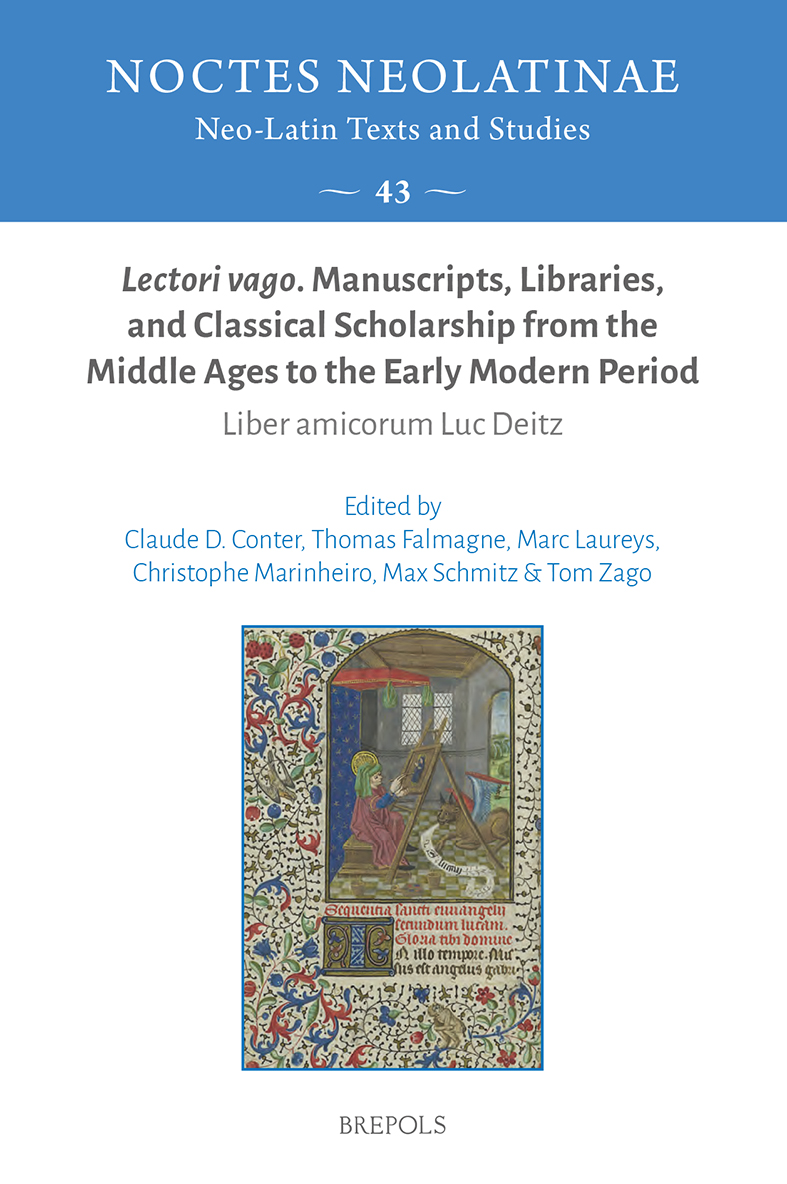 Lectori vago. Manuscripts, Libraries, and Classical Scholarship from the Middle Ages to the Early Modern Period
Liber amicorum Luc Deitz
Volume 43


 »Ein elend-schönes Land«
Gattung und Gedächtnis in Lea Goldbergs hebräischer Literatur. Aus dem Hebräischen von Rainer Wenzel

