Vivre et régner sur les frontières égyptiennes
Le Haut-Ṣaʽīd de la conquête islamique au milieu du Ve/XIe siècle
By (author) Afnen Habibi

Hardback (Published)
(August 2026)
ISBN: 9783963273483
6.73 x 9.49 inches
Price: $119.00
In stock
The objective of this study is to undertake a regional analysis of Upper Ṣaʽīd – situated in the far south of Egypt – during a time of profound political, social, and cultural transformation – from the Islamic conquest to the mid-5th/11th century. The establishment of the new Islamic authority in Egypt marks a significant turning point in the broader history of the Mediterranean. This analysis draws on a diverse corpus of sources, including papyrological documents (Greek and Coptic for the 7th–8th centuries, Arabic from the 8th century onward), funerary stelae, archaeological findings, and literary texts. The investigation begins in the 1st/7th century, a time when Egypt was administratively divided into two geographic entities : Upper and Lower Egypt. The importance of papyri and ostraca is highlighted in the second part of this research, as they constitute the most valuable source for studying the administrative organisation of the territory in question. Using these Greek and Coptic documents from the 1st/7th–2nd/8th centuries and Arabic documents from the 2nd/8th century onwards, I examine the evolution of the administrative hierarchy between the Byzantine legacy, and the new structure adopted by the new power. Papyrological documents and ostraca are also utilized in the third part of this study to analyze the role played by Upper Ṣaʽīd as a hub monopolizing commercial networks. The evidence reveals that, alongside the interactions between state officials, monasteries and merchants, the network was notably open, attracting pilgrims and merchants from diverse regions. These actors were interconnected through sales transactions and services rendered, reflecting a sustained level of economic activity until the 5th/11th century. These routes were controlled by these entities, with caravans and riverboats facilitating the efficient operation of commerce. Thanks to its strategic geographical position, Upper Ṣaʽīd emerged as a commercial centre and an attractive market, guaranteeing its significance for the Muslim authorities based in the capital.
Translittération en arabe littéral
Liste des abréviations
Introduction
La première catégorie
La deuxième catégorie
La troisième catégorie
English abstract of the Introduction
Première partie : Le Haut-Ṣaʽīd et sa documentation
I. L’apport des sources pour l’histoire du Haut-Ṣaʽīd suite à la conquête Islamique
1. Les documents papyrologiques
A. Les documents grecs
B. Les papyrus arabes
C. Les papyrus et ostraca coptes
2. Le corpus épigraphique-archéologique
A. Les inscriptions funéraires
B. L’apport archéologique
3. Les sources littéraires
A. L’historiographie égyptienne
B. L’historiographie chrétienne
C. Les géographes
English abstract of the chapter: The contribution of sources to the history of Upper Ṣaʽīd following the Islamic conquest
II. Le cadre géographique du Haut-Ṣaʽīd et ses frontières avec le territoire Nubien
1. Les régions du Haut-Ṣaʽīd
A. Iḫmīm
B. Isnā
C. Udfū
D. Uswān
2. Les régions périphériques
A. Les Buǧǧa
B. al-Wāḥāt
C. ʽīḏāb
D. Les territoires des mines
3. Les frontières avec la Nubie
A. al-Ǧanādil (Les cataractes)
B. Bilāq
C. al-Qaṣr
D. Le territoire nubien
English abstract of the chapter: The geographical area of Upper Ṣaʽīd and its borders with Nubian territory
III. La conquête musulmane du Haut-Ṣaʽīd au Ier/VIIe siècle
1. La conquête de l’Égypte et l’expédition du Haut-Ṣaʽīd par les musulmans
2. La conquête musulmane de la Nubie et le traité de Baqṭ
3. La relation entre le pouvoir musulman et les Buǧǧa
English abstract of the chapter: The Muslim conquest of Upper Ṣaʽīd in the 1st/7th century
Conclusion de la première partie
Deuxième Partie : L’organisation islamique du Haut-Ṣaʽīd
I. L’organisation administrative du Haut-Ṣaʽīd suite à l’installation musulmane
1. L’organisation territoriale et l’origine des institutions administratives
2. L’organisation administrative sous les musulmans et l’héritage byzantin
A. Les ducs
B. Les topotérètes
C. Les pagarques
D. Les notaires
E. Les scribes et les messagers
3. Le pouvoir judiciaire et l’apparition des Cadis
English abstract of the chapter: The administrative organisation of Upper Ṣaʽīd following the Muslim settlement
II. L’organisation financière
1. Le système fiscal
2. Le système de la perception des taxes
3. Le problème des fugitifs et l’émission des saufs-conduits
English abstract of the chapter: The financial organization
III. L’organisation militaire et le rôle diplomatique joué par le Haut-Ṣaʽīd
1. L’organisation militaire du Haut-Ṣaʽīd
2. Le rôle diplomatique du Haut-Ṣaʽīd
English abstract of the chapter: The military organisation and diplomatic role played by the Upper Ṣa’īd
Conclusion de la deuxième partie
Troisième Partie : Économie et société dans le Haut-Ṣaʽīd (Ier/VIIe–Ve/XIe)
I. Le Haut-Ṣaʽīd un monopole de réseaux commerciaux
1. L’apport documentaire
A. Des échanges entre fonctionnaires
B. Des échanges entre fonctionnaires et églises
C. Des échanges entre commerçants
2. Réseaux en mouvement
A. Les routes de circulation
B. Au rythme des caravanes
C. Les flux maritimes
3. Entre marchandises et paiements
A. Des marchandises alimentaires
B. Des matériaux de construction
C. Des produits textiles et de la poterie
D. Des mines
E. Des esclaves
English abstract of the chapter: The Upper Ṣaʽīd: a monopoly of trade networks
II. Qui sont les habitants ? Professions et savoirs en question
1. Les professions dans les papyrus et ostraca
A. Les artisans
B. Les marins
C. Les commerçants
D. Les ouvriers du textile et les travailleurs des mines
2. Les professions dans les stèles funéraires
3. Le niveau intellectuel d’après les Kutub al-Tarāǧim
English abstract of the chapter: Who are the inhabitants? Professions and knowledge in question
III. Portrait sociologique de la société du Haut-Ṣaʽīd
1. Datation et provenance confirmés
2. Les origines des habitants à partir de leur Nisba
A. L’apport des stèles funéraires
B. L’apport de Kutub al-Tarāǧim
3. Un aperçu de l’identité juridique des habitants du Haut-Ṣaʽīd
A. al-Mawālī
B. Le statut de « Um Walad », « al-ǧāria » ou « al-fatā »
English abstract of the chapter: Sociological portrait of the society of Upper Ṣa’īd
Conclusion de la troisième partie
Conclusion générale
General conclusion
Bibliographie
Index
Aliments
Lieux
Mesures
Personnages
Substances
- By (author) Afnen Habibi
Other Titles in this Series
 Die Grenzorganisation der spatantiken Kyrenaika
Studien zu den Militarreformen unter Anastasius I. (491-518 n. Chr.)
Volume 3
 Ehre und Inklusion
Versorgungsleistungen, Solidaritat und Euergetismus im privaten Kultvereinswesen des hellenistischen Athen
Volume 4
 Trade and Seafaring in Antiquity
Red Sea - Persian Gulf - Indian Ocean. Proceedings of the 1st Muziris Workshop, Trier, 28th May 2021
Volume 1
Similar Books





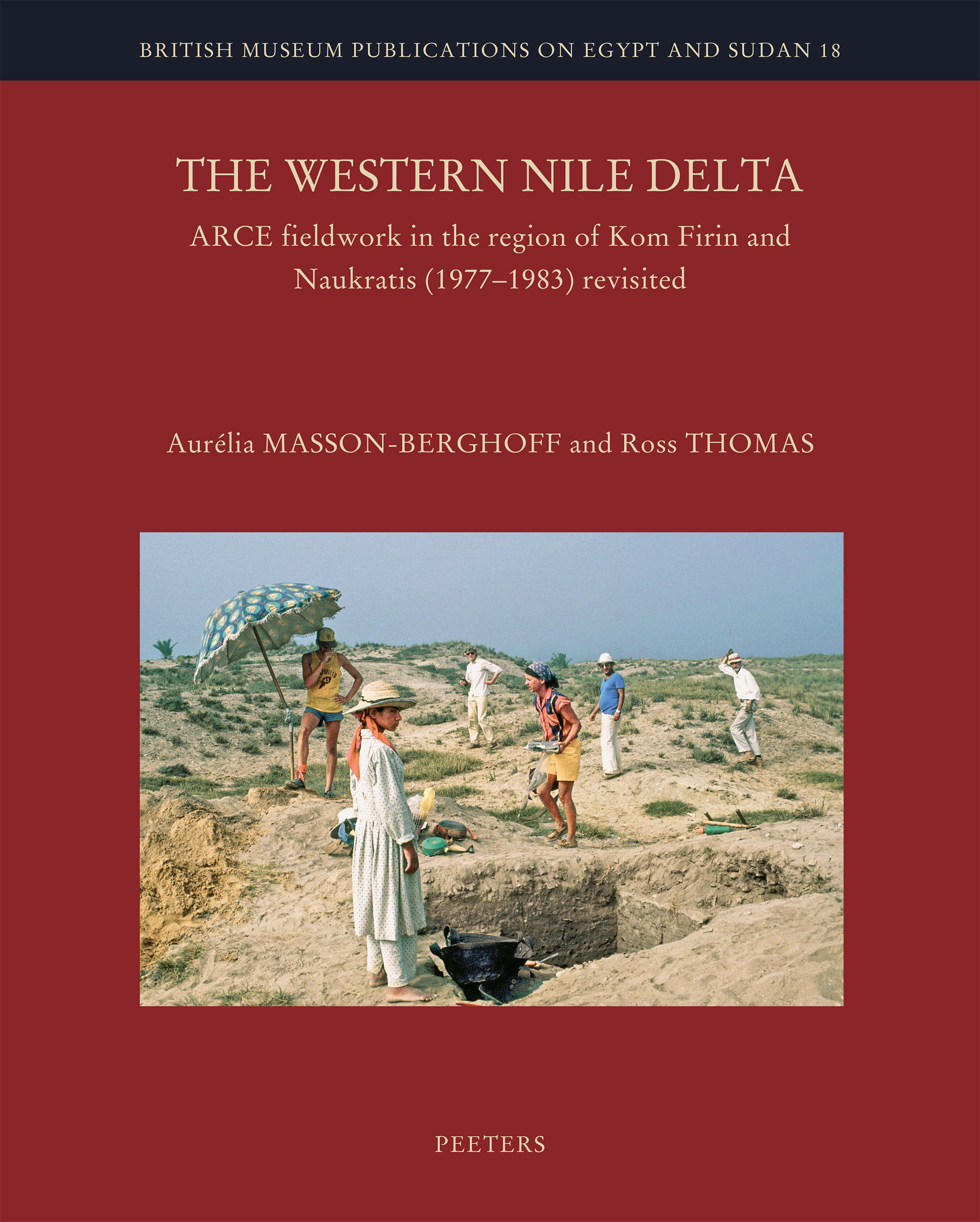 The Western Nile Delta
ARCE Fieldwork in the Region of Kom Firin and Naukratis (1977-1983) Revisited
 Archaeological Discoveries at the Temple of Ramesses II in Abydos
Vol. 2: Old Kingdom Wall, Papyri, Ostraca, and Leather Remains



 The Southern Room of Amun in the Temple of Hatshepsut
Volume 2: Studies on Decoration and Ritual Function
Volume 11

 Die Ägyptenworte im Ezechielbuch
Eine literarhistorische und religionsgeschichtliche Analyse von Ez 29–32
 Du côté de chez Zeus
Fouilles de la Mission archéologique française du désert Oriental à Abû Qurayya (Dios) et Bi’r Bayza (y inclus O.Dios I 1-67)
Volume 98
 La littérature de l’Égypte ancienne. Volume V
Nouvel Empire : XVIIIe dynastie. Eulogies et narrations royales, contes, enseignements et littérature d’idée
 Lehrreiche Literatur
Die didaktische Gestaltung von Plutarchs Quaestiones Graecae und Romanae und Gellius' Noctes Atticae

 Nouvelles perspectives sur le Traité anonyme du Codex Bruce. New Perspectives on the Untitled Treatise of the Bruce Codex
(Colloque international, Québec, Université Laval, 13 avril 2018)
Volume 11


 Ägypten und Levante XXXIV / Egypt and the Levant XXXIV (2024)
Internationale Zeitschrift für ägyptische Archäologie und deren Nachbargebiete / International Journal for Egyptian Archaeology and Related Disciplines

 Ancient Egypt in 50 Discoveries
Highlights from the first century of the Egypt Exploration Society
Volume 8
 Archaeological Discoveries at the Temple of Ramesses II in Abydos
Vol. 1: Magazines, Animal Burials, and Miscellanea
 Building an 18th Dynasty Tomb at Thebes
Construction Records from Mery's Funerary Complex (TT 95) in Context
Volume 4

 Current Research in Egyptology 2024
Proceedings of the Twenty-Fourth Annual Symposium, Jointly Organised by the University of Liverpool, Swansea University, University of Birmingham, University of Oxford, and University of Wales Trinity Saint David, 2–6 September 2024


 From Egypt to the Levant and Beyond
African Individuals and Groupsain Cuneiform Texts from the Late Bronze Age
Volume 133