
Vegetationsanalytische Untersuchungen an Halophytenfluren Zentralanatoliens (Türkei)
By (author) Harald Kürschner

Paperback (Published)
(January 1983)
ISBN: 9783882261622
6.69 x 9.49 inches
Price: $53.00
In stock
The Near and Middle East, long too poor and unimportant to be other than pawns in the power politics of this century, no longer cries out for recognition. In the past few years we have become painfully aware of the economic clout of the Near and Middle East and the political muscle connected to it. And yet our knowledge of these countries and the complex forces which determine their character has lagged woefully behind the attention we now lavish on them. The familiar stereotypes, the bazars, coffee houses, camel caravans and bedouin tents, are no longer valid. In their place we see industrial complexes, reclamation projects, irrigation systems and tourism. The old ways are being sifted through the newly awakened nationalism and the realities of contemporary civilization. Some are discarded while others come through the process unscathed to be nurtured and fostered in their own unique ways. To help supply needed information about this area which now commands our attention, scholars of various faculties at the University of Tubingen decided to pool their talents and diverse disciplines. Thus the idea was born to draft an atlas of the Near and Middle East wherein the latest research and cartographic techniques would be employed to present in a concise and lucid form the results of their separate efforts. The Tubinger Atlas des Vorderen Orients (TAVO) as the project came to be called will cover the countries from Turkey to Yemen, from Afghanistan to the Sudan, and the countries in between, i. e. Iran, Iraq, Syria, Lebanon, Israel, Jordan, the Gulf States,Saudi Arabia,Egypt and in certain cases Ethiopia and individual Maghreb states. In order to facilitate the ordered presentation of the contemporary and historical material,two parts, A and B, are planned. Part A covering the contemporary situation will be divided into 10 sections, e. g. orohydrography, geomorphology, climate, flora, demography, commerce and communications. Part B, dedicated to the historical dimension of the Near and Middle East, has been intentionally designed to control diachronistic depth (from the paleolithic age to the present) without losing synchronistic breadth. Here, as in Part A, 10 sections are planned, arranged however chranologically rather than thematically, wherein each section will cover one of the main divisions of Near Eastern history.
The Near and Middle East, long too poor and unimportant to be other than pawns in the power politics of this century, no longer cries out for recognition. In the past few years we have become painfully aware of the economic clout of the Near and Middle East and the political muscle connected to it. And yet our knowledge of these countries and the complex forces which determine their character has lagged woefully behind the attention we now lavish on them. The familiar stereotypes, the bazars, coffee houses, camel caravans and bedouin tents, are no longer valid. In their place we see industrial complexes, reclamation projects, irrigation systems and tourism. The old ways are being sifted through the newly awakened nationalism and the realities of contemporary civilization. Some are discarded while others come through the process unscathed to be nurtured and fostered in their own unique ways. To help supply needed information about this area which now commands our attention, scholars of various faculties at the University of Tubingen decided to pool their talents and diverse disciplines. Thus the idea was born to draft an atlas of the Near and Middle East wherein the latest research and cartographic techniques would be employed to present in a concise and lucid form the results of their separate efforts. The Tubinger Atlas des Vorderen Orients (TAVO) as the project came to be called will cover the countries from Turkey to Yemen, from Afghanistan to the Sudan, and the countries in between, i. e. Iran, Iraq, Syria, Lebanon, Israel, Jordan, the Gulf States,Saudi Arabia,Egypt and in certain cases Ethiopia and individual Maghreb states. In order to facilitate the ordered presentation of the contemporary and historical material,two parts, A and B, are planned. Part A covering the contemporary situation will be divided into 10 sections, e. g. orohydrography, geomorphology, climate, flora, demography, commerce and communications. Part B, dedicated to the historical dimension of the Near and Middle East, has been intentionally designed to control diachronistic depth (from the paleolithic age to the present) without losing synchronistic breadth. Here, as in Part A, 10 sections are planned, arranged however chranologically rather than thematically, wherein each section will cover one of the main divisions of Near Eastern history.
- By (author) Harald Kürschner
Other Titles in this Series


 Die antiken Synagogen in Israel
Die jüdischen Synagogen, Lehrhäuser und Gerichtshöfe (1); Die samaritischen Synagogen (2)
 Städte und Stadtwachstum im Vorderen Orient
Vergleichende Fallstudie zur regionalen Differenzierung jüngerer städtischer Entwicklungsprozesse im orientalisch-islamischen Kulturkreis


 Répertoire Géographique des Textes Cunéiformes
Die Orts- und Gewässernamen der mittelbabylonischen und mittelassyrischen Zeit


 Répertoire Géographique des Textes Cunéiformes
Die Orts- und Gewässernamen der Zeit der 3. Dynastie von Ur

 Das christlich-koptische Ägypten in arabischer Zeit (Teil 1: A–C)
Eine Sammlung christlicher Stätten in Ägypten in arabischer Zeit, unter Ausschluß von Alexandria, Kairo, des Apa-Mena-Klosters, der Sketis und der Sinai-Region


 Das Epipaläolithikum des Vorderen Orients
1: Das Epipaläolithikum und der Übergang zum Neolithikum in der Levante und in Ägypten. 2: Das Epipaläolithikum und der Übergang zum Neolithikum zwischen Taurus und Hindukusch. Zur Ökologie des Epipaläolithikums


 Horasan zur Timuridenzeit nach dem Tarih-e Hafez-e Abru (verf. 817–823 h.) des Nurallah ’Abdallah b. Lutfallah al-Hvafi genannt Hafez-e Abru
2. Übersetzung und Ortsnamenkommentar


Similar Books



 Connecting the Dots: Counting, Writing, and the Beginnings of Civilization
The Secret Lives of Clay Tokens: A Memoir


 Exploring Gender Dynamics across the Ancient Near East
Collected Essays of Gender and Methodology in the Ancient Near East (GeMANE) 4 and 5
Volume 7


 Ḫattušaš utnē išḫameški
Hittite and Other Ancient Near Eastern Studies Presented to Piotr Taracha on the Occasion of His 65th Birthday


 New Research on Old Collections in Southwest Asian Archaeology
Proceedings of the Workshop Held at the British Museum, London, 31 July – 2 August, 2023
 Old Aramaic Inscriptions and their Contexts
An Epigraphic, Archaeological, and Historical Synthesis
Volume 63

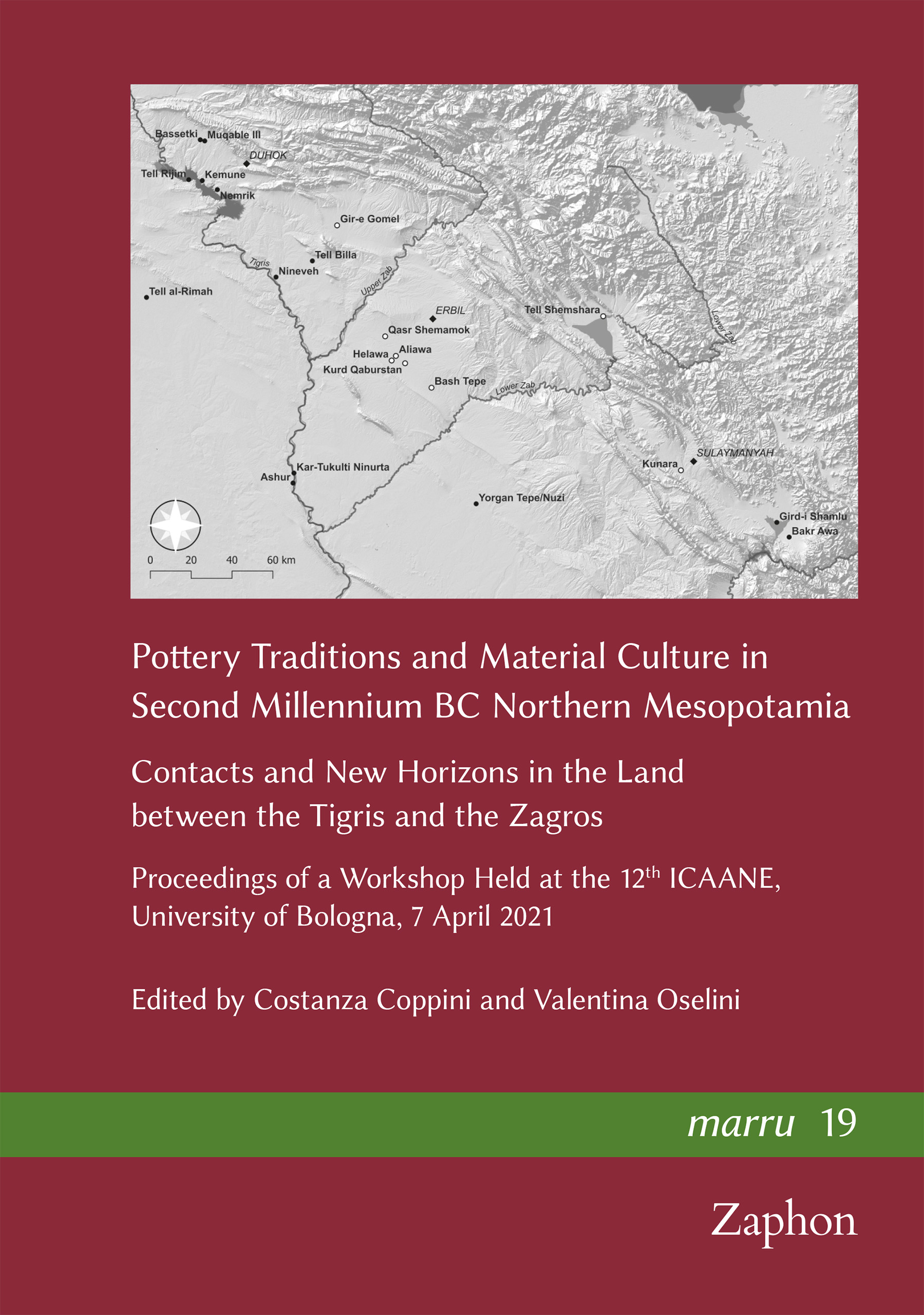 Pottery Traditions and Material Culture in Second Millennium BC Northern Mesopotamia
Contacts and New Horizons in the Land between the Tigris and the Zagros. Proceedings of a Workshop Held at the 12th ICAANE, University of Bologna, 7 April 2021
Volume 19
 Punning in Odd or Elegant Constructions in Jeremiah
The Convergence of Linguistics, Rhetoric, and Textuality in the Hebrew Text of Jeremiah
 Shame in the Worlds of the Hebrew Bible and Akkadian Texts
A Linguistic Study and Its Implications
Volume 33
 Telling Contexts
Archaeological and Textual Studies in Honor of Elizabeth Bloch-Smith and Mark S. Smith
 The Body
Lived, Cultured, Adorned: Essays on Dress and the Body in the Bible and Ancient Near East in Honor of Nili S. Fox
 The Discourse of Rites
Shaping and Reshaping the (Counter-)Priestly Rituals Conducted Outside the Tabernacle
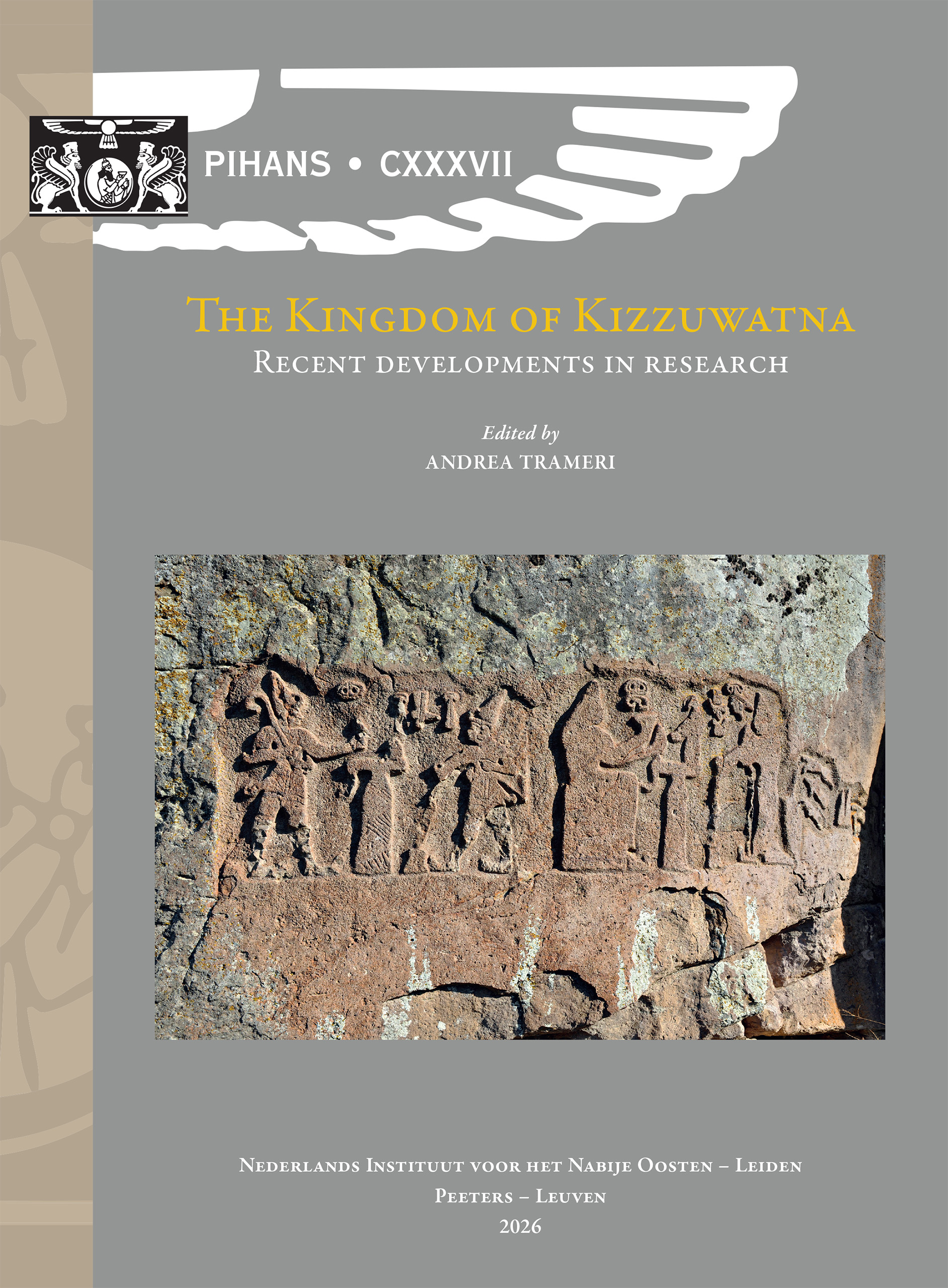 The Kingdom of Kizzuwatna: Recent Developments in Research
Proceedings of the Third NINO Postdoctoral Research Fellow Annual Conference, Leiden, 23rd-25th March 2023
Volume 137


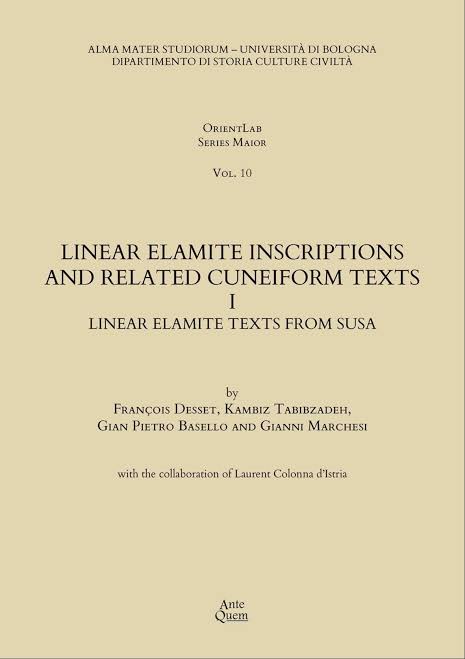
 Die Entwicklung erdbebensicherer Bautechniken in der Frühen und Mittleren Eisenzeit in Ostanatolien
Volume 11
 Die JHWH-Religion und die Vorstellung göttlicher Gesetzgebung
Überschneidungen zwischen der Rechtsentwicklung und der Sphäre der Religion in der Geschichte des antiken Israel und Juda

 Kultur – Kontakt – Kultur
Beiträge anlässlich der 66. Rencontre Assyriologique Internationale in Frankfurt/Main und Mainz, 25.–29. Juli 2022
Volume 35
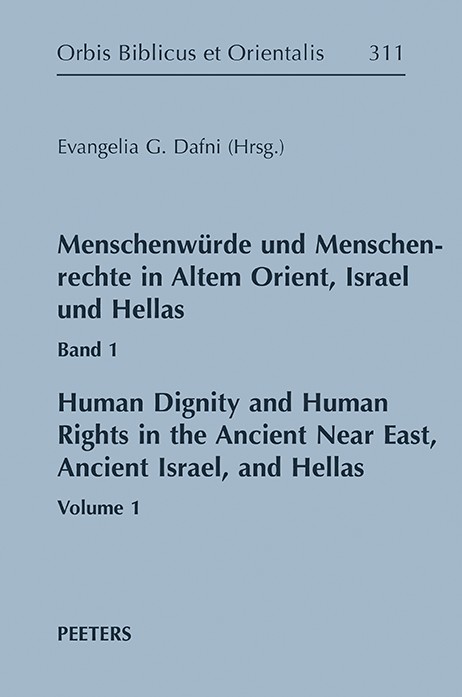 Menschenwürde und Menschenrechte im Altem Orient, Israel und Hellas. Band 1
Human Dignity and Human Rights in the Ancient Near East, Ancient Israel, and Hellas. Volume 1
Volume 311
 Ptolemaiou Procheiroi Kanones. Les «Tables Faciles» de Ptolemée. Volume 2a: Tables A3-A13
Édition critique, Transcription
 Sprachwissenschaftliche und kulturhistorische Reflexionen
Festschrift zu Ehren von Jörg Klinger
Volume 31

 Vom Mädchen zur Frau
Weihgaben als Indikatoren rituellen und kommunikativen Handelns von Frauen in griechischen Kulten
Volume 188
 Von der Symmachie zur Arché und zurück
Die Entwicklungsphasen des Ersten Attischen Seebundes (478/7–404 v. Chr.)
