
Understanding Chipped Stone Tools
by Brian Hayden
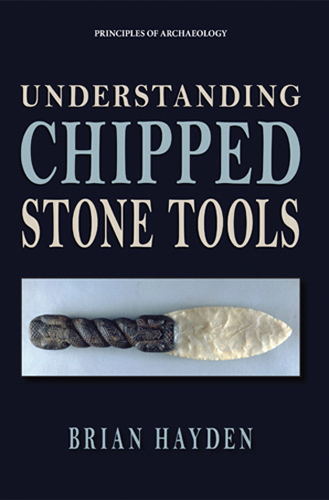
This is a unique and engaging book on prehistoric stone tools. It advocates an experiential approach in which analysts try to understand stone tool designs from the users’ perspectives, and employs a universal logic of designing tools to solve practical problems and evaluating various possible solutions. However, to do so it is also necessary to understand how stone can be mechanically modified to serve specific functions. The author enlists a rich array of ethnographic observations and considerable background as a flintknapper to show the basic ways in which stones can be flaked and modified and what these characteristics can reveal about prehistoric problem-solving strategies and design constraints. This is an invaluable primer for anyone contemplating the study of prehistoric stone tools.”
This is a unique and engaging book on prehistoric stone tools. It advocates an experiential approach in which analysts try to understand stone tool designs from the users’ perspectives, and employs a universal logic of designing tools to solve practical problems and evaluating various possible solutions. However, to do so it is also necessary to understand how stone can be mechanically modified to serve specific functions. The author enlists a rich array of ethnographic observations and considerable background as a flintknapper to show the basic ways in which stones can be flaked and modified and what these characteristics can reveal about prehistoric problem-solving strategies and design constraints. This is an invaluable primer for anyone contemplating the study of prehistoric stone tools.”
1 - Perspectives on Lithics Perspectives: Old, New, and From the Bottom Up What Do You Want To Find Out? Experiential and Experimental Archaeology My Background Organization of This Book Exercise Additional Readings 2 - Design Theory Steps in Design Analysis Design Theory in Practice Constraints The Importance of Quantity Prestige Technologies Exercise Additional Readings 3 - Design Theory as Applied to Lithic Analysis End Scrapers: A Specially Designed Tool Type The Problem Step 1: Dehairing and Removing the Epidermis Step 2: Defleshing Step 3: Removing the Inner Membrane Step 4: Stretching and Working the Hide Step 5: Abrading the Hide Design Lessons from Making Buckskin Deconstructing End Scrapers: The Design Factors Material Constraints Task Constraints Size and Kinematic Constraints Skill Constraints Technological Constraints Quantity Size Matters Designing Hide-Scraping Tools Blades and Reduction Strategies Discussion Exercise Additional Readings 4 - Tier 1: Analyzing Stone Tools Expedient, Extemporaneous, and Opportunistic Tool Use The Nuts and Bolts of Analyzing Stone Tools: Tools and Debitage An Artifact or Not an Artifact? Flake Tools: The Six Sides of a Flake Types of Edge Modification Other Sources of Edge Modification Unmodified Tools Summary Exercise Additional Readings 5 - Tier 2: Basic Reduction Strategies and Specialized Types Specialized Tools: Projectile Points Spears or Arrows? Consequences Reduction Strategies Hard Hammer Block Core Reduction Blade Reduction Bipolar Reduction Bifacial Reduction Levallois Reduction Pressure Reduction Summary Exercise Additional Readings 6 - Tier 3: Design Considerations Reliability Maintainability Versatility and Multifunctionality Flexibility Diversity Other Design Considerations Commentary Identifying Tasks and Strategies Types Traditional Typologies Contemporary Typologies Exercise Additional Readings 7 - Changes Raw Materials Geological Nomenclature versus Prehistoric Choices Resharpening Strategies Over Time The Oldawan Acheulian Handaxes and Mousterian Levallois Flakes Upper Paleolithic Blades and Bifaces Mesolithic Microliths Ground Stone Axes Additional Readings 8 - Total Assemblages Profile of the Keatley Creek Site The Lithic Assemblage at Keatley Creek The Block Core Strategy Bifacial Reduction Bipolar Reduction Pressure Reduction Grinding Reduction 9 - Precepts and Prospects Getting Oriented Prospects Research Constraints Additional Reading Sources for Images Glossary
- By (author) Brian Hayden
"Written in an informal and engaging style that makes the book an easy read, especially for those who may not be familiar with chipped stone tool analysis. Those starting their careers with an interest in lithic artifacts will likely find the book very useful. For those who have a background in chipped stone tool analysis, the book will likely provide a somewhat different perspective on lithic analysis. In either case, I can highly recommend Understanding Chipped Stone Tools." Bradbury, Andrew P., North American Archaeologist, 2023
—
"The author draws on his lifelong experimentation with lithic materials, ethnographic investigations, and conversations with knappers and archaeologists in compiling this comprehensive primer. Using design theory as the theoretical fulcrum, Hayden provides practical, down-to-earth advice about how to tackle lithic assemblages." Deborah Olausson, Lund University
—
"In this excellent primer, Hayden uses his extensive background in ethnographic and experimental work to introduce students to stone tools and offers them a framework for how to think about with stone tool technology. I wish I could have written this book!" Robert L. Kelly, University of Wyoming
—
"A sophisticated introduction to basic lithic analysis, written in an informal and engaging style. Employing a design theory perspective and stressing a need for active experimentation, it views lithic artifacts as a solution to substantive problems and sociopolitical realities. An excellent lithics primer." Christopher J. Ellis, University of Western Ontaio
—
"Multiple approaches in different specific areas help the readers to comprehend the integrity of the lithic sstudies. Additionally, Hayden also shares his personal experiences in this field with students. . . . He avoids using complicated sentence structures. Non-native English speakers can deal with this study readily." Yesilova, Gorkem Cenk, Lithic Technology, September 16, 2022
—
"This volume brings a valuable and deep perspective which benefits everyone from the student to the experienced archaeologist. Anyone with an interest in stone tools, from field or experimental archaeologists to flintknappers and avocational archaeologists, will find something to broaden their perspectives inUnderstanding Chipped Stone Tools." Anderson, Arthur W., Journal canadien darcheologie 46 (2022)
—
"Brian Hayden's book is informative and serves its purpose well. As a reader, I was offered enjoyable insights into his work on stone tools and provided with a good introduction to Design Theory and its application in lithic analysis." Hogberg, Anders, Antiquity, 12 December 2022
—
Other Titles in this Series




Similar Books


 Archaeological Excavations at Irmis Rka: An Investigation of a Multi-Layered Settlement in Southwest Georgia
Results from the 2020 Season: Early Bronze Age to Medieval Occupations


 Catuvellaunia and Rome: Economic and Political Relations during the Final Decades Pre-conquest
The Role of Grain from Southeastern Britain and Its Potential for Maintenance of the Roman Military along the Frontier on the Rhine
 Colour Concept “Secoli bui” a colori
Codici cromatici e architetture dipinte nell’età tardoantica e medievale

 Crossing Disciplines in the Study of Archaeology and Prehistoric Art: Insights from the Sahara and Mediterranean Africa
Proceedings of the XX UISPP World Congress (5–9 September 2023, Timișoara, Romania) Volume / Session 18
 Cuneiform Artefacts from Archaeological Contexts: New Research on Ancient Iraq
Proceedings of a Conference Held at the Bavarian Academy of Sciences and Humanities, July 4–5, 2024
Volume 2

 ENTANGLED AFRICA
Intra-African Relations Between Rain Forest and Mediterranean from Around 4,000 BCE to 1,500 CE


 Exploring Prehistoric Pottery in Japan
A Study of Organic Inclusions, Adhering Materials, and Impressions of Woven Items

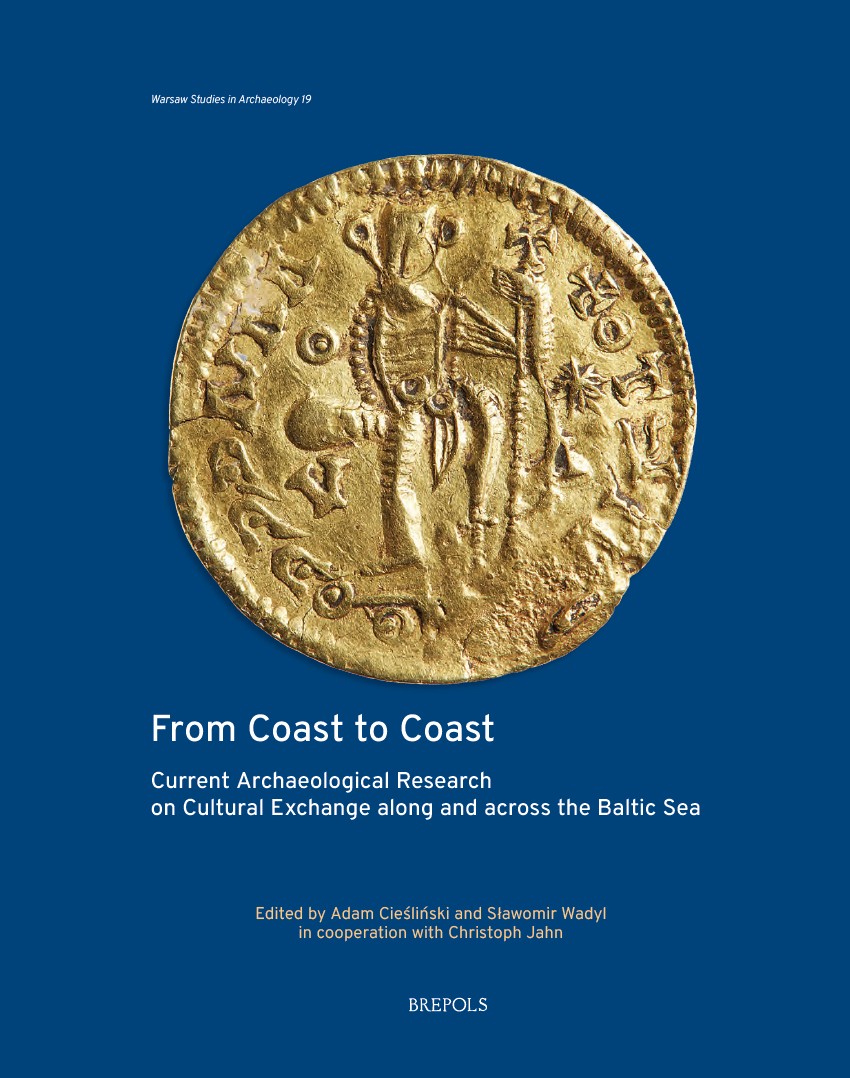 From Coast to Coast
Current Archaeological Research on Cultural Exchange along and across the Baltic Sea
Volume 19
 Frontiers of the Roman Empire: The Frontier of the Roman Province of Raetia
Grenzen des Römischen Reiches: Die Grenze der Römischen Provinz Raetien
 Gold, Silver and Glass: Power Networks, Cultural Identities, Technology Transfers and Agency across the Old World (7th Century BC – 1st Century AD)
Proceedings of a Conference Held at the British Museum, 16–18 June 2023
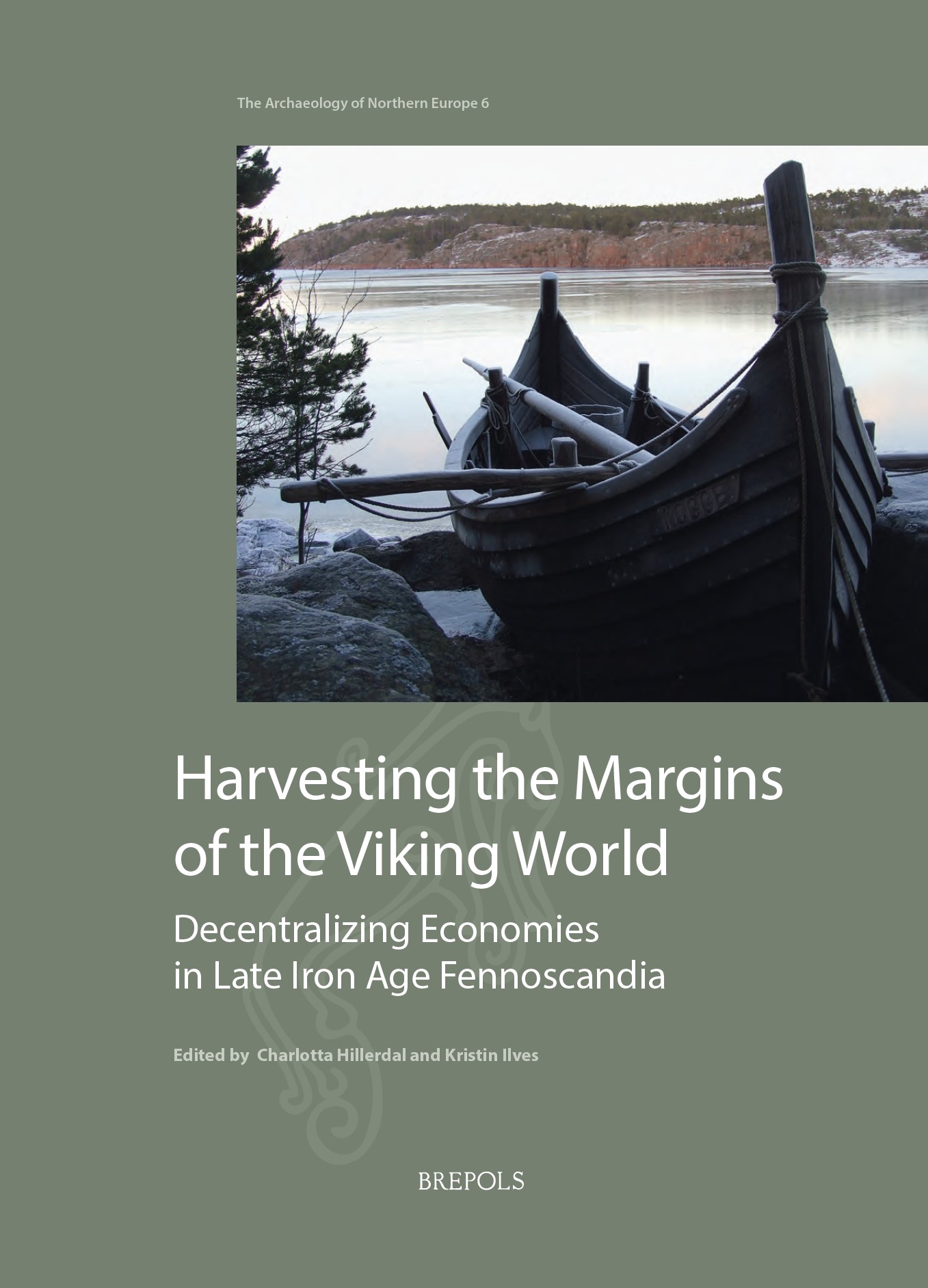 Harvesting the Margins of the Viking World
Decentralizing Economies in Late Iron Age Fennoscandia
Volume 6
 Images of Anonymous Women
A Semiotic Approach to Image-Text Relations in Interpretation of Ancient Near Eastern Art and the Hebrew Bible
Volume 310


 Making and Meaning in the Bronze and Iron Ages
Chronology, Landscapes and Societies across Europe. Proceedings from the METALAGES2024 Colloquium (Florence, 23 October 2024)

 Medieval Yeghegis, Armenia
History, Archaeology, Society. Local Multiplicities and Global Connections of a Rural Centre on the Silk Road(s)


 Mobility and Archaeogenetics in Central Asia
People – Goods – Ideas. 3rd International Conference on Central Asian Archaeology in Bern, 11th–13th January 2024
Volume 24


 Offa’s Dyke Journal: Volume 7 for 2025
A Journal for Linear Monuments, Frontiers and Borderlands Research
