Tugend und Gemeinwohl
Grundzuge hermeneutischen Denkens in der postklassischen koranischen Ethik am Beispiel der maqasid-Theorie von as-satibi
by Mohammed Nekroumi

Paperback (Published)
(February 2018)
ISBN: 9783447109581
Price: $75.00
On back order
Since the beginning of the twentieth century, the modern debate about the meaning and intention of the term sari’a has been accompanied by the question of the permanence, universality, and changeability of Qur’anic moral normativity. While a variety of unsystematic popular scientific explanatory approaches dealt with the supposed crisis of Islamic morality, the theological-academic discourse on the underlying contemporary issues of Islamic ethics remained largely underdeveloped. To this day, there are hardly any studies that deal with the history of ideas and epistemology in terms of the depth of meaning of Islamic ethical concepts and the transformation of the normative concept of sari’a during the different epochs of Islamic intellectual history. Based on an epistemological examination of the ethical theory of the so-called maq?sid, which focuses on the goals of the sari’a and the intentions of the legislator, Mohammed Nekroumi undertakes a reconstruction attempt to determine the relationship between Islamic morality and ethical questions of modernity such as conscience, freedom, responsibility, virtue and bliss.
Die moderne Debatte um Bedeutung und Anliegen des Begriffs sari’a ging seit Beginn des 20. Jahrhundert mit der Frage nach Bestandigkeit, Allgemeingultigkeit und Wandelbarkeit koranischer Moralnormativitat einher. Wahrend sich eine Vielzahl unsystematischer popularwissenschaftlicher Erklarungsansatze mit der vermeintlichen Krise islamischer Moralitat beschaftigten, blieb der theologisch-akademische Diskurs zu den grundliegenden zeitgenossischen Fragen islamischer Ethik weitgehend unterentwickelt, mit der Begrundung, er sei angesichts der Bildungsferne des muslimischen Empfangers nicht kommunikabel. Und bis heute findet man kaum Studien, die sich ideengeschichtlich und epistemologisch mit Blick auf die ganze Bedeutungstiefe islamisch-ethischer Begriffe und den Wandel des normativen Konzepts der sari’a in den unterschiedlichen Epochen der islamischen Geistesgeschichte befassen. Ausgehend von einer erkenntnistheoretischen Auseinandersetzung mit der Ethiktheorie der sogenannten maqasid, die die Ziele der sari’a bzw. die Intentionen des Gesetzgebers zum Gegenstand hat, unternimmt Mohammed Nekroumi einen Rekonstruktionsversuch zur Verhaltnisbestimmung zwischen islamischer Moralitat und Ethikfragen der Moderne wie Gewissen, Freiheit, Verantwortlichkeit, Tugend oder Gluckseligkeit. Im Mittelpunkt der theologisch-hermeneutischen Reflexion steht dabei das Werk des andalusischen Universalgelehrten Abu Ishaq Ibrahim ibn Musa as-satibi (gest. 790/1388), das die Blutezeit und die epistemologische Reife der islamischen theologischen Ethik kennzeichnet.
- By (author) Mohammed Nekroumi
Other Titles in this Series
 Das Nomen im Arabischen
Eine kritisch-analytische Gegenuberstellung der Analyse bei den Nationalgrammatikern bis as-Suyuti (gest. 911 n. H.)
Volume 26

 The Creation of Philosophical Tradition
Biography and the Reception of Avicenna's Philosophy from the Eleventh to the Fourteenth Century A.D.
Volume 21

 Philologische Kommentarkulturen
Abu 'Ubaidas Magaz al-Qur'an im Licht spatantiken Exegesewissens
Volume 23
 Christen und Muslime im Andalus
Andalusische Christen und ihre Literatur nach religionspolemischen Texten des zehnten bis zwolften Jahrhunderts
Volume 19


 Latin Translation of the Qur’an (1518/1621)
Commissioned by Egidio da Viterbo. Critical Edition and Case Study
Volume 24
 Zwischen Islamismus und Eurozentrismus
Mosaiksteine zu einem Bild arabisch-islamischen Erbes
Volume 18
 Das Bild der Liebe im Werk des Dichters Gamil ibn Ma’mar
Eine Studie zur 'udritischen Lyrik in der arabischen Literatur des spaten 7. Jahrhunderts
Volume 13


 Hellas im Islam
Interdisziplinare Studien zur Ikonographie, Wissenschaft und Religionsgeschichte
Volume 6
Similar Books
 Cities through Time
Glimpses into Urbanity and Community in Mediaeval to Modern West Asia and Egypt
Volume 1

 Islamic Rituals Beyond the Mosque
Historical Evolution of Prayer and Devotion in Physical Space and Cyberspace
 Ismail Hakki Bursevi’s translation of and commentary on Fusus al-Hikam By Muhyiddin Ibn ‘Arabi
Volumes 1-4

 Qatar’s Societal Security
Towards the Inclusive National Concept of ‘Baladna’ Identity, Migration and External Threats Since 2017


 Beiträge zur Islamischen Kunst und Archäologie
The Arts and Archaeology of Funerary Cultures in Islam
Volume 10.0

 Explorations in Islamic Archaeology
Material Culture, Settlements, and Landscapes from the Mediterranean to Western Asia
Volume 7


 Occasionalism Revisited
New Essays from the Islamic and Western Philosophical Traditions (2nd ed.)
Volume 2
 Proceedings of the Seminar for Arabian Studies Volume 54 2025
Papers from the fifty-seventh meeting of the Seminar for Arabian Studies held at the Institut national d’histoire de l’art, Paris, 27–29 June 2024
 The Logic of al-Fanari
A Study and Annotated Translation of al-Fanari's Commentary on the Isaghuji
Volume 3


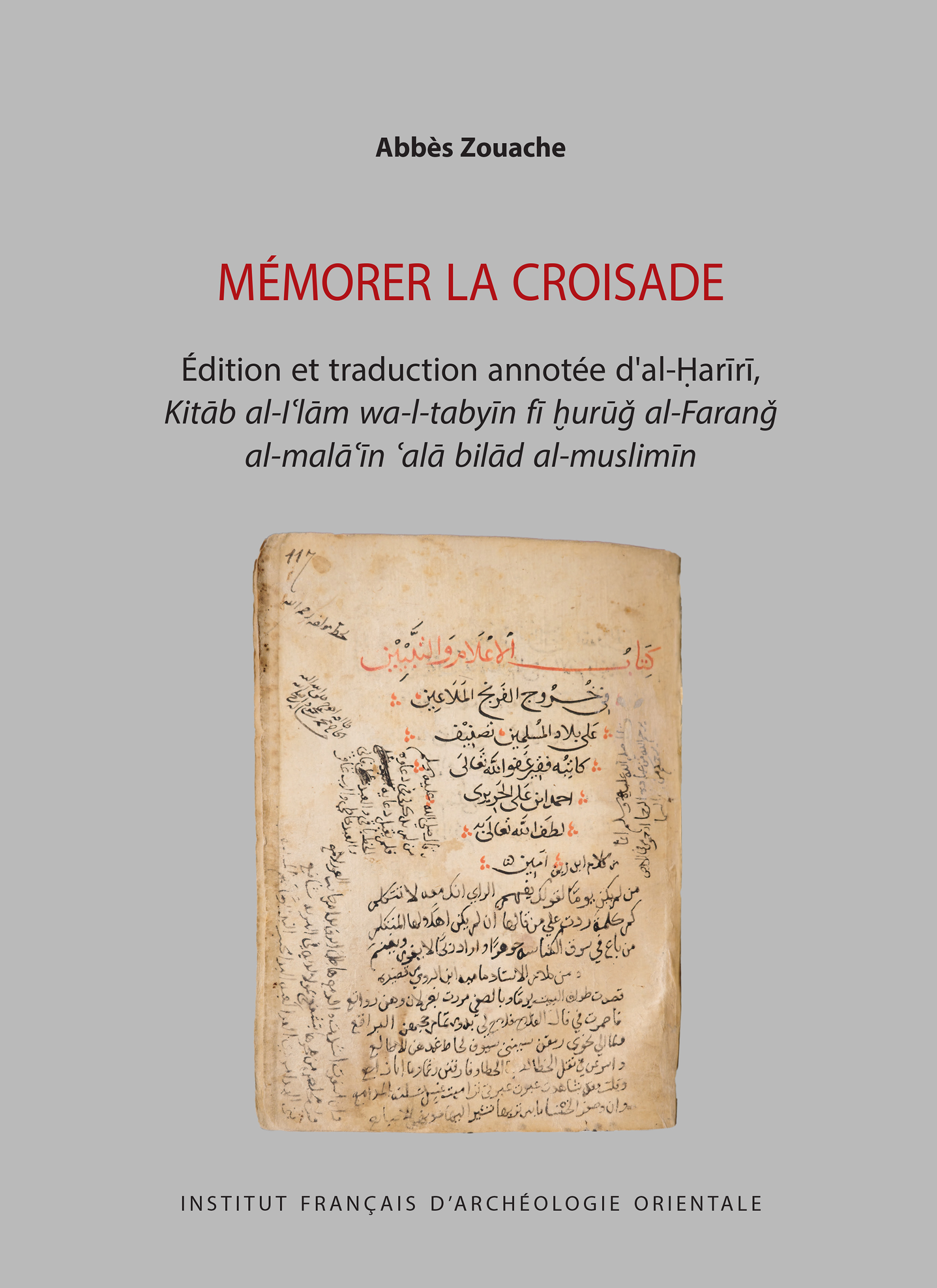 Memorer la croisade
Edition et traduction annotee dal-Hariri, Kitab al-I'lam wa-l-tabyin fi hurug al-Farang al-mala'in 'ala bilad al-muslimin
Volume 64


 Freedom Revisited
A Comparative Theological Approach to the Question of Free Will in Islam
Volume 40


 History of the Oil Industry in the Gulf and the People Who Made it Happen, 1934-1966
Based on Original Documents of Abu Dhabi Petroleum Company
 Navigating Language in the Early Islamic World
Multilingualism and Language Change in the First Centuries of Islam
Volume 2
 Proceedings of the Seminar for Arabian Studies Volume 53 2024
Papers from the fifty-sixth meeting of the Seminar for Arabian Studies held in Aarhus 4–6 August 2023


 The Trucial Coast Political Reports 1963-1966
From Pearls to Oil - at Last. With an Index for vols 1-5
 Zoroastrian Hermeneutics in Late Antiquity
Commentary on the 'Sudgar Nask' of 'Denkard' Book 9
Volume 32