
Philologische Kommentarkulturen
Abu 'Ubaidas Magaz al-Qur'an im Licht spatantiken Exegesewissens
by Nora Schmidt

English summary: Abu Ubaida (d. 825), one of the founders of Arabic philology, created one of the earliest commentaries on the Quran with his work, Majaz al Quran. This work focused on the linguistic aspects of sacred scripture and Abu Ubaida was therefore widely read as a skilled pioneer of Arabic exegetics, linguistics, and rhetoric. As a contrast to this image of the early commentary culture in Islam as a pre-systematic phrase of Arabic scribal erudition, Nora Schmidt considers the philological commentary of Abu Ubaida as an important part of the history of philology in Late Antiquity. Using methods derived from literary scholarship, Schmidt examines the technological aspects of philological commentaries on the Quran and discusses the relevance of the epochal construction of Late Antiquity for the analysis of intellectual developments in the early Islamic period. The milieu in which the Quran was produced, as well as Arabic linguistic studies, are approached through the central hermeneutic questions of Late Antiquity, such as the approach to allegorical or literary reading of scripture. By means of allegorical and literal interpretation, the hermeneutic and religious viewpoints of various communities will be discussed in Schmidts work, and these methods are stressed in the work as useful tools in understanding the meaning of early Quranic exegesis. German description: Abu ‘Ubaida (gest. 825), Mitbegrunder der arabischen Philologie, schuf mit Magaz al-Qur’an einen der fruhesten Kommentare zum Koran. Dieser konzentriert sich auf die sprachliche Aspekten der Offenbarungsschrift und wird daher meist als Wegbereiter der erst spater voll ausgebildeten arabischen Exegese, Sprachwissenschaft und Rhetorik gelesen. Entgegen dieser Perspektive auf die fruhislamische Kommentarkultur als vorsystematische Phase arabischer Schriftgelehrsamkeit betrachtet Nora Schmidt den philologischen Kommentar Abu ‘Ubaidas als eigenstandigen und lehrreichen Teil einer spatantiken Philologiegeschichte. Mithilfe literaturwissenschaftlich orientierter Methoden erarbeitet sie die Techniken des philologischen Korankommentars selbst und diskutiert die Bedeutung der Epochenkonstruktion “Spatantike” fur die Beschreibung fruhislamischer geistiger Errungenschaften. Das Herkunftsmilieu der Koran-, aber auch der arabischen Sprachwissenschaften wird anhand einer fur “die Spatantike” zentralen hermeneutischen Streitfrage, der Haltung zu allegorischer oder aber literaler Auslegung heiliger Schriften, nachvollzogen. Mittels Allegorese und literaler Interpretation werden nicht nur hermeneutische, sondern vor allem auch religionspolitische Standpunkte unterschiedlicher Gemeinschaften vertreten. Diese Dynamik wird in diesem Buch auch fur die Deutung der fruhen Koranexegese beansprucht.
English summary: Abu Ubaida (d. 825), one of the founders of Arabic philology, created one of the earliest commentaries on the Quran with his work, Majaz al Quran. This work focused on the linguistic aspects of sacred scripture and Abu Ubaida was therefore widely read as a skilled pioneer of Arabic exegetics, linguistics, and rhetoric. As a contrast to this image of the early commentary culture in Islam as a pre-systematic phrase of Arabic scribal erudition, Nora Schmidt considers the philological commentary of Abu Ubaida as an important part of the history of philology in Late Antiquity. Using methods derived from literary scholarship, Schmidt examines the technological aspects of philological commentaries on the Quran and discusses the relevance of the epochal construction of Late Antiquity for the analysis of intellectual developments in the early Islamic period. The milieu in which the Quran was produced, as well as Arabic linguistic studies, are approached through the central hermeneutic questions of Late Antiquity, such as the approach to allegorical or literary reading of scripture. By means of allegorical and literal interpretation, the hermeneutic and religious viewpoints of various communities will be discussed in Schmidts work, and these methods are stressed in the work as useful tools in understanding the meaning of early Quranic exegesis. German description: Abu ‘Ubaida (gest. 825), Mitbegrunder der arabischen Philologie, schuf mit Magaz al-Qur’an einen der fruhesten Kommentare zum Koran. Dieser konzentriert sich auf die sprachliche Aspekten der Offenbarungsschrift und wird daher meist als Wegbereiter der erst spater voll ausgebildeten arabischen Exegese, Sprachwissenschaft und Rhetorik gelesen. Entgegen dieser Perspektive auf die fruhislamische Kommentarkultur als vorsystematische Phase arabischer Schriftgelehrsamkeit betrachtet Nora Schmidt den philologischen Kommentar Abu ‘Ubaidas als eigenstandigen und lehrreichen Teil einer spatantiken Philologiegeschichte. Mithilfe literaturwissenschaftlich orientierter Methoden erarbeitet sie die Techniken des philologischen Korankommentars selbst und diskutiert die Bedeutung der Epochenkonstruktion “Spatantike” fur die Beschreibung fruhislamischer geistiger Errungenschaften. Das Herkunftsmilieu der Koran-, aber auch der arabischen Sprachwissenschaften wird anhand einer fur “die Spatantike” zentralen hermeneutischen Streitfrage, der Haltung zu allegorischer oder aber literaler Auslegung heiliger Schriften, nachvollzogen. Mittels Allegorese und literaler Interpretation werden nicht nur hermeneutische, sondern vor allem auch religionspolitische Standpunkte unterschiedlicher Gemeinschaften vertreten. Diese Dynamik wird in diesem Buch auch fur die Deutung der fruhen Koranexegese beansprucht.
- By (author) Nora Schmidt
Other Titles in this Series

 Hellas im Islam
Interdisziplinare Studien zur Ikonographie, Wissenschaft und Religionsgeschichte
Volume 6
 Das Nomen im Arabischen
Eine kritisch-analytische Gegenuberstellung der Analyse bei den Nationalgrammatikern bis as-Suyuti (gest. 911 n. H.)
Volume 26

 The Creation of Philosophical Tradition
Biography and the Reception of Avicenna's Philosophy from the Eleventh to the Fourteenth Century A.D.
Volume 21


 Christen und Muslime im Andalus
Andalusische Christen und ihre Literatur nach religionspolemischen Texten des zehnten bis zwolften Jahrhunderts
Volume 19
 Tugend und Gemeinwohl
Grundzuge hermeneutischen Denkens in der postklassischen koranischen Ethik am Beispiel der maqasid-Theorie von as-satibi
Volume 25

 Latin Translation of the Qur’an (1518/1621)
Commissioned by Egidio da Viterbo. Critical Edition and Case Study
Volume 24
 Zwischen Islamismus und Eurozentrismus
Mosaiksteine zu einem Bild arabisch-islamischen Erbes
Volume 18
 Das Bild der Liebe im Werk des Dichters Gamil ibn Ma’mar
Eine Studie zur 'udritischen Lyrik in der arabischen Literatur des spaten 7. Jahrhunderts
Volume 13


Similar Books


 Cities through Time
Glimpses into Urbanity and Community in Mediaeval to Modern West Asia and Egypt
Volume 1
 Cuneiform Artefacts from Archaeological Contexts: New Research on Ancient Iraq
Proceedings of a Conference Held at the Bavarian Academy of Sciences and Humanities, July 4–5, 2024
Volume 2
 Des mots aux actes
Traduction épistémique et littéraire. Nouvelles tendances en histoire et didactique
Volume 15


 Global Gulf
Geo-Economic, Geo-Political, and Geo-Technological Transformation in Saudi Arabia, the United Arab Emirates, and Qatar


 Ismail Hakki Bursevi’s translation of and commentary on Fusus al-Hikam By Muhyiddin Ibn ‘Arabi
Volumes 1-4


 Monastic Manuscripts from the Eastern Mediterranean (Sinai, Jerusalem, Antioch)
Production, Use, and Contexts


 Punning in Odd or Elegant Constructions in Jeremiah
The Convergence of Linguistics, Rhetoric, and Textuality in the Hebrew Text of Jeremiah
 Qatar’s Societal Security
Towards the Inclusive National Concept of ‘Baladna’ Identity, Migration and External Threats Since 2017


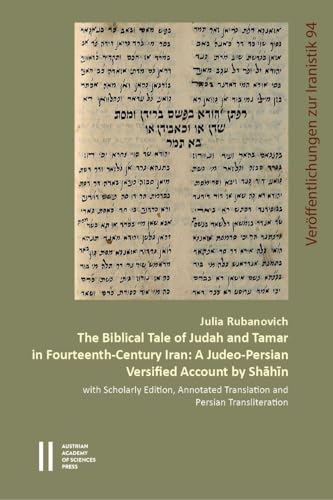 The Biblical Tale of Judah and Tamar in Fourteenth-Century Iran
A Judeo-Persian Versified Account by Shāhīn with Scholarly Edition, Annotated Translation and Persian Transliteration
Volume 94, 951
 The Discourse of Rites
Shaping and Reshaping the (Counter-)Priestly Rituals Conducted Outside the Tabernacle



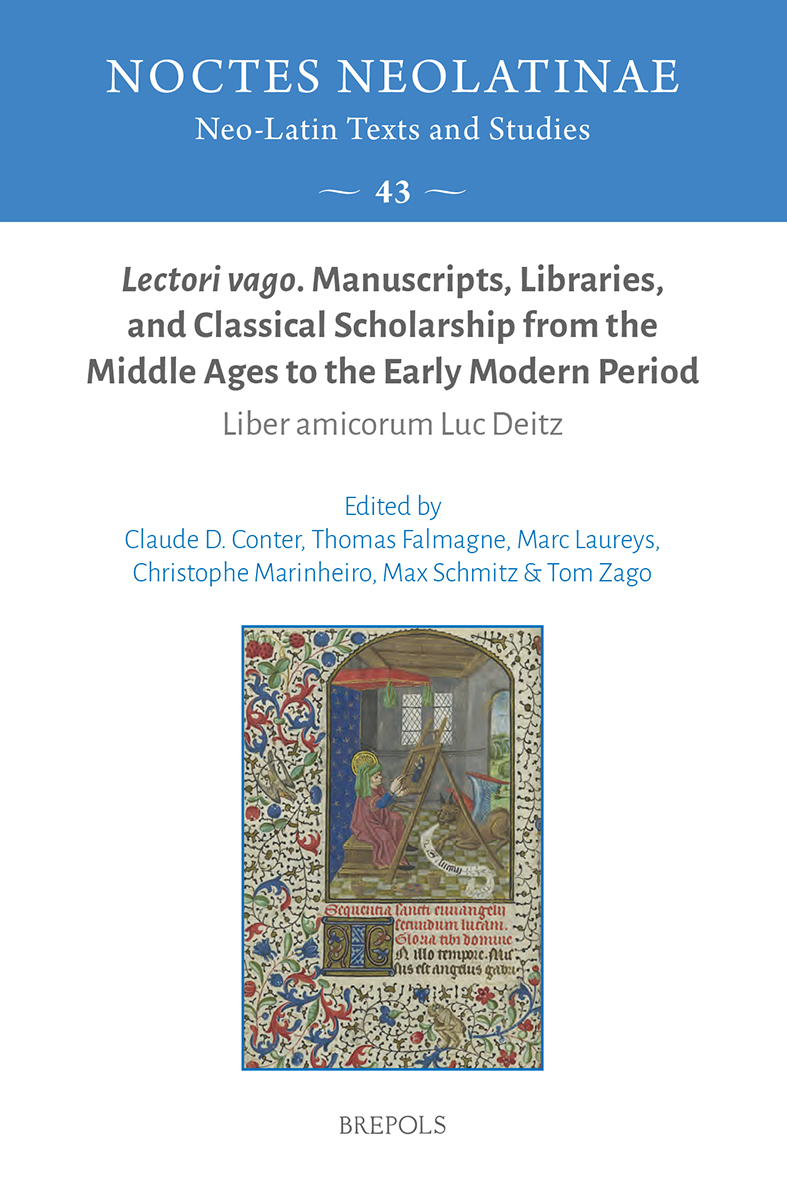 Lectori vago. Manuscripts, Libraries, and Classical Scholarship from the Middle Ages to the Early Modern Period
Liber amicorum Luc Deitz
Volume 43


 »Ein elend-schönes Land«
Gattung und Gedächtnis in Lea Goldbergs hebräischer Literatur. Aus dem Hebräischen von Rainer Wenzel

