Navigating Language in the Early Islamic World
Multilingualism and Language Change in the First Centuries of Islam
Edited by Antoine Borrut Edited by Manuela Ceballos Edited by Alison Vacca

Bringing together scholars from different disciplines and employing a broad array of case studies ranging from Central Asia to North Africa, Navigating Language reexamines prevailing narratives about the history of language change in the early Islamic world through the lens of multilingualism.
Traditional accounts of Arabicization have often favoured linear narratives of language change instead of delving into the diversity of peoples, processes, and languages that informed the fate of Arabic in the early Islamic world. Using a wide range of case studies from the caliphal centres at Damascus and Baghdad to the provinces of Arabia, Egypt, Armenia, and Central Asia, Navigating Language reconsiders these prevailing narratives by analysing language change in different regions of the early Islamic world through the lens of multilingualism and language change. This volume complicates the story of Arabic by building on the work of scholars in Late Antiquity who have abundantly demonstrated the benefits of embracing multilingualism as a heuristic framework. The three main themes include imperial strategies of language use, the participation of local elites in the process of language change, and the encounters between languages on the page, in the markets, and at work. This volume brings together historians and art historians working on the interplay of Arabic and other languages during the early Islamic period to provide a critical resource and reference tool for students and scholars of the cultural and social history of language in the Near East and beyond.
Introduction Antoine Borrut, Manuela Ceballos, and Alison M. Vacca, 'Multilingualism in the Early Islamic World' Section One: Languages of the Umayyad Caliphate Petra M. Sijpesteijn, 'The Early Islamic Empire's Policy of Multilingual Governance' Marie Legendre, 'The Translation of the Diwan and the Making of the Marwanid "Language Reform": Secretarial Agency, Economic Incentives, and Regional Dynamics in the Umayyad State' Antoine Borrut, 'Towards an Arabic Cosmopolis: Culture and Power in Early Islam' Section Two: Multilingualism, Empires, and Local Elites Muriel Debie, 'The Arabs and Northern Languages and Scripts before Islam' Robert Haug, 'Triliteral Coins and Political Authority along a Contentious Frontier: Between Arabic, Bactrian, and Pahlavi in Late Antique Khurasan' Alison M. Vacca, 'Arabic and the Public Performance of Power in Early Medieval Armenia' Judith A. Lerner, 'From Bactrian to Arabic: Changes in Seals and Sealing Practices as Observed in the Documents from Bactria' Section Three: Languages in Contact and Shared Spaces Khodadad Rezakhani, 'Navigating Persian: Travels and Tribulations of Middle Iranian Languages' Aaron Butts, 'Once Again, the Twin Histories of Arabic and Aramaic (with a Focus on Syriac)' Arianna D'Ottone Rambach, 'Sharing the Written Space: Contact and Interaction between Arabic and Other Scripts as Attested by Palaeographical and Codicological Evidence' Fred Astren, ''Abbasid Book Culture and Ninth-Century Jewish Sectarianism' Index
- Edited by Antoine Borrut
- Edited by Manuela Ceballos
- Edited by Alison Vacca
Other Titles in this Series

Similar Books

 A Collaborative Tapestry in Honour of Shirley Ann Brown / Une fresque brodée en l’honneur de Shirley Ann Brown
The Bayeux Tapestry Seen by her Colleagues and Friends / La Tapisserie de Bayeux vue par ses collègues et amis

 Behind the Scenes of Medieval Roofs
An Overview of the Roofing Systems of Italian Churches
Volume 90


 Cities through Time
Glimpses into Urbanity and Community in Mediaeval to Modern West Asia and Egypt
Volume 1

 Cuneiform Artefacts from Archaeological Contexts: New Research on Ancient Iraq
Proceedings of a Conference Held at the Bavarian Academy of Sciences and Humanities, July 4–5, 2024
Volume 2
 Des mots aux actes
Traduction épistémique et littéraire. Nouvelles tendances en histoire et didactique
Volume 15




 Global Gulf
Geo-Economic, Geo-Political, and Geo-Technological Transformation in Saudi Arabia, the United Arab Emirates, and Qatar


 Innovation and Medieval Communities
The Circulation of Ideas and Practices in and out of the Town (1200-1500)
Volume 63

 Ismail Hakki Bursevi’s translation of and commentary on Fusus al-Hikam By Muhyiddin Ibn ‘Arabi
Volumes 1-4
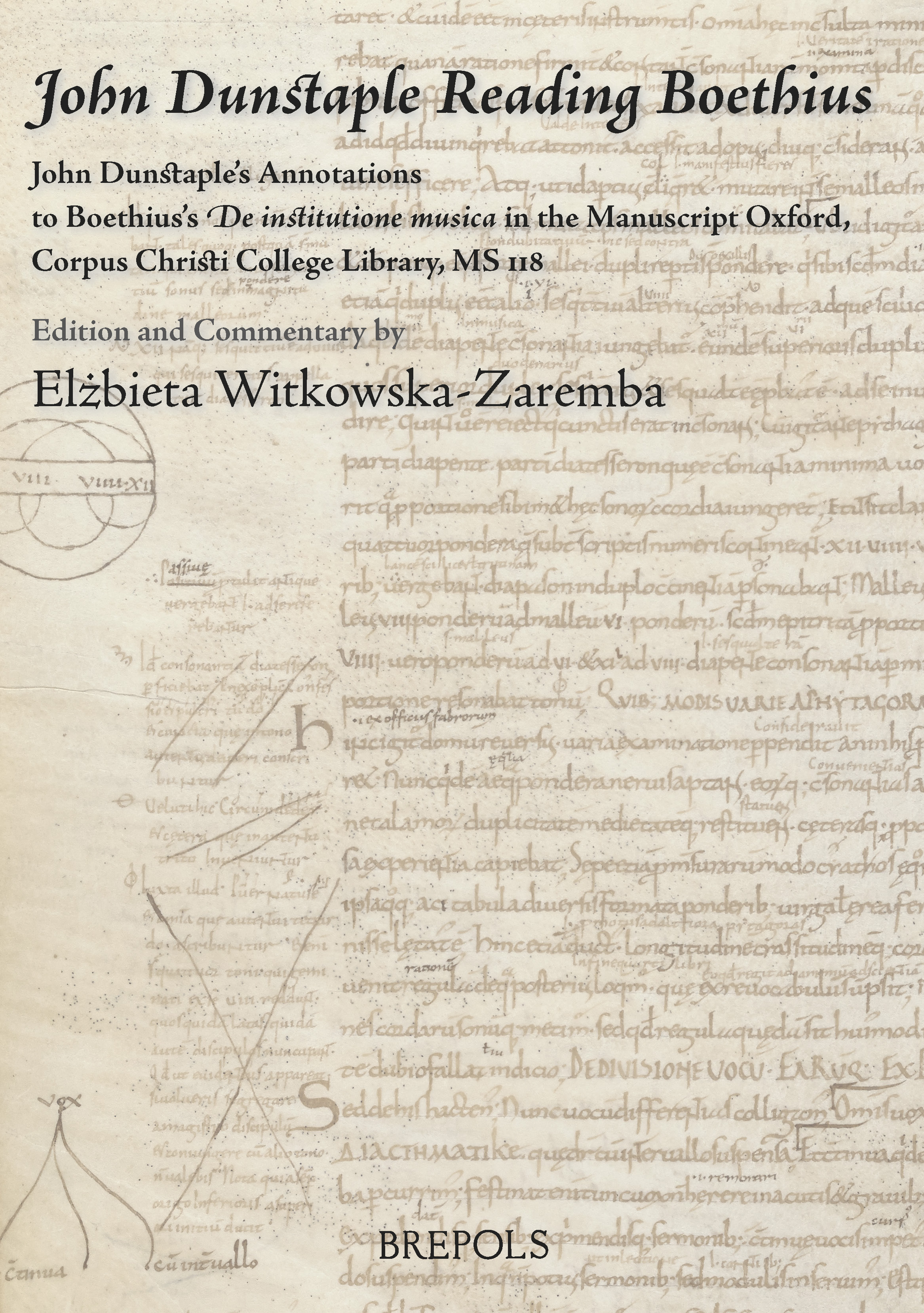 John Dunstaple Reading Boethius
John Dunstaple’s Annotations to Boethius’s “De institutione musica” in the Manuscript Oxford, Corpus Christi College Library, MS 118

 Linguistic and Cultural Dynamics in a Frontier Society
New Perspectives on Northeastern Bavaria and Western Bohemia in the Early Middle Ages
Volume 9


 Medieval Debates on Foreknowledge: Future Contingents, Prophecy, and Divination
Acts of the XXVII Annual Colloquium of the SIEPM, Trento 12-15 September 2023
Volume 31
 Medieval Yeghegis, Armenia
History, Archaeology, Society. Local Multiplicities and Global Connections of a Rural Centre on the Silk Road(s)
 Monastic Manuscripts from the Eastern Mediterranean (Sinai, Jerusalem, Antioch)
Production, Use, and Contexts