
The Shock of the Cross
by Anthony J. Kelly
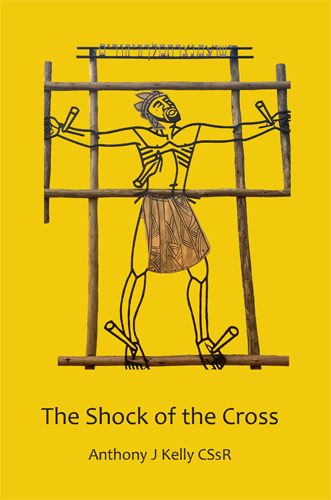
Like it or not, the Cross is the uncomfortable, scandalous symbol of Christianity. There is just no way of avoiding it. No other religion professes its faith with the image of a capital punishment. It was a gruesome form of torture and death in the ancient Roman Empire, and yet women and men wear this symbol on chains around their necks, on commitment rings or badges; they sign themselves with a Cross before prayers and even sports people are seen making this sign before an event. In his years of teaching and writing, Tony Kelly has continuously explored they ‘why’ of this symbol. Apart from the historical, political reasons that led to Jesus’ death in this brutal way, why this form of death; where was God on Golgotha; what was the purpose or meaning of this death; could it have been avoided? These are just some of the questions raised on the cross of Jesus. Such questions were first asked by Jesus’ friends and followers who seem to have had such high expectation of him. But these ‘had hopes’ (Lk 24:21) were shattered on Golgotha. The shock of his death was compounded by the fur- ther shock of his return to them-they named their experience as resurrection-a word only associated with the ‘last days’. Death was one thing. Resurrection compounded the questions. As Jews, these friends and followers puzzled their experience in the light of their Jewish scriptures and traditions. First Paul, then the Gospel writers, and then John, the visionary, mined their scriptures and theology to find ways to communicate the inexpressible. From the Foreword by Mary Coloe, PBVM
Like it or not, the Cross is the uncomfortable, scandalous symbol of Christianity. There is just no way of avoiding it. No other religion professes its faith with the image of a capital punishment. It was a gruesome form of torture and death in the ancient Roman Empire, and yet women and men wear this symbol on chains around their necks, on commitment rings or badges; they sign themselves with a Cross before prayers and even sports people are seen making this sign before an event. In his years of teaching and writing, Tony Kelly has continuously explored they ‘why’ of this symbol. Apart from the historical, political reasons that led to Jesus’ death in this brutal way, why this form of death; where was God on Golgotha; what was the purpose or meaning of this death; could it have been avoided? These are just some of the questions raised on the cross of Jesus. Such questions were first asked by Jesus’ friends and followers who seem to have had such high expectation of him. But these ‘had hopes’ (Lk 24:21) were shattered on Golgotha. The shock of his death was compounded by the fur- ther shock of his return to them-they named their experience as resurrection-a word only associated with the ‘last days’. Death was one thing. Resurrection compounded the questions. As Jews, these friends and followers puzzled their experience in the light of their Jewish scriptures and traditions. First Paul, then the Gospel writers, and then John, the visionary, mined their scriptures and theology to find ways to communicate the inexpressible. From the Foreword by Mary Coloe, PBVM
- By (author) Anthony J. Kelly
Similar Books

 A Companion to Christianity and Sport in Europe and North America (19th-21st centuries)
Volume 1: Western and Eastern Europe
 A Connecting Polemic in the Medieval Mediterranean
The Correspondence of Leo III and ʿUmar II
Volume 6





 Ars Prophetica
Theology in the Poetry of Twentieth-Century Hebrew Poets Avraham Halfi, Shin Shalom, Amir Gilboa, and T. Carmi
 As Messianism Turns to Heresy
The Regenstein Chair Lectures On Lurianic Kabbalah and Shabbatai Tzevi at Hebrew Union College - Cincinnati


 Creating the Woman in Antiquity
Proceedings of the 16th Melammu Workshop, Innsbruck, 2–3 June 2022
Volume 13
 Cultic Kisses
Fruitful Encounters Between Deities and Humans. Festschrift for Angelika Berlejung on the Occasion of Her 65th Birthday
 De/colonizing Theologies
Glocal Histories, Contemporary Challenges, Theoretical Reflections
Volume 4
 Drunk the Potion, No Whit Charmed
The Doctrine of Pure and Perfect Souls from Iamblichus to Damascius






 Extracanonical Traditions and the Holy Land
Texts, Rituals, and Material Culture in Late Antique Palestine
 Fear, Fear of God, God-Fearers
Philological and Historical Perspectives on the World of Ancient Judaism and Christianity


 Gender and Iconography in Antiquity
Femininities, Masculinities, Ambiguities, and Beyond in the Ancient Levant, Near East, and Mediterranean