The Qur’an and Kerygma
Biblical Receptions of the Muslim Scripture across a Millennium
by Jeffrey Einboden
Rather than read the Muslim scripture in light of its biblical antecedents, The Qur’?n & Kerygma adopts the inverse approach, situating the Qur’an as itself the formative foreground to Western literary innovation and biblical exegesis, stretching from late antiquity in the 9th century to postmodernity in the 20th. The book argues, in particular, that Qur’anic readings and renditions have provoked and paralleled key developments in the Christian canon and its critique.
The Qur’an’s biblical foregrounds have long formed a controversial concern within Qur’anic Studies, with field-leading scholars debating the Muslim scripture’s complex relationship and response to the Judeo-Christian canon. This contentious subject has largely overshadowed, however, a reciprocal, yet no less rich, question which motivates the present study. Rather than read the Muslim scripture in light of its biblical antecedents, The Qur’an & Kerygma adopts the inverse approach, situating the Qur’an as itself the formative foreground to Western literary innovation and biblical exegesis, stretching from late antiquity in the 9th century to postmodernity in the 20th. The book argues, in particular, that Qur’anic readings and renditions have provoked and paralleled key developments in the Christian canon and its critique, catalyzing pivotal acts of authorship and interpretation which have creatively contoured the language and legacy of biblical kerygma. Structured chronologically, the study’s span of more than a millennium is sustained by its specific concentration on four case studies selected from representative areas and eras, exploring innovative translations and interpretations of the Qur’an authored by Christian literati from 9th-century Andalucia to 20th-century North America. Mirroring its subject matter, the book engages a literary critical approach, offering close-readings of targeted texts frequently neglected and never before synthesized in a single study, highlighting the stylistic, as well as spiritual, influence on Western authors exercised by Islamic writ.
Preliminaries Introduction Part I 1. From Basmala to Hallelujah: Christian Arabic after the Qur'an 2. His Desire is in the Kitab Allah': The Qur'anic Psalter of Hafs al-Quti Part II 3. Qur'anic Classicism: Muslim Scripture in Medieval Europe 4. The Qur'an's Hohere Kritik: Europe's Arabic Enlightenment Part III: Operations 5. The Beauty of its Composure': Augustan Origins of the English Qur'an 6. Anatomy of Qur'anic Criticism: Northrop Frye's 20th-Century Tafsir End Matter Epilogue
Jeffrey Einboden is Professor of 19th-century American Literature and Comparative Literature at Northern Illinois University, and author of Nineteenth-Century U.S. Literature in Middle Eastern Languages (Edinburgh University Press 2013); Islam and Romanticism: Muslim Currents from Goethe to Emerson (Oneworld 2014); and The Islamic Lineage of American Literary Culture (Oxford University Press, 2016).
- By (author) Jeffrey Einboden
"His analysis of the texts he examines is thorough and insightful, and he has a fine eye for quranic allusions and echoes. In the process, he convincingly demonstrates that the authors he discusses have brought the Quran into their Bible-related work. . . . These six snapshots of various moments in the relationship between the Bible and the Quran provide an important corrective in that they remind us that, like all relationships, this one has been a two-way street. One direction of that road, the one that considers the Bible's possible influence on the Islamic text, has been well traveled. Einboden is to be commended and thanked for pointing us in the opposite direction so we can better appreciate the Qurans role in shaping how the biblical literature has been presented and understood. He is an able and informative tour guide on this fascinating journey." --Kaltner, John, Rhodes College, Memphis, TN, American Journal of Islam and Society
—
Other Titles in this Series

Similar Books
 Cities through Time
Glimpses into Urbanity and Community in Mediaeval to Modern West Asia and Egypt
Volume 1

 Islamic Rituals Beyond the Mosque
Historical Evolution of Prayer and Devotion in Physical Space and Cyberspace
 Ismail Hakki Bursevi’s translation of and commentary on Fusus al-Hikam By Muhyiddin Ibn ‘Arabi
Volumes 1-4

 Qatar’s Societal Security
Towards the Inclusive National Concept of ‘Baladna’ Identity, Migration and External Threats Since 2017


 Beiträge zur Islamischen Kunst und Archäologie
The Arts and Archaeology of Funerary Cultures in Islam
Volume 10.0

 Explorations in Islamic Archaeology
Material Culture, Settlements, and Landscapes from the Mediterranean to Western Asia
Volume 7


 Occasionalism Revisited
New Essays from the Islamic and Western Philosophical Traditions (2nd ed.)
Volume 2
 Proceedings of the Seminar for Arabian Studies Volume 54 2025
Papers from the fifty-seventh meeting of the Seminar for Arabian Studies held at the Institut national d’histoire de l’art, Paris, 27–29 June 2024
 The Logic of al-Fanari
A Study and Annotated Translation of al-Fanari's Commentary on the Isaghuji
Volume 3


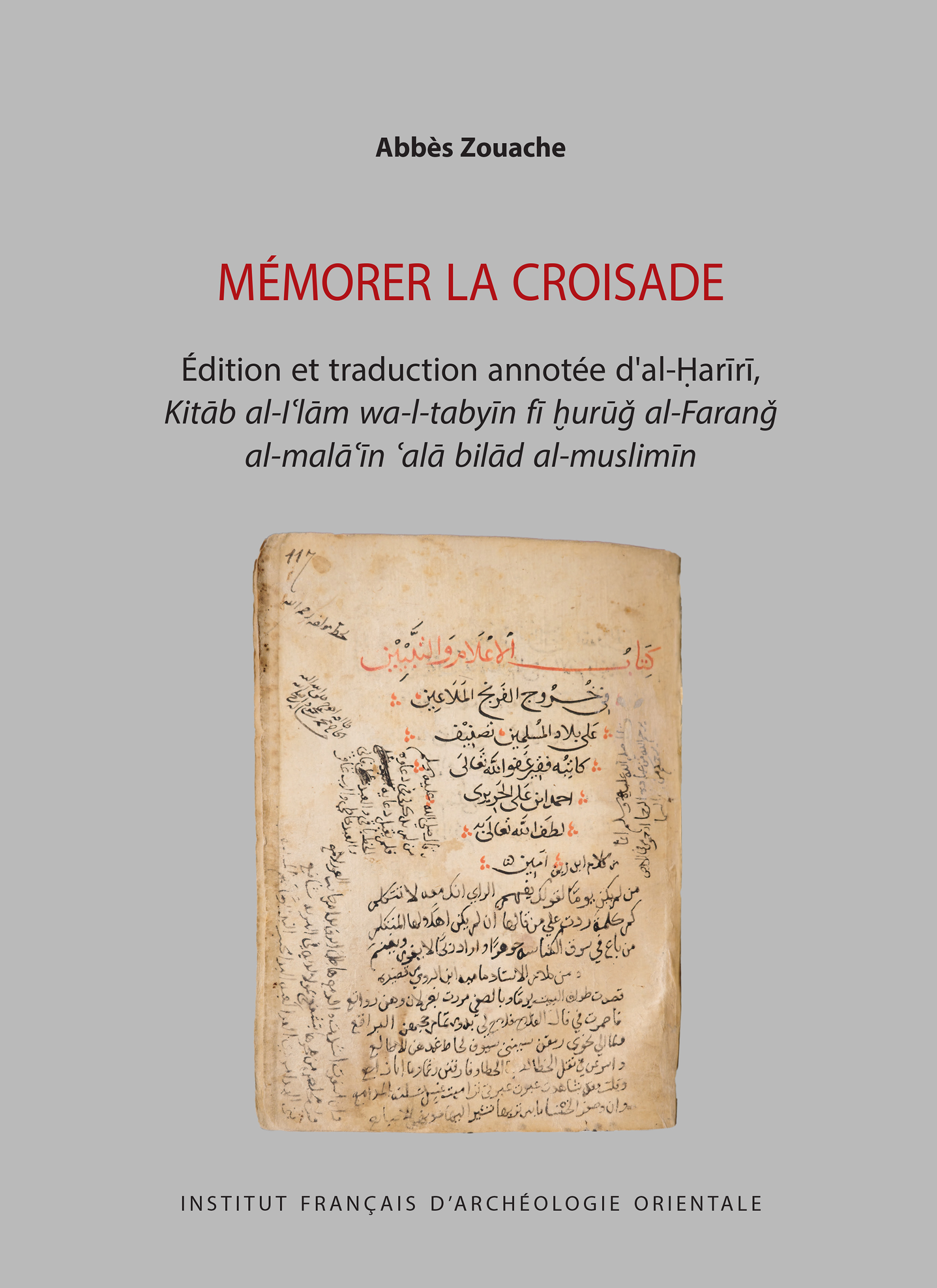 Memorer la croisade
Edition et traduction annotee dal-Hariri, Kitab al-I'lam wa-l-tabyin fi hurug al-Farang al-mala'in 'ala bilad al-muslimin
Volume 64


 Freedom Revisited
A Comparative Theological Approach to the Question of Free Will in Islam
Volume 40


 History of the Oil Industry in the Gulf and the People Who Made it Happen, 1934-1966
Based on Original Documents of Abu Dhabi Petroleum Company
 Navigating Language in the Early Islamic World
Multilingualism and Language Change in the First Centuries of Islam
Volume 2
 Proceedings of the Seminar for Arabian Studies Volume 53 2024
Papers from the fifty-sixth meeting of the Seminar for Arabian Studies held in Aarhus 4–6 August 2023


 The Trucial Coast Political Reports 1963-1966
From Pearls to Oil - at Last. With an Index for vols 1-5
 Zoroastrian Hermeneutics in Late Antiquity
Commentary on the 'Sudgar Nask' of 'Denkard' Book 9
Volume 32