
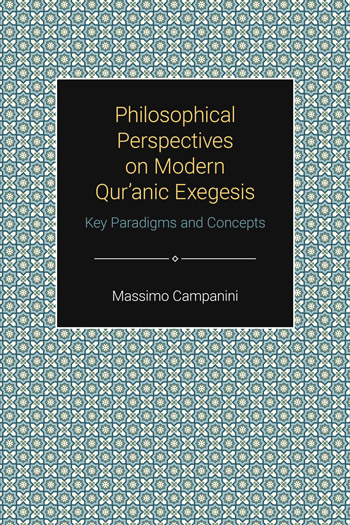
Philosophical Perspectives on Modern Qur’anic Exegesis
by Massimo Campanini
Paperback (Published)
(October 2016)
ISBN: 9781781792315
6.1 x 9.17 inches
Price: $29.95
In stock
Hardback (Published)
(October 2016)
ISBN: 9781781792308
6.1 x 9.17 inches
Price: $29.95
In stock
This book explores the possibility of a hermeneutics of the Qur’an. It starts from the presupposition that the Qur’an can be studied as a philosophical book. Thus the analysis is theoretical more than historical. Many philosophers commented the Qur’an and many supported their theories by resorting to the Qur’an. Thinkers like Fakhr al-Din al-Razi connected traditional theology and philosophy in their Qur’anic commentary. Others like Nasr Abu Zayd used philosophy to deconstruct the Qur’an paving the way for a modern humanistic hermeneutics. This book tries to go a step further: it aims to offer a path within the Qur’an that – through philosophy – leads to a fresh understanding of fundamental tenets of Islamic thought, most importantly tawhid – God’s oneness – and to a fresh reading of the Qur’anic text. This book applies the phenomenological and ontological hermeneutics of Edmund Husserl and Martin Heidegger to the study of the Qur’an going far beyond Annemarie Schimmel’s phenomenological approach that is neither philosophical nor properly phenomenological (in Husserl’s sense).
This book explores the possibility of a hermeneutics of the Qur’an. It starts from the presupposition that the Qur’an can be studied as a philosophical book. Thus the analysis is theoretical more than historical. Many philosophers commented the Qur’an and many supported their theories by resorting to the Qur’an. Thinkers like Fakhr al-Din al-Razi connected traditional theology and philosophy in their Qur’anic commentary. Others like Nasr Abu Zayd used philosophy to deconstruct the Qur’an paving the way for a modern humanistic hermeneutics. This book tries to go a step further: it aims to offer a path within the Qur’an that – through philosophy – leads to a fresh understanding of fundamental tenets of Islamic thought, most importantly tawhid – God’s oneness – and to a fresh reading of the Qur’anic text. This book applies the phenomenological and ontological hermeneutics of Edmund Husserl and Martin Heidegger to the study of the Qur’an going far beyond Annemarie Schimmel’s phenomenological approach that is neither philosophical nor properly phenomenological (in Husserl’s sense).
- By (author) Massimo Campanini
"...This is an innovative and valuable addition to the growing literature on the Qur'an and philosophy and is worth serious attention." --Oliver Leaman, University of Kentucky, Philosophy East and West 68.1 (January 2018) "This is an excellent introductory text for students researching the field of hermeneutics, Qur'an and Islamic Studies. The style and use of language is consistent and unambiguous. [...] Overall, this is a recommended text for scholars and students seeking to engage with the Quran from a philosophical, or more specifically, a deep intellectual perspective." --Imran Khan Suddahazai, The Muslim World Book Review 38.4 (2018)
—
Other Titles in this Series


Similar Books
 ‘For You I Study, For You I Work, For You I Live, For You I Am Ready To Even Give My Life’
Essays in Honour of Francis (Frank) J Moloney, SDB





 Ars Prophetica
Theology in the Poetry of Twentieth-Century Hebrew Poets Avraham Halfi, Shin Shalom, Amir Gilboa, and T. Carmi
 As Messianism Turns to Heresy
The Regenstein Chair Lectures On Lurianic Kabbalah and Shabbatai Tzevi at Hebrew Union College - Cincinnati


 Cities through Time
Glimpses into Urbanity and Community in Mediaeval to Modern West Asia and Egypt
Volume 1
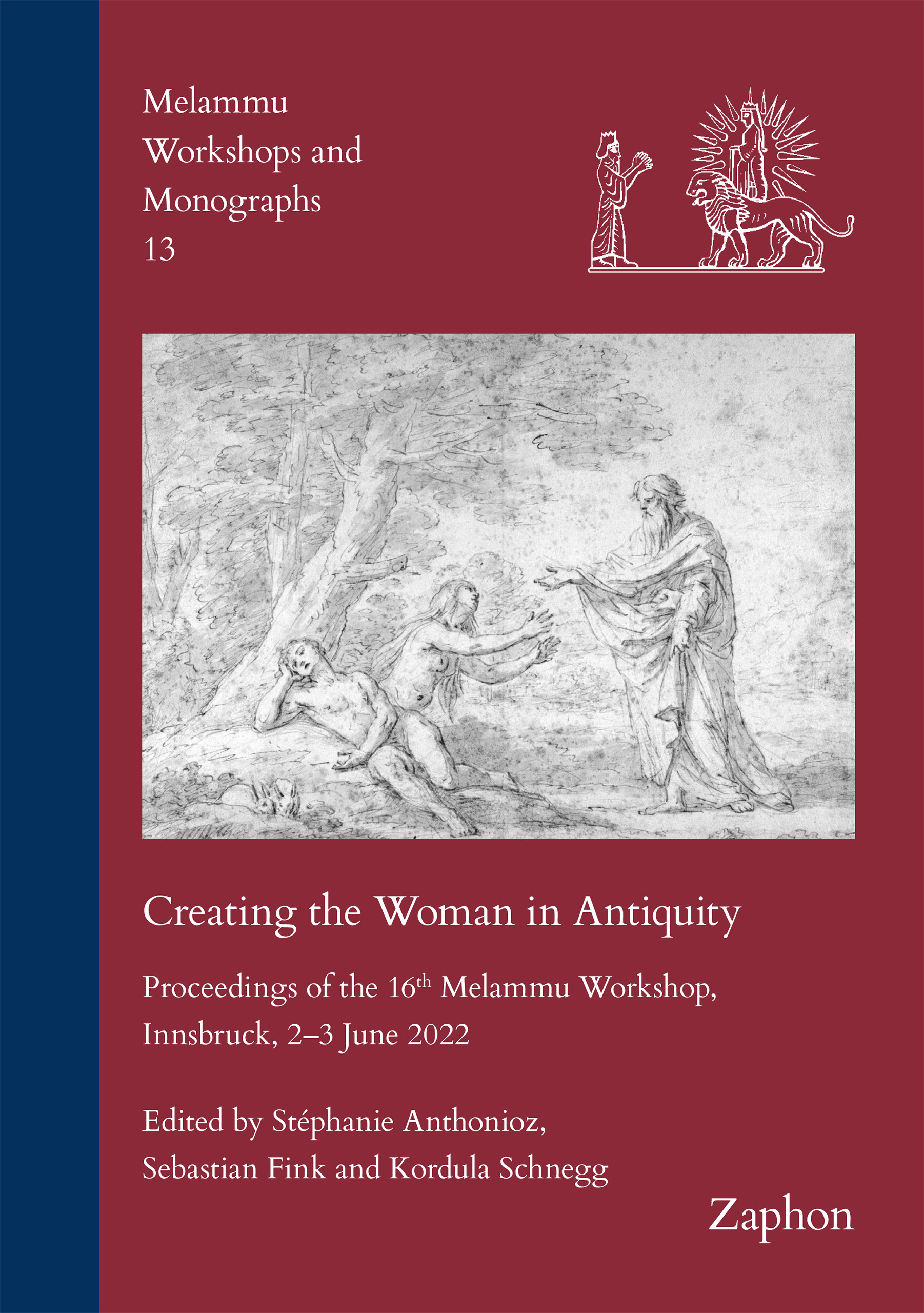 Creating the Woman in Antiquity
Proceedings of the 16th Melammu Workshop, Innsbruck, 2–3 June 2022
Volume 13
 Cuneiform Artefacts from Archaeological Contexts: New Research on Ancient Iraq
Proceedings of a Conference Held at the Bavarian Academy of Sciences and Humanities, July 4–5, 2024
Volume 2


 Drunk the Potion, No Whit Charmed
The Doctrine of Pure and Perfect Souls from Iamblichus to Damascius



 Extracanonical Traditions and the Holy Land
Texts, Rituals, and Material Culture in Late Antique Palestine
 Fear, Fear of God, God-Fearers
Philological and Historical Perspectives on the World of Ancient Judaism and Christianity


 Global Gulf
Geo-Economic, Geo-Political, and Geo-Technological Transformation in Saudi Arabia, the United Arab Emirates, and Qatar


