
Studying the Religious Mind
Methodology in the Cognitive Science of Religion
edited by Armin W. Geertz, Leonardo Ambasciano, Esther Eidinow, Luther H. Martin, Kristoffer Laigaard Nielbo, Nickolas P. Roubekas, Valerie van Mulukom and Dimitris Xygalatas
Paperback (Published)
(October 2022)
ISBN: 9781800501614
6.1 x 9.17 inches
Price: $50.00
In stock
Hardback (Published)
(October 2022)
ISBN: 9781800501607
6.1 x 9.17 inches
Price: $100.00
In stock
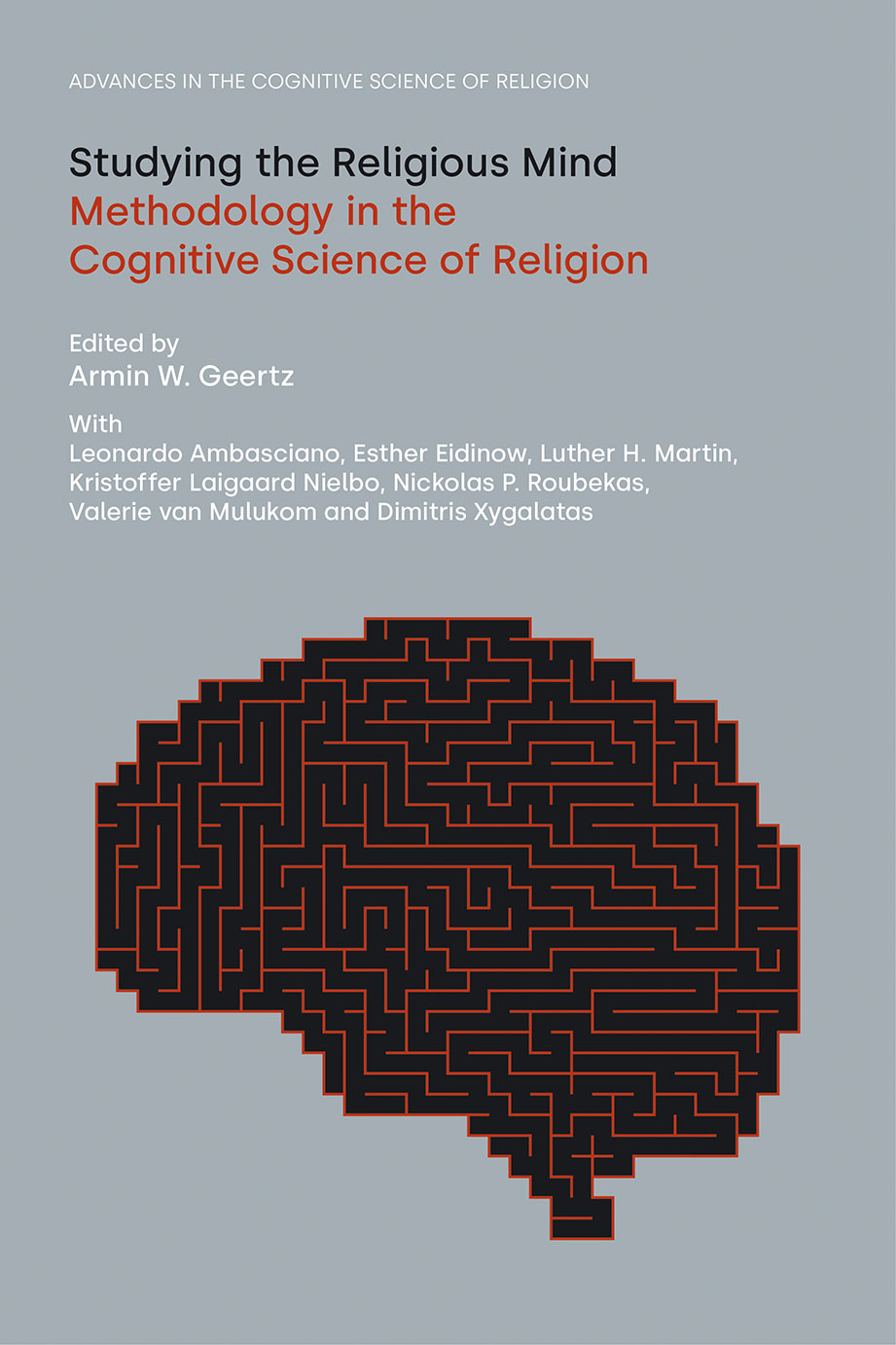
The cognitive science of religion (CSR) does not have its own methodology, and yet from the very beginnings of the discipline, methodology has defined it not only in relation to the general study of religion in the humanities but also to the sciences interested in the mind. CSR scholars are using a wide range of methodologies, borrowing mostly from the cognitive sciences and experimental psychology, but also from biology, archaeology, history, philosophy, linguistics, the social and statistical sciences, neurosciences, and anthropology. This multi-disciplinarity, in fact, defines the cognitive science of religion. Such multi-disciplinarity requires hard work and truly interdisciplinary teams, but also continual reflections on and debates about the methodologies being used. In fact, no CSR study worth its name can rely on only one methodology. Triangulation is standard, but often even more approaches are used. This book consists of selected papers from the Journal for the Cognitive Science of Religion and the Journal of Cognitive Historiography. Each chapter demonstrates a particular method or group of methods and how those methods advance our knowledge of the religious mind from the ancient past up to today.
The cognitive science of religion (CSR) does not have its own methodology, and yet from the very beginnings of the discipline, methodology has defined it not only in relation to the general study of religion in the humanities but also to the sciences interested in the mind. CSR scholars are using a wide range of methodologies, borrowing mostly from the cognitive sciences and experimental psychology, but also from biology, archaeology, history, philosophy, linguistics, the social and statistical sciences, neurosciences, and anthropology. This multi-disciplinarity, in fact, defines the cognitive science of religion. Such multi-disciplinarity requires hard work and truly interdisciplinary teams, but also continual reflections on and debates about the methodologies being used. In fact, no CSR study worth its name can rely on only one methodology. Triangulation is standard, but often even more approaches are used. This book consists of selected papers from the Journal for the Cognitive Science of Religion and the Journal of Cognitive Historiography. Each chapter demonstrates a particular method or group of methods and how those methods advance our knowledge of the religious mind from the ancient past up to today.
- Edited by Leonardo Ambasciano
- Edited by Esther Eidinow
- Edited by Armin W. Geertz
- Edited by Kristoffer Laigaard Nielbo
- Edited by Luther H. Martin
- Edited by Nickolas P. Roubekas
- Edited by Valerie van Mulukom
- Edited by Dimitris Xygalatas
Other Titles in this Series



Similar Books

 A Companion to Christianity and Sport in Europe and North America (19th-21st centuries)
Volume 1: Western and Eastern Europe
 A Connecting Polemic in the Medieval Mediterranean
The Correspondence of Leo III and ʿUmar II
Volume 6





 Ars Prophetica
Theology in the Poetry of Twentieth-Century Hebrew Poets Avraham Halfi, Shin Shalom, Amir Gilboa, and T. Carmi
 As Messianism Turns to Heresy
The Regenstein Chair Lectures On Lurianic Kabbalah and Shabbatai Tzevi at Hebrew Union College - Cincinnati


 Creating the Woman in Antiquity
Proceedings of the 16th Melammu Workshop, Innsbruck, 2–3 June 2022
Volume 13
 Cultic Kisses
Fruitful Encounters Between Deities and Humans. Festschrift for Angelika Berlejung on the Occasion of Her 65th Birthday
 De/colonizing Theologies
Glocal Histories, Contemporary Challenges, Theoretical Reflections
Volume 4
 Drunk the Potion, No Whit Charmed
The Doctrine of Pure and Perfect Souls from Iamblichus to Damascius






 Extracanonical Traditions and the Holy Land
Texts, Rituals, and Material Culture in Late Antique Palestine
 Fear, Fear of God, God-Fearers
Philological and Historical Perspectives on the World of Ancient Judaism and Christianity


 Gender and Iconography in Antiquity
Femininities, Masculinities, Ambiguities, and Beyond in the Ancient Levant, Near East, and Mediterranean