
Selected Features of Bactrian Grammar
by Saloumeh Gholami

Paperback (Published)
(December 2014)
ISBN: 9783447103008
6.65 x 9.45 inches
Price: $82.00
In stock
Bactrian, the only Iranian language written in the Greek alphabet, was spoken in ancient Bactria in northern Afghanistan. It is an intermediary Middle Iranian language, possessing the characters of both Eastern and Western Iranian groups, and thus playing a very important role in the dialectology of Iranian Languages. Saloumeh Gholami’s study deals with various relatively unknown phonological, morphological and syntactical features of Bactrian and includes the following topics: historical phonology of Bactrian; the syntactical position of different kinds of nouns and their relationship in a sentence; the different types of pronouns and their syntactical properties; the function and syntactical position of prepositions and postpositions; adverbs and their formation; proximate and remote deixis adverbs as well as their different syntactic positions; various kinds of conjunctions and their functions; selected aspects of the verb; word order in clauses with transitive or intransitive verbs, and an investigation of double object constructions; as well as the different types of compounds.
- By (author) Saloumeh Gholami
"Overall this book presents a detailed catalogue of Bactrian, and it gives the reader a general impression of the structure of the language, while giving a few comparisons to other languages. Generally speaking, this book is a good source of data for historical phonologists and to some extent for those working on syntax or morphology." --Blake Justin Collin Lewis, University of Calgary, LINGUIST List 27.2948
—
Other Titles in this Series


 Yezidism in Europe
Different Generations Speak about their Religion / In Collaboration with Z. Kartal, Kh. Omarkhali, and Kh. Jindy Rashow
Volume 5

 Faszination Iran. Beitrage zur Religion, Geschichte und Kunst des Alten Iran
Gedenkschrift fur Klaus Schippmann
Volume 13


 Voices from Zoroastrian Iran
Oral texts and testimony: Volume 2: Urban and Rural Centres: Yazd and Outlying Villages
Volume 17.2

 ‘Our Steppe is Vast …’
Kurdish epics and tribal stories from Urfa, 1906. Kurmanji - English
Volume 19


 Die zoroastrische Zeitvorstellung
Eine Untersuchung uber Zeit- und Ewigkeitskonzepte und die Frage des Zurvanismus
Volume 7
 God First and Last’. Religious Traditions and Music of the Yaresan of Guran
Volume 1: Religious Traditions by Philip G. Kreyenbroek
Volume 18.1
Similar Books


 Des mots aux actes
Traduction épistémique et littéraire. Nouvelles tendances en histoire et didactique
Volume 15


 Punning in Odd or Elegant Constructions in Jeremiah
The Convergence of Linguistics, Rhetoric, and Textuality in the Hebrew Text of Jeremiah


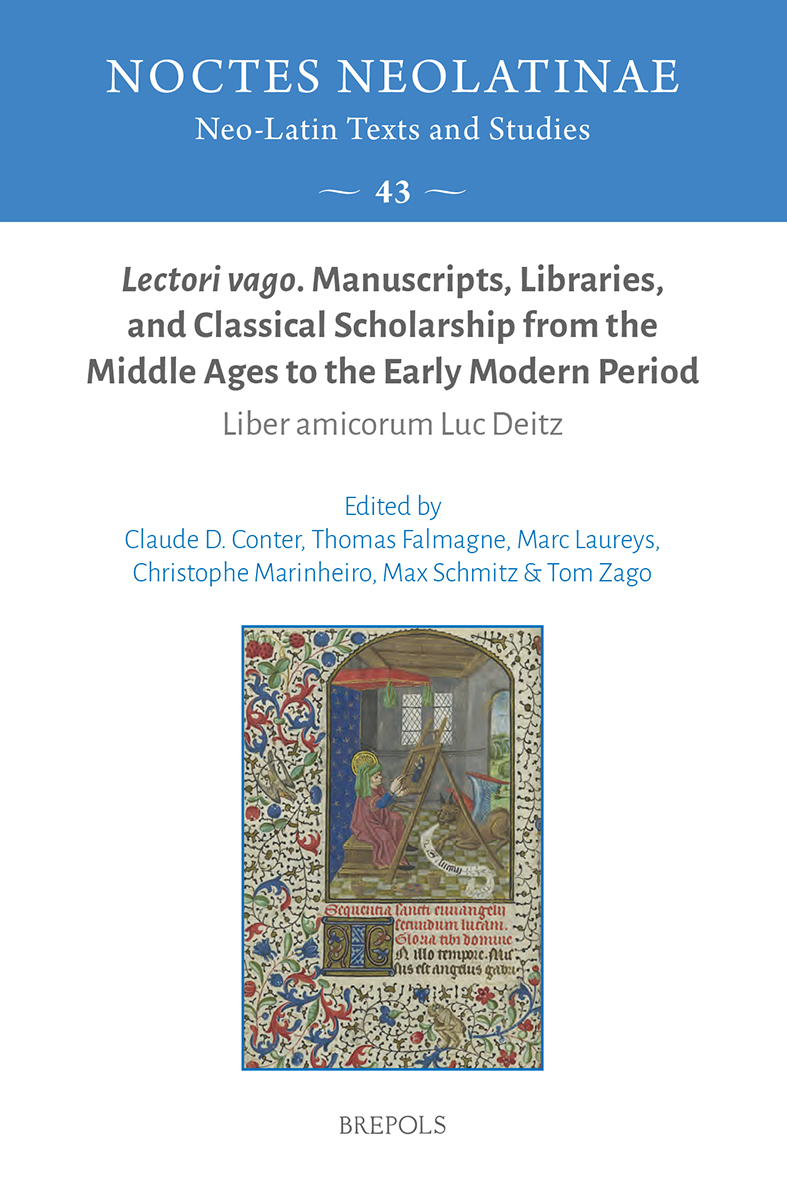 Lectori vago. Manuscripts, Libraries, and Classical Scholarship from the Middle Ages to the Early Modern Period
Liber amicorum Luc Deitz
Volume 43


 Ein Schatzhaus indischer Erzählkunst –– Die Erzählliteratur der Jainas
Band 2: Ein „Lesebuch“ originalsprachlicher Texte zur jainistischen „Universalgeschichte“ samt eines Jaina-Māhārāṣṭrī-Wörterbuchs zu allen Text- und Lesestücken.


