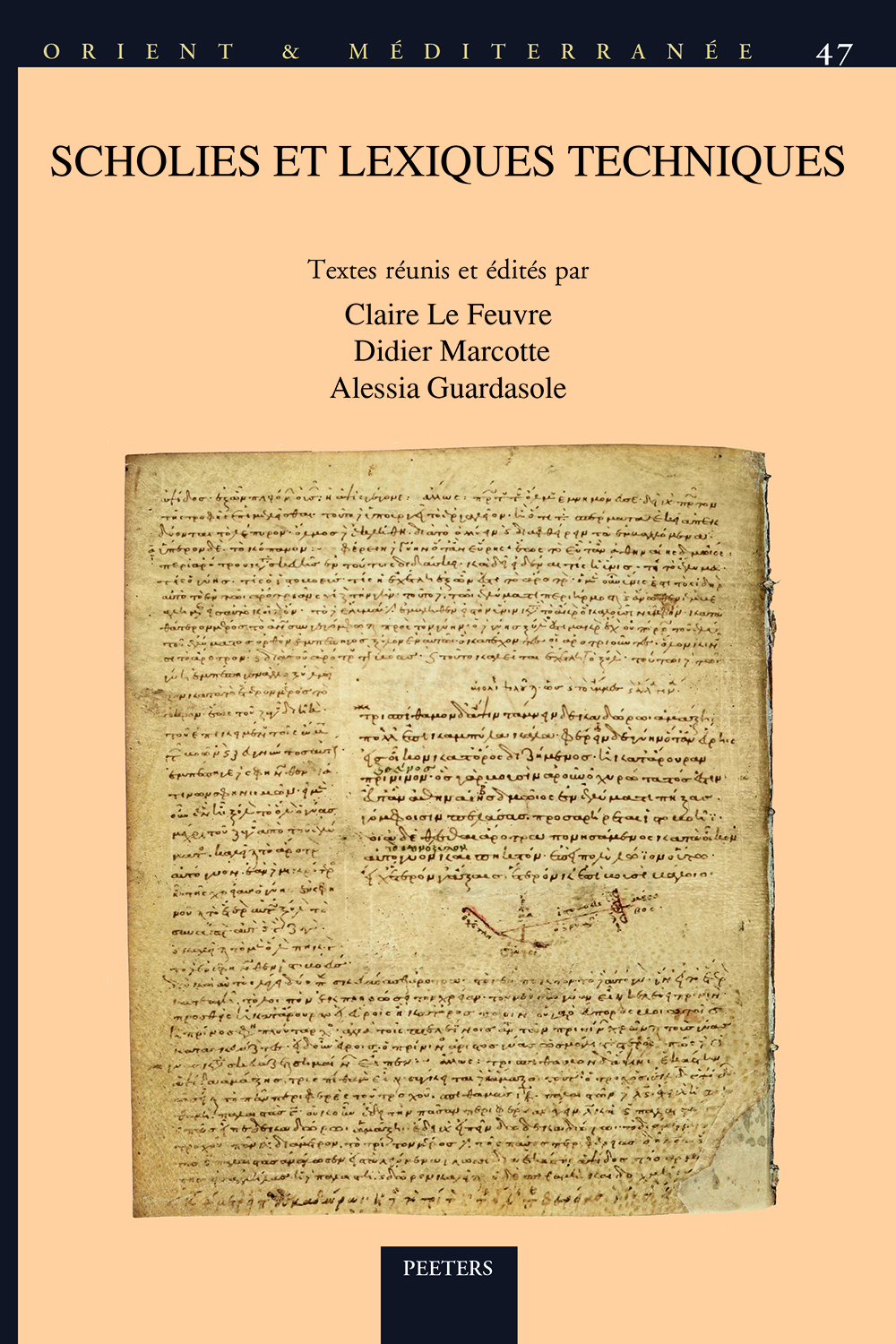
Scholies et lexiques techniques
Edited by C. Le Feuvre Edited by D. Marcotte Edited by A. Guardasole
De l’Antiquité à la fin du Moyen Âge byzantin, les commentaires d’école et les glossaires ont toujours accompagné les textes, poétiques ou non, dans ce que ceux-ci avaient de plus technique. La littérature qu’ils ont ainsi formée au cours des siècles reste pour nous un instrument décisif dans l’interprétation, voire dans l’établissement, des textes qu’elle embrasse. Le regain d’intérêt qu’elle suscite aujourd’hui justifie l’analyse croisée, à laquelle ce volume est consacré, des lexiques et des scholies en tant que catégories exégétiques intimement liées entre elles par le matériau dont elles se sont nourries et la méthode qu’elles mettent en œuvre.
From Antiquity through to the end of the Byzantine Middle Ages, school commentaries and glossaries consistently accompanied texts—whether poetic or otherwise—particularly in their most technical dimensions. The corpus of literature thus formed over the centuries remains a critical instrument for the interpretation, and even the establishment, of the texts it engages. The resurgence of scholarly interest in this tradition today fully justifies the comparative analysis to which this volume is devoted—namely, that of lexica and scholia as exegetical categories, intimately connected through the material they draw upon and the methodological frameworks they employ.
- Edited by C. Le Feuvre
- Edited by D. Marcotte
- Edited by A. Guardasole
Other Titles in this Series




 Les Jafnides
Des rois arabes au service de Byzance (VIe siecle de l'ere chretienne): (Actes du colloque de Paris, 24-25 novembre 2008)
Volume 17


 Architecture et decor dans l’Orient chretien (IVe-VIIIe Siecle)
Actes de la journee d'etudes en hommages au pere Michele Piccirillo, INHA, Paris, 8 decembre 2011
Volume 21
 Ancient Jewish Texts and Greek Culture
Accommodations and Appropriations (2nd c. BC – 1st c. AD)
Volume 46


 An Ancient Mesopotamian Herbal Handbook
The Series URU.AN.NA and MUD-UR.MAH. Volume 1: The Tablets
Volume 33
 Guerison, religion et raison
De la medecine hippocratique aux neurosciences: Actes de colloque
Volume 24


 Médecine et christianisme: Sources et pratiques
Actes du colloque international de Paris, septembre 2016
Volume 40

Similar Books





 Boğazköy Tablets in the Museum of Anatolian Civilizations (Bo 9032–Bo 9097)
Anadolu Medeniyetleri Müzesinde Bulunan Boğazköy Tabletleri (Bo 9032–Bo 9097)
Volume 4
 Connecting the Dots: Counting, Writing, and the Beginnings of Civilization
The Secret Lives of Clay Tokens: A Memoir

 Curating the Prehistoric Past
Studies on West Asian Archaeology and Beyond in Honour of Yoshihiro Nishiaki

 Exploring Gender Dynamics across the Ancient Near East
Collected Essays of Gender and Methodology in the Ancient Near East (GeMANE) 4 and 5
Volume 7


 Ḫattušaš utnē išḫameški
Hittite and Other Ancient Near Eastern Studies Presented to Piotr Taracha on the Occasion of His 65th Birthday




 Kultur – Kontakt – Kultur
Beiträge anlässlich der 66. Rencontre Assyriologique Internationale in Frankfurt/Main und Mainz, 25.–29. Juli 2022
Volume 35
 Money of Mercenaries in the Cimmerian Bosporus
From the Mithridatic Wars to the Roman-Bosporan War of AD 45-49
Volume 45

 New Research on Old Collections in Southwest Asian Archaeology
Proceedings of the Workshop Held at the British Museum, London, 31 July – 2 August, 2023
 Old Aramaic Inscriptions and their Contexts
An Epigraphic, Archaeological, and Historical Synthesis
Volume 63

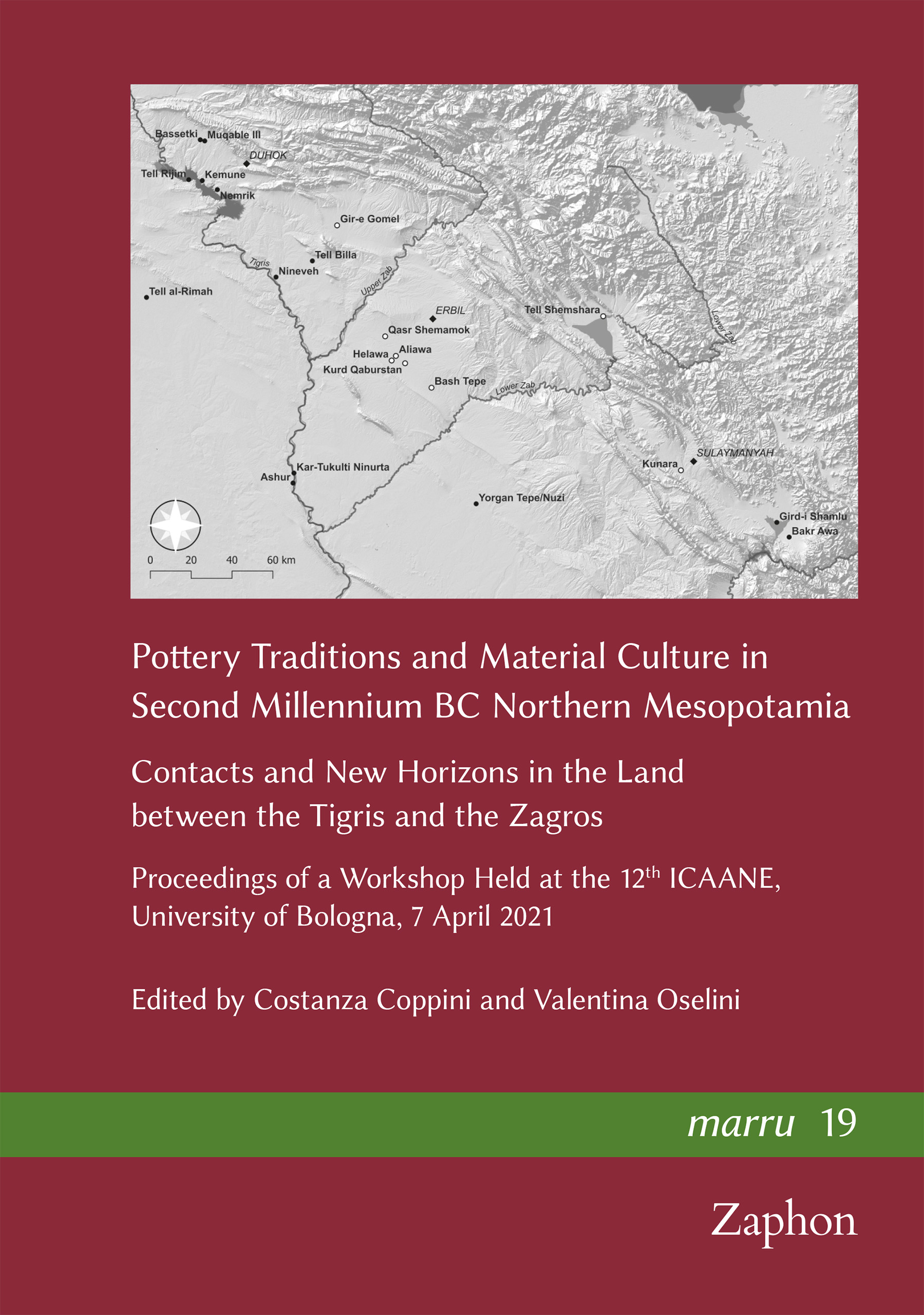 Pottery Traditions and Material Culture in Second Millennium BC Northern Mesopotamia
Contacts and New Horizons in the Land between the Tigris and the Zagros. Proceedings of a Workshop Held at the 12th ICAANE, University of Bologna, 7 April 2021
Volume 19
 Punning in Odd or Elegant Constructions in Jeremiah
The Convergence of Linguistics, Rhetoric, and Textuality in the Hebrew Text of Jeremiah

 Sertorius, the Exiles of the Sullan Regime and the Provinces of the Empire
Legitimacy, Morality and Imperial Discourse in the 70s BCE
 Shame in the Worlds of the Hebrew Bible and Akkadian Texts
A Linguistic Study and Its Implications
Volume 33

 Telling Contexts
Archaeological and Textual Studies in Honor of Elizabeth Bloch-Smith and Mark S. Smith
 The Body
Lived, Cultured, Adorned: Essays on Dress and the Body in the Bible and Ancient Near East in Honor of Nili S. Fox
 The Discourse of Rites
Shaping and Reshaping the (Counter-)Priestly Rituals Conducted Outside the Tabernacle
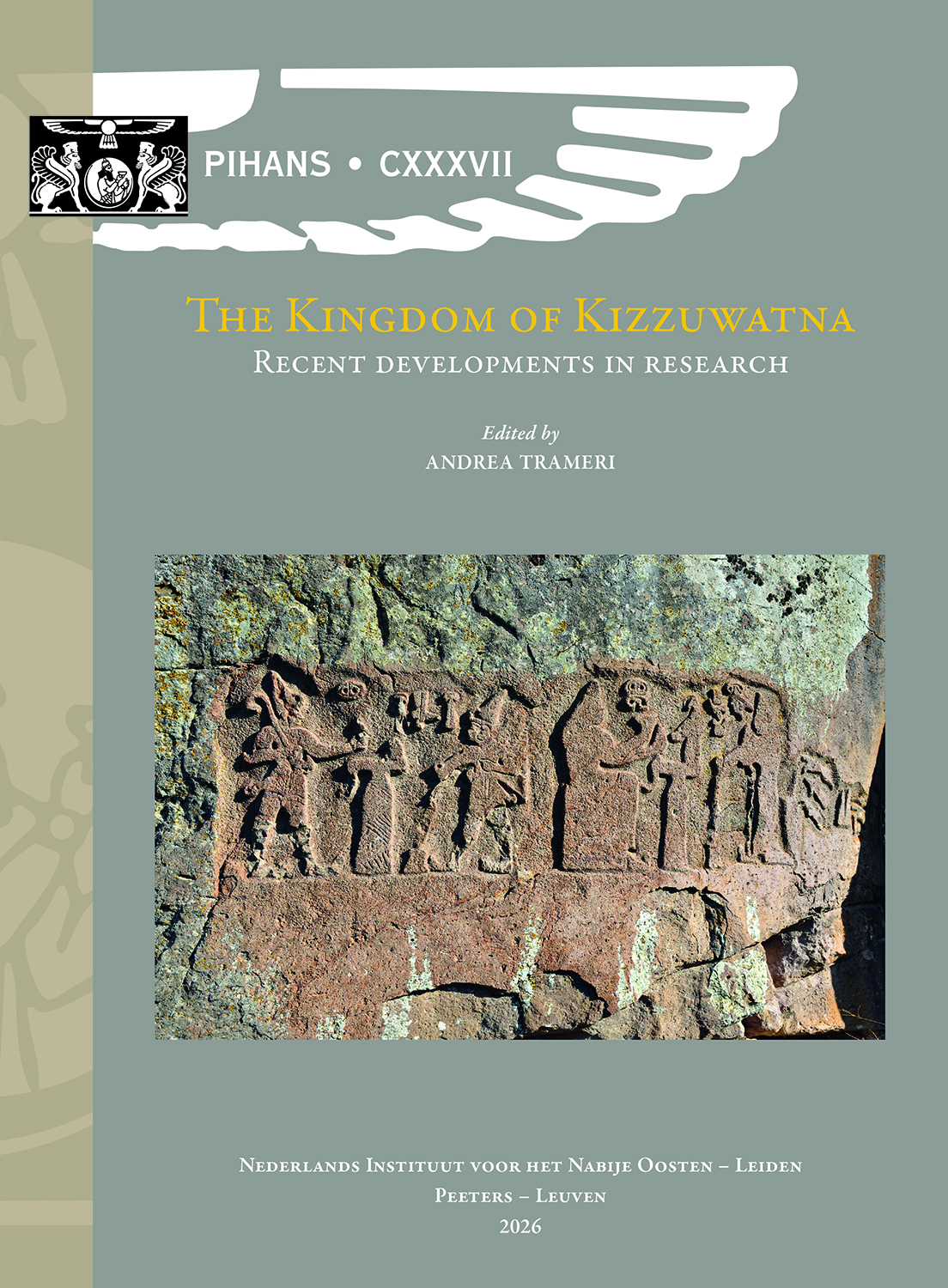 The Kingdom of Kizzuwatna: Recent Developments in Research
Proceedings of the Third NINO Postdoctoral Research Fellow Annual Conference, Leiden, 23rd-25th March 2023
Volume 137