
Sacred Knots
Religious Systems of Contemporary Japan
By (author) Michael Pye
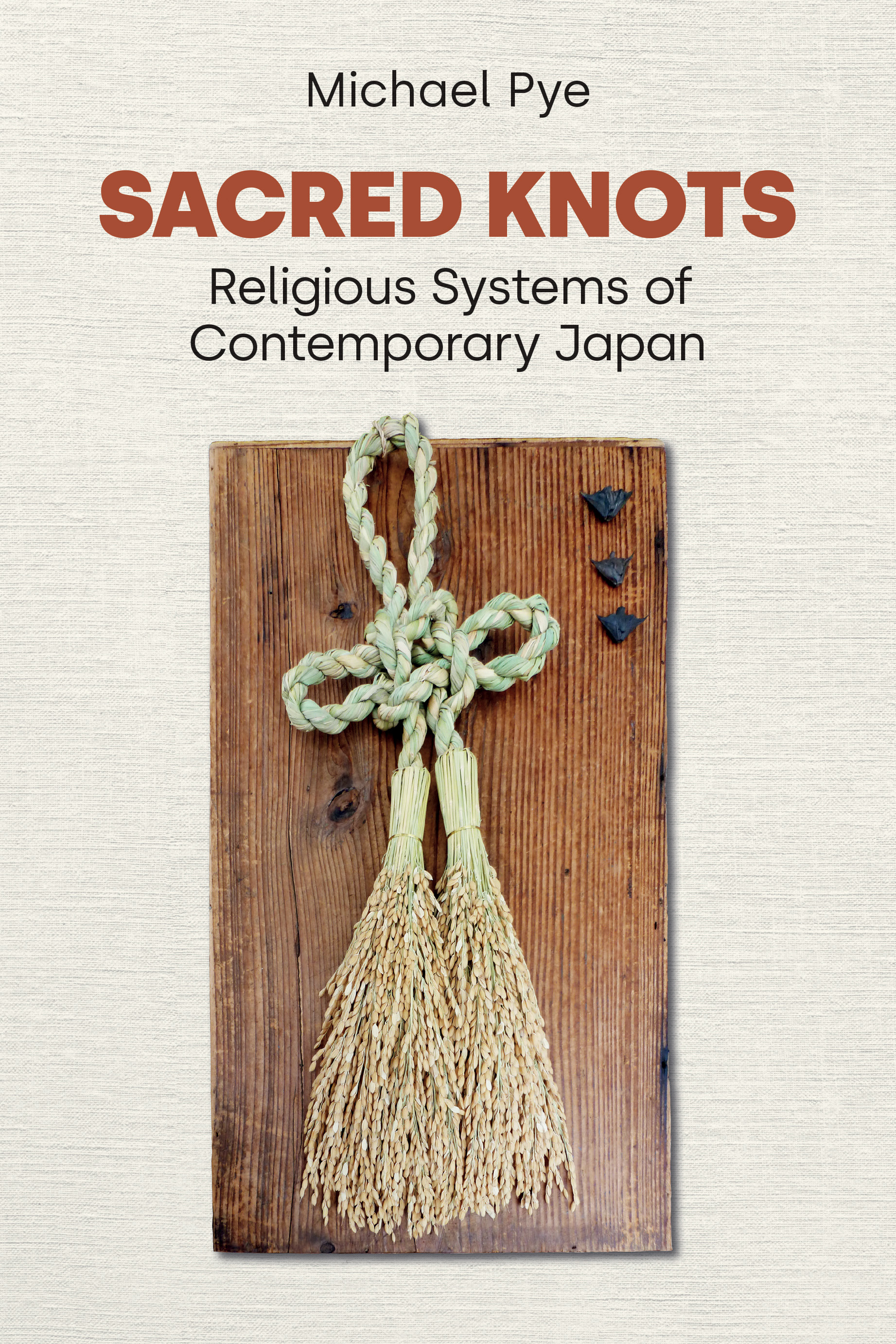
Paperback (Forthcoming)
(January 2027)
ISBN: 9781800509030
6.14 x 9.21 inches
Price: $29.95
Hardback (Forthcoming)
(January 2027)
ISBN: 9781800509023
6.14 x 9.21 inches
Price: $80.00
Based on years of observation, Sacred Knots presents the key features of Japan’s primal religion in a systematic but transparently accessible work that is expected to shape the discussion for a long time to come.
Japan is known for its secular culture of understated aesthetics, imaginative digital projects, and cutting-edge technologies. No wonder then that foreign observers are puzzled by an apparently arbitrary display of Buddhist traditions and picturesque Shinto shrines, while many Japanese people, like the state itself, claim not to be “religious” at all. However, the reality is both more subtle and more obstinate. There is in fact an underlying pattern of shared religious assumptions and values that escape official definitions and yet are universally recognized and remarkably persistent. Sacred space, structured time, festivities of life, and the stages of individual existence –all are integrated under the keen watch of the ancestors and tied together with simple rites of transaction. This “primal religion” is the bedrock in which more particular religions are rooted. It is understood and frequently used even by those who claim not to be religious at all. Much of it, such as the observance of New Year, is socially inescapable and indeed the interwoven network of karmic affinity (en) and sacred knots (musubi) is effectively life-sustaining. Closely related is the equally influential pattern of civil religion.
Based on years of observation, Sacred Knots presents the key features of Japan’s primal religion in a systematic but transparently accessible work that is expected to shape the discussion for a long time to come.
Contents
Preface
Transliteration and script
1 Orientation
2 Sacred space, sacred focus, sacred power
3 Calendricity, and endless sequence
4 Celebrating life and welfare
5 Birth, life and ancestors
6 Rites of transaction
7 Civil religion, symbols and values
8 Religious diversity in the shared field
9 Conclusions and outlook
10 Indice
- By (author) Michael Pye
Similar Books

 A Companion to Christianity and Sport in Europe and North America (19th-21st centuries)
Volume 1: Western and Eastern Europe
 A Connecting Polemic in the Medieval Mediterranean
The Correspondence of Leo III and ʿUmar II
Volume 6





 Ars Prophetica
Theology in the Poetry of Twentieth-Century Hebrew Poets Avraham Halfi, Shin Shalom, Amir Gilboa, and T. Carmi
 As Messianism Turns to Heresy
The Regenstein Chair Lectures On Lurianic Kabbalah and Shabbatai Tzevi at Hebrew Union College - Cincinnati


 Creating the Woman in Antiquity
Proceedings of the 16th Melammu Workshop, Innsbruck, 2–3 June 2022
Volume 13
 Cultic Kisses
Fruitful Encounters Between Deities and Humans. Festschrift for Angelika Berlejung on the Occasion of Her 65th Birthday
 De/colonizing Theologies
Glocal Histories, Contemporary Challenges, Theoretical Reflections
Volume 4
 Drunk the Potion, No Whit Charmed
The Doctrine of Pure and Perfect Souls from Iamblichus to Damascius






 Extracanonical Traditions and the Holy Land
Texts, Rituals, and Material Culture in Late Antique Palestine
 Fear, Fear of God, God-Fearers
Philological and Historical Perspectives on the World of Ancient Judaism and Christianity


 Gender and Iconography in Antiquity
Femininities, Masculinities, Ambiguities, and Beyond in the Ancient Levant, Near East, and Mediterranean