
Roman Republican Sieges
Operations in Gaul and Hispania
Edited by Mike Dobson

Paperback (Published)
(February 2026)
ISBN: 9781805832171
8.11 x 10.08 inches
Price: $55.00
In stock
Sieges were central to Rome’s conquest of Gaul and Hispania. This book explores how Republican armies planned, built and fought sieges, from artillery and camps to environmental impact and human suffering. Moving beyond Caesar’s dramatic accounts, it reveals siege warfare as a familiar, adaptable and deeply human experience.
Sieges and siege-related activities played a significant role in the development of Rome’s power in Hispania and Gaul during the late-Roman Republic. They were made possible by the efficient Roman ‘military machine’ available to commanders during this period – a constantly adapting and improving army, highly regularised encampments and lethal artillery.
The narration of Caesar’s sieges by Caesar himself and his literary successor Hirtius, makes them seem unusual and inventive, probably to emphasise Caesar’s brilliance as a military commander. They were not that different or new though, as shown by the close similarity between established Hellenistic siege practices and the general evidence of sieges in Gaul and Hispania.
It can often seem that siege fieldworks were ‘operation-specific’ to sieges, but essentially just mining and ramps were siege-only techniques. Most of the other works were simply implementations of the normal repertoire of the army’s fortifications, just as the artillery and weaponry were used in all types of conflicts. This becomes apparent when looking at the wide variety of Roman military installations emerging in the Iberian Peninsula.
Sieges are not mere mechanical exercises in military technology and tactics, as often seems in academic discussions, but people are at the centre of it all, with troops and besieged suffering alike. Sieges are consequently considered here within ‘warfare ecology’ – the severe environmental impact, the suffering health and well-being of all involved, even changes to the smellscape, much of which continued for the besieged long after the siege had ended and troops had departed.
Contributors
Acknowledgements
Terms and Translations
Introduction – Mike Dobson
Chapter 1. A professional amateur militia: the late-Republican army – Mike Dobson
Chapter 2. Artillery of the later Roman Republic – Alan Wilkins
Chapter 3. Caesar in Gaul and the Hellenistic tradition – Michel Reddé
Chapter 4. The Roman Republican Army in Hispania: Sieges, Battlefields and Camps – Ángel Morillo Cerdán
Chapter 5. Win the siege before it kills us. Environmental warfare by and against a besieging army. – Mike Dobson
Bibliography
Index
Mike Dobson is an Honorary Senior Research Fellow in the Department of Classics, Ancient History, Religion and Theology at the University of Exeter. He has long researched and published on the Roman Republican army and its fortifications. He is particularly interested in the Republican army in Spain, especially their campaigns against Numantia. He has been a collaborator in several Spanish research projects and visiting scholar to the Universidad de Alcalá de Henares. More recently, he has also been exploring the environmental and health impacts of ancient armies – warfare ecology. His books include The Army of the Roman Republic: The Second Century BC, Polybius and the Camps at Numantia, Spain (2008) and Rome and the North-Western Mediterranean. Integration and Connectivity c. 150–70 BC (2022, edited with Toni Ñaco and Jordi Principal).
- Edited by Mike Dobson
Similar Books


 Archaeological Excavations at Irmis Rka: An Investigation of a Multi-Layered Settlement in Southwest Georgia
Results from the 2020 Season: Early Bronze Age to Medieval Occupations


 Catuvellaunia and Rome: Economic and Political Relations during the Final Decades Pre-conquest
The Role of Grain from Southeastern Britain and Its Potential for Maintenance of the Roman Military along the Frontier on the Rhine
 Colour Concept “Secoli bui” a colori
Codici cromatici e architetture dipinte nell’età tardoantica e medievale

 Crossing Disciplines in the Study of Archaeology and Prehistoric Art: Insights from the Sahara and Mediterranean Africa
Proceedings of the XX UISPP World Congress (5–9 September 2023, Timișoara, Romania) Volume / Session 18
 Crossing Sacred Landscapes
Contacts and Continuities in the Desert Cults and Beliefs of Ancient Northern Arabia and the Arid Southern Levant
 Cuneiform Artefacts from Archaeological Contexts: New Research on Ancient Iraq
Proceedings of a Conference Held at the Bavarian Academy of Sciences and Humanities, July 4–5, 2024
Volume 2

 ENTANGLED AFRICA
Intra-African Relations Between Rain Forest and Mediterranean from Around 4,000 BCE to 1,500 CE


 Exploring Prehistoric Pottery in Japan
A Study of Organic Inclusions, Adhering Materials, and Impressions of Woven Items

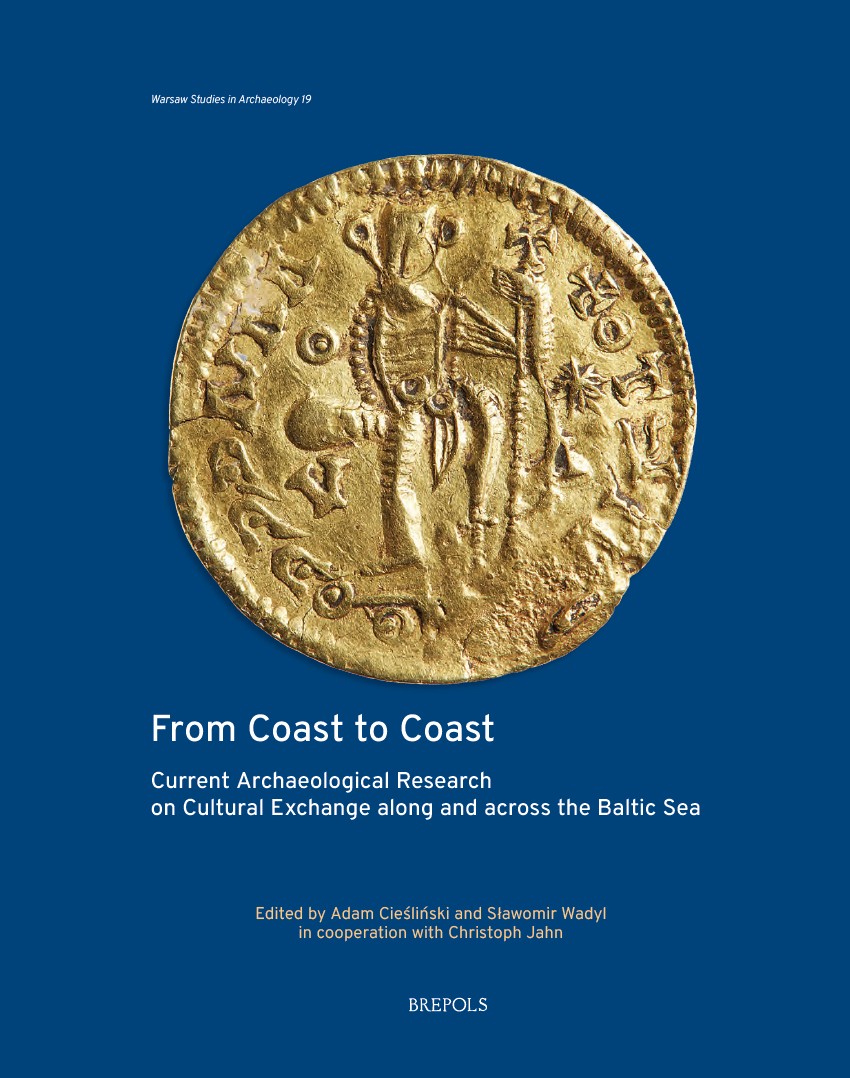 From Coast to Coast
Current Archaeological Research on Cultural Exchange along and across the Baltic Sea
Volume 19
 Frontiers of the Roman Empire: The Frontier of the Roman Province of Raetia
Grenzen des Römischen Reiches: Die Grenze der Römischen Provinz Raetien
 Gold, Silver and Glass: Power Networks, Cultural Identities, Technology Transfers and Agency across the Old World (7th Century BC – 1st Century AD)
Proceedings of a Conference Held at the British Museum, 16–18 June 2023
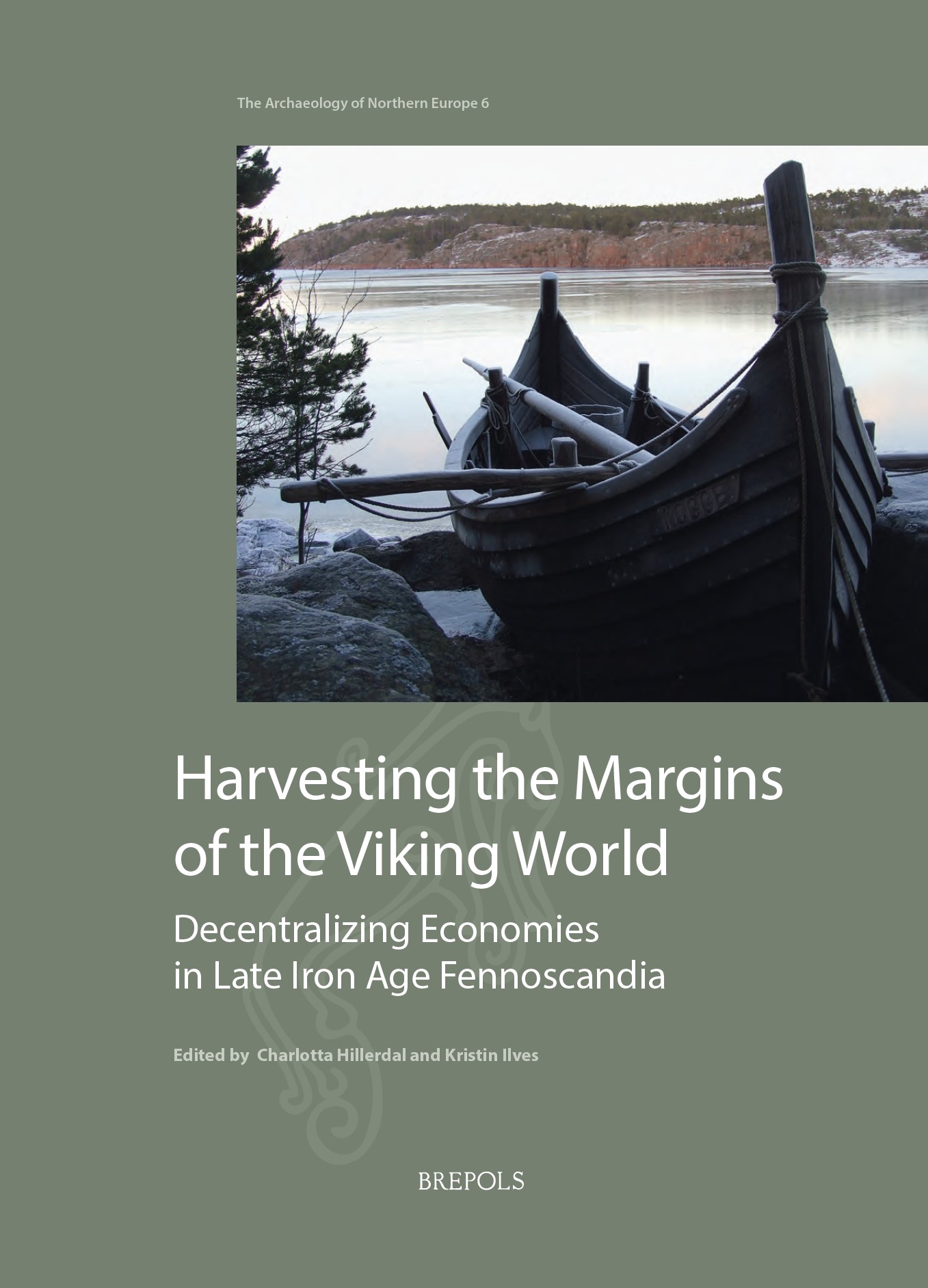 Harvesting the Margins of the Viking World
Decentralizing Economies in Late Iron Age Fennoscandia
Volume 6
 Images of Anonymous Women
A Semiotic Approach to Image-Text Relations in Interpretation of Ancient Near Eastern Art and the Hebrew Bible
Volume 310

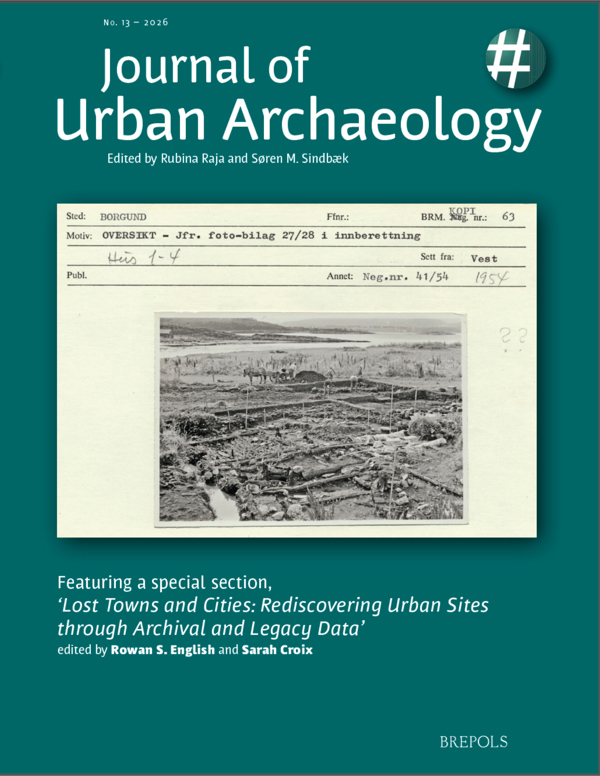 Journal of Urban Archaeology 13 (2026)
Featuring a special section, ‘Lost Towns and Cities: Rediscovering Urban Sites through Archival and Legacy Data’


 Making and Meaning in the Bronze and Iron Ages
Chronology, Landscapes and Societies across Europe. Proceedings from the METALAGES2024 Colloquium (Florence, 23 October 2024)

 Medieval Yeghegis, Armenia
History, Archaeology, Society. Local Multiplicities and Global Connections of a Rural Centre on the Silk Road(s)
 Mobility and Archaeogenetics in Central Asia
People – Goods – Ideas. 3rd International Conference on Central Asian Archaeology in Bern, 11th–13th January 2024
Volume 24


 Offa’s Dyke Journal: Volume 7 for 2025
A Journal for Linear Monuments, Frontiers and Borderlands Research


