
Popular Song in the 19th Century
Edited by Derek B Scott

Many new and exciting kinds of popular song emerged in the 19th century, and the contributors to this volume place the development and reception of these songs in their social and cultural context. The chapters are grouped into four parts. Part I investigates border crossings: an internationally known gondola song, popular songs in the Southern United States, the impact of American music in Germany, and Brazilian music in Europe. Part II concentrates on public and private spaces: the cabarets of Montmartre, salons in Berlin and Prague, popular songs and the church organ, and theatre songs in Portugal and Spain. Part III takes up the subject of social struggle: German protest songs, Hussitism and Czech songs, and Antebellum American popular songs. Part IV is concerned with matters of cultural identity: songs of Flanders, songs of the Russian ‘Slavic spirit’, urban songs in Greece after the War of Independence (1821), and rural and urban Serbian songs. Taken as a whole, the chapters reveal the importance of understanding different historical and cultural environments when investigating the subject matter, structure and meaning of 19th-century popular song.
Many new and exciting kinds of popular song emerged in the 19th century, and the contributors to this volume place the development and reception of these songs in their social and cultural context. The chapters are grouped into four parts. Part I investigates border crossings: an internationally known gondola song, popular songs in the Southern United States, the impact of American music in Germany, and Brazilian music in Europe. Part II concentrates on public and private spaces: the cabarets of Montmartre, salons in Berlin and Prague, popular songs and the church organ, and theatre songs in Portugal and Spain. Part III takes up the subject of social struggle: German protest songs, Hussitism and Czech songs, and Antebellum American popular songs. Part IV is concerned with matters of cultural identity: songs of Flanders, songs of the Russian ‘Slavic spirit’, urban songs in Greece after the War of Independence (1821), and rural and urban Serbian songs. Taken as a whole, the chapters reveal the importance of understanding different historical and cultural environments when investigating the subject matter, structure and meaning of 19th-century popular song.
- Edited by Derek B Scott
Other Titles in this Series


 Singing Speech and Speaking Melodies
Minor Forms of Musical Theatre in the 18th and 19th Century
Volume 43


 La Musique religieuse en France au XIXe siecle
Le sentiment religieux entre profane et sacre (1830-1914)
Volume 44


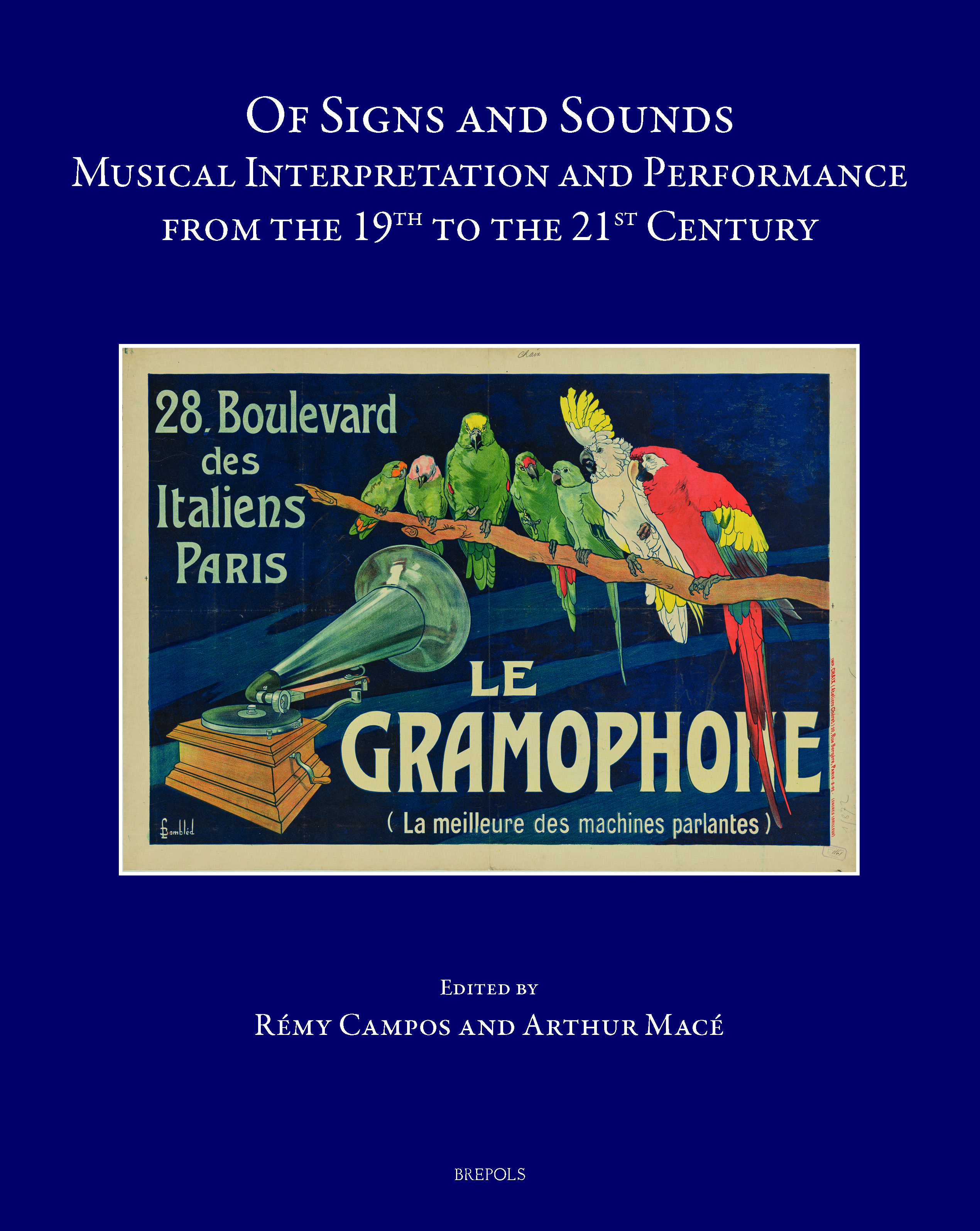 Of Signs and Sounds
Musical Interpretation and Performance from the 19th to the 21st Century
Volume 58
 Beethoven the European
Transcultural Contexts of Performance, Interpretation and Reception
Volume 48




 En pelerinage avec Liszt
Virtuosos, Repertoire and Performing Venues in 19th-Century Europe
Volume 24


 The Sound of Empire
Soundscapes, Aesthetics and Performance between Ancien regime and Restoration
Volume 51
Similar Books



 Between Bones and Beliefs
Human-Bird Relations in Central and Northern Europe in the First Millennium AD
Volume 4





 Engaged Languages and Literatures / Langues et Littératures engagées
Critical Views / Regards Critiques
 European Drama and Performance Studies
Dramatisations politiques. Théâtre, politique et idéologie au XIXe siècle (1806-1914)
Volume 27


 John Dunstaple Reading Boethius
John Dunstaple’s Annotations to Boethius’s “De institutione musica” in the Manuscript Oxford, Corpus Christi College Library, MS 118
 Music and Colonialism in Fascist Italy
Identity, Propaganda, and Ethnographic Representation
Volume 13


 Performing Science, Mediating Knowledge
Science, Showmanship, and the Performance of Authority in the Long Nineteenth Century
Volume 21


 The Antiquarian Book-trade in Switzerland
Sir Thomas Phillipps's Acquisitions in the 1820s and their Later Dispersal
Volume 69


 Visual Memory and Oblivion
Monuments and Conflicts in Urban Spaces in Central and Eastern Europe from the Nineteenth Century to the Present Day