
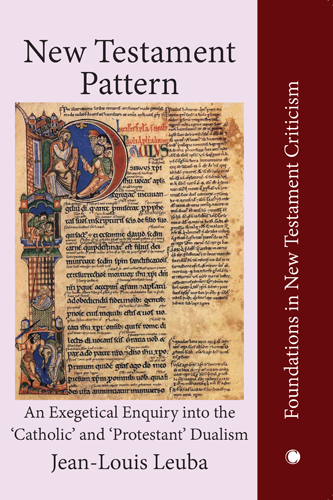
New Testament Pattern
An Exegetical Enquiry into the 'Catholic' and 'Protestant' Dualism
by Jean-Louis Leuba

Paperback (No longer our product)
(January 2003)
ISBN: 9780227172131
5.47 x 8.46 inches
Price: $41.00
In stock
Hardback (No longer our product)
(September 2002)
ISBN: 9780227172148
5.47 x 8.46 inches
Price: $98.00
In stock
An examination of the nature of Christian unity based on the pattern revealed in the New Testament.
What is the nature of Christian unity? Is it Sacramental, Organic, Federal, Spiritual? These are questions that demand careful examination when different Christian traditions are drawing closer to one another in a common desire to heal the divisions that hinder the witness of the Church to the world. In any attempt to deal with these questions, full weight must be given to the evidence of the New Testament itself: what kind of unity does it reveal? In New Testament Pattern, Jean-Louis Leuba reveals a two-fold framework of unity in the New Testament. One strand – in its witness to Christ, to the Apostles and to the Church – emphasises the institutional, traditional and particular. The other strand emphasises the personal, dynamic and universal. Yet the two strands are actually one. Their unity is more comprehensive, more creative, than any undifferentiated unity could be, with important implications for ecumenism and broader scriptural study.
Introduction Part One: The Christ I. Christological Dualism 1. The Two Categories of Titles of Jesus: Institutional and Spiritual 2. Theology of Christological Dualism II. The Unity of the Christ 1. The Christ is the Lord 2. The Lord is the Christ Part Two: The Apostles I. Apostolic Dualism 1. The Institutional Apostolate of the Twelve and the Spiritual Apostolate of Paul 2. Theology of Apostolic Dualism II. The Unity of the Apostles 1. The Union of the Twelve with Paul 2. The Union of Paul with the Twelve Part Three: The Church I. Ecclesiastical Dualism 1. The Institutional Church of Jewish Christianity and the Spiritual Church of Gentile Christianity 2. The Theological Basis of Ecclesiastical Dualism II. The Unity of the Church 1. The Union of the Jewish Christian with the Gentile Christian Church 2. The Union of the Gentile Christian with the Jewish Christian Church Conclusion 1. Institution and Event According to the New Testament 2. The Perpetual Validity of the Fundamental New Testament Dualism Notes
Jean-Louis Leuba (1912-2005) was Professor of Theology at the University of Neuchatel. He was Pastor of the French Reformed Church in Basel and editor of the theological and ecclesiastical review Verbum Caro.
- By (author) Jean-Louis Leuba
"Dr Leuba has done his work with painstaking attention to Scriptural detail, and has developed his interpretation of the evidence with much skill and insight. There are many good points made in the course of the exposition." Alan M. Stibbs, The Churchman 68/1 "Dr Leuba begins with the New Testament, and finds in it dogmatic implications of ecumenical importance ... [He] discovers running through every level of the New Testament theology two strands, that of the 'institution' and the 'event', two modes of God's working, idfferent, but united in his divine action ... The institution, says Leuba, is like a row of noughts, the event like the preceding figure 1 which makes them into a millio: divine action needs a historical embodiment, but historical institutions are nothing without the breadth of the Spirit." William Nicholls in Theology 57/409
—
Other Titles in this Series






Similar Books


 Apocrypha, Magic, Liturgy
The Multiple Identities of Coptic Prayers in Late Antique and Early Islamic Egypt
 Athanasius of Alexandria, Epistula ad episcopos Aegypti et Libyae
Old Slavonic Version and English Translation
Volume 261



 Contesting Labeled Identities
The Sociology of Gentilics in Biblical and Northwest Semitic Literature

 Cyril of Alexandria’s Christological Exegesis
Explorations of Partitive Exegesis in the Dialogues on the Trinity
Volume 70


 Epiphanies of the Divine in the Septuagint and the New Testament
Fifth International Symposium of the Corpus Judaeo-Hellenisticum Novi Testamenti (CJHNT), 14-17 May 2015, Nottingham


 Extracanonical Traditions and the Holy Land
Texts, Rituals, and Material Culture in Late Antique Palestine
 From Joseph to Jesus
The Joseph Narrative as a Compositional Template from Old Greek Esther to the Gospel of Luke
Volume 125





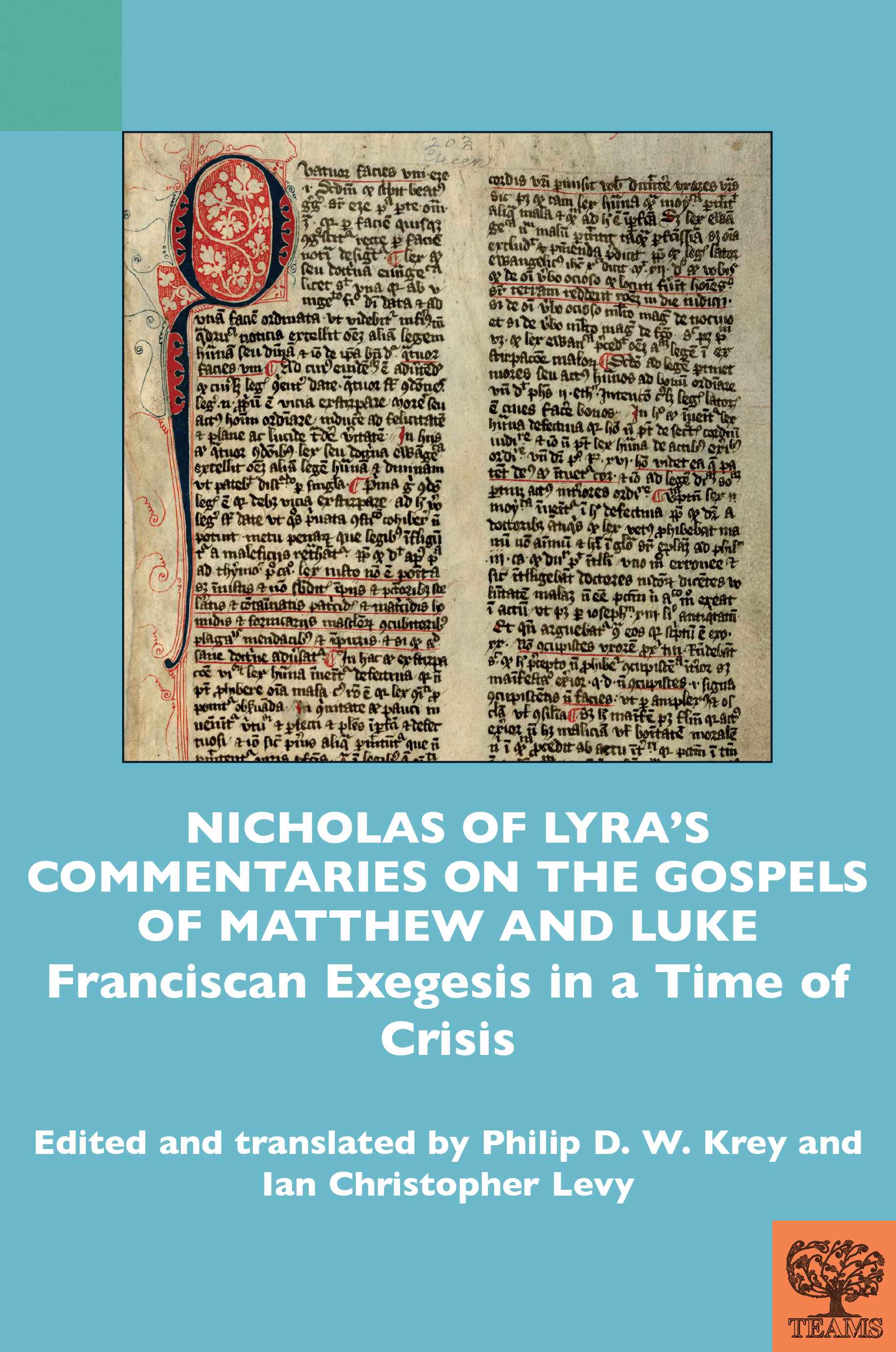 Nicholas of Lyra’s Commentaries on the Gospels of Matthew and Luke
Franciscan Exegesis in a Time of Crisis
 Paradise Lost in Transmission
The Return to Eden in the Apocalypse of Peter within Its Ethiopic and Early Christian Contexts




 Punning in Odd or Elegant Constructions in Jeremiah
The Convergence of Linguistics, Rhetoric, and Textuality in the Hebrew Text of Jeremiah
