
Mon dieu qu’ai-je fait?
Les diĝir-šà-dab(5)-ba et la piété privée en Mésopotamie
By (author) Margaret Jaques

The corpus of penitential prayers to the personal god that bear the signature KA-inim-ma digir a-dab(5)-ba gur-ru-da-kam “Incantation to return the ‘tied heart’ of the god” gives us an overview of how the inhabitants of Mesopotamia represented to themselves what we would call “private piety”. Focusing on this corpus, this book includes texts from the genre’s origin in Old Babylonian private devotion up to its use in official Assyrian kings’ rituals. The whole corpus is important for religious studies.
The corpus of penitential prayers to the personal god that bear the signature KA-inim-ma digir a-dab(5)-ba gur-ru-da-kam “Incantation to return the ‘tied heart’ of the god” gives us an overview of how the inhabitants of Mesopotamia represented to themselves what we would call “private piety”. Focusing on this corpus, this book includes texts from the genre’s origin in Old Babylonian private devotion up to its use in official Assyrian kings’ rituals. The Old Babylonian corpus consists of about 10 tablets in Sumerian that were excavated in various Mesopotamian cities. These tablets include only one prayer, addressed to the personal god. This prayer gives an idea of the wealth of metaphors used to talk about guilt, shame or sorrow. Identical metaphors appear in other similar literary texts and letters. The texts of the Assyrian corpus are either bilinguals (Akkadian and Sumerian) or purely Akkadian. Most of them were discovered in Assurbanipal’s library in Niniveh. The Akkadian texts consist of a corpus of prayers in which the Old Babylonian prayer is the fifth one. This prayer derived directly from the ancient Sumerian digir a-dab(5)-ba and was incorporated into official royal rituals, where it took on the character of an “incantation-prayer”. The other prayers of the corpus are found in different rituals like Bit rimki, urpu, ama-um-ukin Dream Rituals, and therapeutic texts of the SA.GIG series, magical texts and omen texts. The prayers were first published in 1974, but without the rituals. However, prayers and rituals should be analysed both individually and as a whole, while considering their connections and differences. The corpus of Hittite prayers to the Sun God from 13th century Anatolia, embodies isolated clauses borrowed from the Sumerian digir a-dab(5)-ba. The research published here considers the migration of these sentences from the Sumerian corpus to the Hittite texts, and analyses their use and interpretations in the new context. The Hittite texts are published by Daniel Schwemer in a separate chapter. The whole corpus is important for religious studies. First, it provides insight into private devotion in Mesopotamia, still a very little known topic. Second, the problem of evil is treated, its causes and its deflection or palliation. Naturally, evil is a source of emotions and the way these emotions are expressed in prayers has to be considered in comparison with other kinds of expressions in Mesopotamian culture. Finally, the way a text changes while traveling from one place to another and from one period to another has to be analysed. Study of this corpus illustrates how both historical and synthetic analyses can interact and support each other in order to enhance our understanding of religion in the ancient Near East.
- By (author) Margaret Jaques
Other Titles in this Series
 Wortschöpfung
Die Memphitische Theologie und die Siegesstele des Pije - zwei Zeugen kultureller Repräsentation in der 25. Dynastie
Volume 243
 From Most Ancient Sources
The Nature and Text-Critical Use of the Greek Old Testament Text of the Complutensian Polyglot Bible
 When Gods Speak to Men
Divine Speech according to Textual Sources in the Ancient Mediterranean Basin
Volume 289

 Les fluides corporels en Égypte et au Proche-Orient anciens
Actes du colloque organisé à l'Université Paul-Valéry, Montpellier, 5-7 septembre 2019
Volume 309
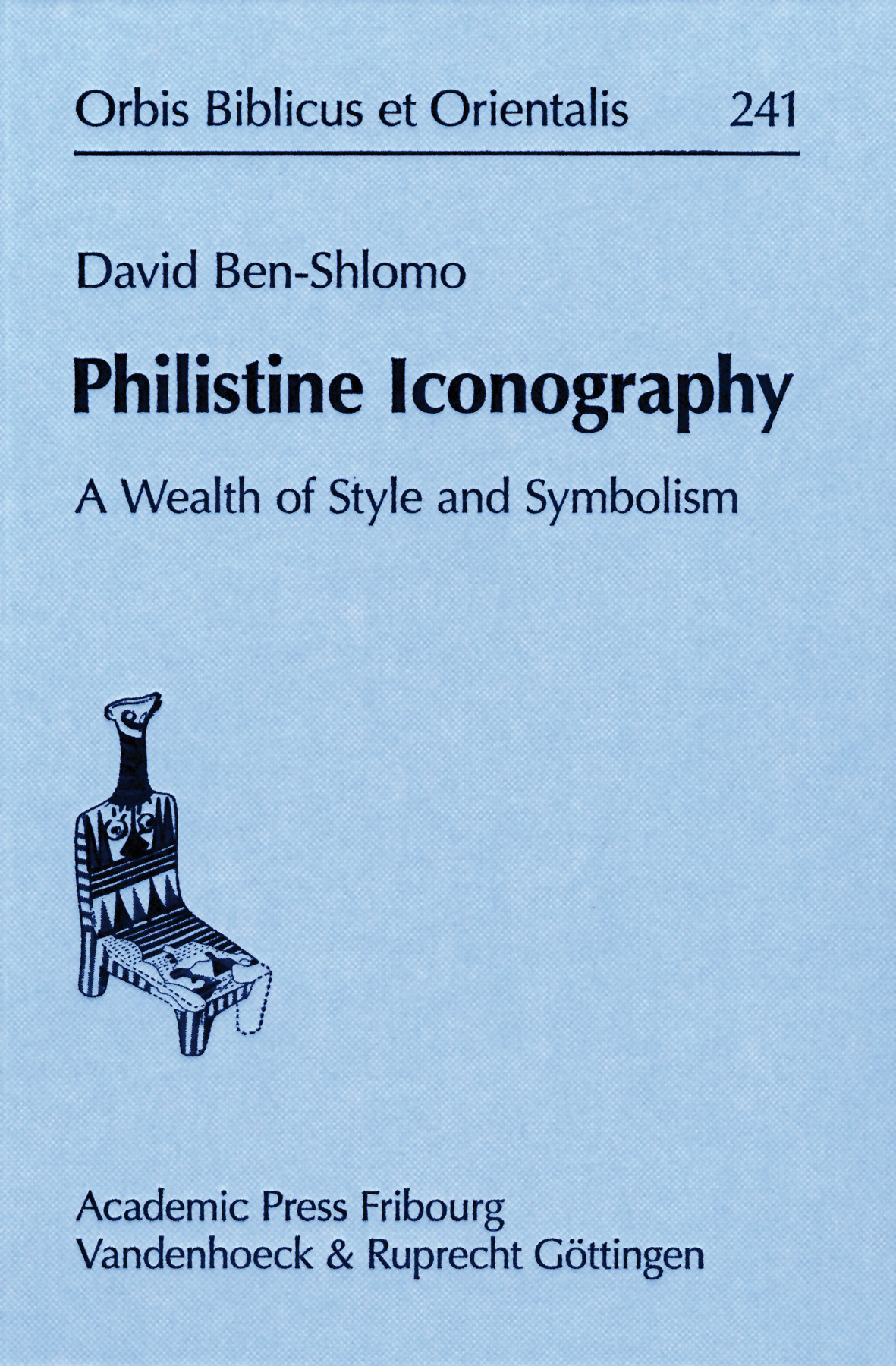
 Göttliche Körper – Göttliche Gefühle
Was leisten anthropomorphe und anthropopathische Götterkonzepte im Alten Orient und Alten Testament?

 Divine Names on the Spot II
Exploring the Potentials of Names through Images and Narratives
Volume 299
 Comment devient-on prophète?
Actes du colloque organisé par le Collège de France, Paris, les 4-5 avril 2011

 Senebi und Selbst
Personenkonstituenten zur rituellen Wiedergeburt in einem Frauensarg des Mittleren Reiches

 Menschenwürde und Menschenrechte im Altem Orient, Israel und Hellas. Band 1
Human Dignity and Human Rights in the Ancient Near East, Ancient Israel, and Hellas. Volume 1
Volume 311
 Prophétisme et Alliance
Des Archives royales de Mari à la Bible hébraïque. Mit einem « Vorwort » von Manfred Weippert. Recueil d’études édité par Stephan Lauber et Hans Ulrich Steymans


 Garments of the Gods
Studies on the Textile Industry and the Pantheon of Sippar according to the Texts from the Ebabbar Archive
 Khirbet Qeiyafa in the Shephelah
Papers Presented at a Colloquium of the Swiss Society of Ancient Near Eastern Studies Held at the University of Bern, September 6, 2014

 Images of Anonymous Women
A Semiotic Approach to Image-Text Relations in Interpretation of Ancient Near Eastern Art and the Hebrew Bible
Volume 310
 Wortschöpfung
Die Memphitische Theologie und die Siegesstele des Pije – zwei Zeugen kultureller Repräsentation in der 25. Dynastie

 La Septante en Allemagne et en France/Septuaginta Deutsch und Bible d’Alexandrie
Textes de la Septante à traduction double ou à traduction très littérale/Texte der Septuaginta in Doppelüberlieferung oder in wörtlicher Übersetzung
 ‘Trinkt von dem Wein, den ich mischte!’ ‘Drink of the Wine which I have Mingled!’
Festschrift für Silvia Schroer zum 65. Geburtstag
Volume 303
Similar Books

 A Companion to Christianity and Sport in Europe and North America (19th-21st centuries)
Volume 1: Western and Eastern Europe
 A Connecting Polemic in the Medieval Mediterranean
The Correspondence of Leo III and ʿUmar II
Volume 6








 Ars Prophetica
Theology in the Poetry of Twentieth-Century Hebrew Poets Avraham Halfi, Shin Shalom, Amir Gilboa, and T. Carmi
 As Messianism Turns to Heresy
The Regenstein Chair Lectures On Lurianic Kabbalah and Shabbatai Tzevi at Hebrew Union College - Cincinnati


 Boğazköy Tablets in the Museum of Anatolian Civilizations (Bo 9032–Bo 9097)
Anadolu Medeniyetleri Müzesinde Bulunan Boğazköy Tabletleri (Bo 9032–Bo 9097)
Volume 4


 Connecting the Dots: Counting, Writing, and the Beginnings of Civilization
The Secret Lives of Clay Tokens: A Memoir

 Creating the Woman in Antiquity
Proceedings of the 16th Melammu Workshop, Innsbruck, 2–3 June 2022
Volume 13
 Cultic Kisses
Fruitful Encounters Between Deities and Humans. Festschrift for Angelika Berlejung on the Occasion of Her 65th Birthday
 Curating the Prehistoric Past
Studies on West Asian Archaeology and Beyond in Honour of Yoshihiro Nishiaki
 De/colonizing Theologies
Glocal Histories, Contemporary Challenges, Theoretical Reflections
Volume 4
 Drunk the Potion, No Whit Charmed
The Doctrine of Pure and Perfect Souls from Iamblichus to Damascius
