
Mithras – Miθra – Mitra
Der romische Gott Mithras aus der Perspektive der vergleichenden Religionsgeschichte
by Jaan Lahe
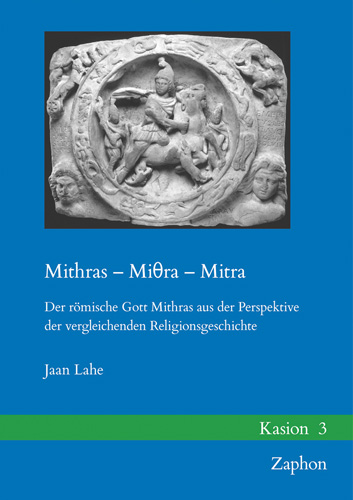
The Roman Mithras cult is one of the so-called “oriental cults” that spread throughout the Roman Empire. Although ancient tradition regards it as a Persian cult, Franz Cumont (the “father of modern Mithraic-study”), and many scholars have been convinced of its Iranian origin. All the information presently available to us opposes this view and suggests that the Roman Mithras cult was not an imported cult from Iran, but a cult that developed within the borders of the Roman Empire and grew there after the end of the first century A.D. The author of the present book assumes that the Roman cult of Mithras is not identical with the cult of Mithra/Mithras/Mithres in the Hellenistic East or even in Iranian religion, but must be regarded as an independent cult in the context of Roman religion. At the same time, the author is convinced that an important link existed between the three cults mentioned above. It is not only the name of the god, which goes back to an Indo-Iranian appellative mitra (Neutr.), but also the figure or personality of the god, who in the Roman Empire was called Mithras, in the Hellenistic Orient Mithra or Mithres and in Iran Miθra/Mithra (later Mihr). The author, on the basis of the literary, epigraphic and numismatic sources and other representations of the god, compares the personality of “Mithra” (used here as the summary meta-name for different deities). The author shows that the figure or personality of the god in the aforementioned regions is not identical and has in each religion or in each cultural space its “individual character”, which distinguishes him from his namesake. The study is supplemented by illustrations and an extensive index.
The Roman Mithras cult is one of the so-called “oriental cults” that spread throughout the Roman Empire. Although ancient tradition regards it as a Persian cult, Franz Cumont (the “father of modern Mithraic-study”), and many scholars have been convinced of its Iranian origin. All the information presently available to us opposes this view and suggests that the Roman Mithras cult was not an imported cult from Iran, but a cult that developed within the borders of the Roman Empire and grew there after the end of the first century A.D. The author of the present book assumes that the Roman cult of Mithras is not identical with the cult of Mithra/Mithras/Mithres in the Hellenistic East or even in Iranian religion, but must be regarded as an independent cult in the context of Roman religion. At the same time, the author is convinced that an important link existed between the three cults mentioned above. It is not only the name of the god, which goes back to an Indo-Iranian appellative mitra (Neutr.), but also the figure or personality of the god, who in the Roman Empire was called Mithras, in the Hellenistic Orient Mithra or Mithres and in Iran Miθra/Mithra (later Mihr). The author, on the basis of the literary, epigraphic and numismatic sources and other representations of the god, compares the personality of “Mithra” (used here as the summary meta-name for different deities). The author shows that the figure or personality of the god in the aforementioned regions is not identical and has in each religion or in each cultural space its “individual character”, which distinguishes him from his namesake. The study is supplemented by illustrations and an extensive index.
Abkurzungen Einleitung - Wie stellt man sich eine Gottheit vor? Eine Phanomenologie des Polytheismus Kapitel 1: Der Gott Mithras in der romischen Religion 1.1 Quellen 1.2. Einzelne Aspekte des Gottes 1.3 Zusammenfassung und Ergebnisse Kapitel 2: Der Gott Mithra/Mithras/Mithres im hellenistischen Kleinasien 2. 1 Quellen 2.2 Einzelne Aspekte des Gottes 2.3 Zusammenfassung und Ergebnisse Kapitel 3: Der romische Mithras und seine vermeintlichen Beziehungen zu Mithra/Mithras/ Mithres im hellenistischen Kleinasien 3.1 Die kommagenischen Mithras-Darstellungen und ihre Beziehungen zur Ikonographie des romischen Mithras-Kultes 3.2 Die Hypothese uber die kleinasiatische Herkunft des romischen Mithras-Kultes 3.3 Zusammenfassung und Ergebnisse Kapitel 4: Der Gott Miθ
ra/Mihr im iranischen Kulturraum 4.1 Primarquellen 4.2 Sekundarquellen 4.3 Die Gestalt des Mithra in Quellen aus dem iranischen Kulturraum 4.4 Mithra in Sekundarquellen 4.5 Zusammenfassung und Ergebnisse Kapitel 5: Der romische Mithras und seine vermeintlichen Beziehungen zu Miθ
ra/Mihr im iranischen Kulturraum 5.1 Beruhrungspunkte zwischen dem romischen Mithras und dem iranischen Mithra 5.2 Die Theorie uber die iranische Herkunft des romischen Mithras-Kultes 5.3 Zusammenfassung und Ergebnisse Kapitel 6: Der iranische Miθ
ra/Mihr und seine vermeintlichen Beziehungen zu Mithra/Mithras/Mithres im hellenistischen Kleinasien 6.1 Der Name des Gottes 6.2 Die Darstellungsweise des Gottes 6.3 Mithras Stellung und Funktion im kommagenischen Pantheon 6.4 Erklarungsmodelle des kommagenischen Pantheons 6.5 Zusammenfassung und Ergebnisse Kapitel 7: Der Gott Mihryazd/Misi Bayi im Manichaismus 7.1 Quellen 7.2 Der Name des Gottes und seine Titel 7.3 Die unterschiedlichen Funktionen des Gottes im Manichaismus 7.4 Zusammenfassung und Ergebnisse Kapitel 8: Der manichaische Mihryazd/Misi Bayi und seine vermeintlichen Beziehungen zu Miθ
ra/Mihr im Zoroastrismus 8.1 Iranische Motive im Manichaismus 8.2. Der manichaische Gott Mihryazd und sein Verhaltnis zum Gott Mithra (Mihr) im Zoroastrismus 8.3. Zusammenfassung und Ergebnisse Kapitel 9: Mitra in Indien 9.1 Quellen 9.2 Die Gestalt des Gottes Mitra in der vedischen Literatur 9.3. Zusammenfassung und Ergebnisse Kapitel 10: Die Beziehungen zwischen indischem Mitra und iranischem Miθ
ra/Mihr 10.1 Beziehungen zwischen vedischem und avestischem Pantheon 10.2 Die Gemeinsamkeiten und Unterschiede zwischen indischem Mitra und iranischem Miθ
ra Exkurs: Mitras Erstnennung in der indoarischen Gotterliste im Vertrag von Hattusa? 10.3 Zusammenfassung und Ergebnisse " Kapitel 11: Zusammenfassender Vergleich und Ergebnisse: romischer Mithras, hellenistischer Mithra/Mithras/Mithres, iranischer Miθ
ra/Mihr, manichaischer Mihryazd/Misi Bayi und indischer Mitra 11.1 Die wichtigsten Wesenszuge der Gotter 11.2 Die Gemeinsamkeiten und Unterschiede der Gotter Zusammenfassung / Summary Quellen und Literatur Index Abbildungen (Tf. I-XXX)
- By (author) Jaan Lahe
Other Titles in this Series
 Die ‘Zwei Korper des Konigs’ in den westsemitischen Kulturen
Ugarit, aramaische Konigreiche, Phonizien, Ammon, Moab, Israel und Juda
Volume 4
 Dying and Rising Gods
The History of a Mythologem in West Asia of the Second Millennium BCE
Volume 10
 talugaes wittes
Ancient Near Eastern Studies Presented to Stefano de Martino on the Occasion of his 65th Birthday
Volume 2
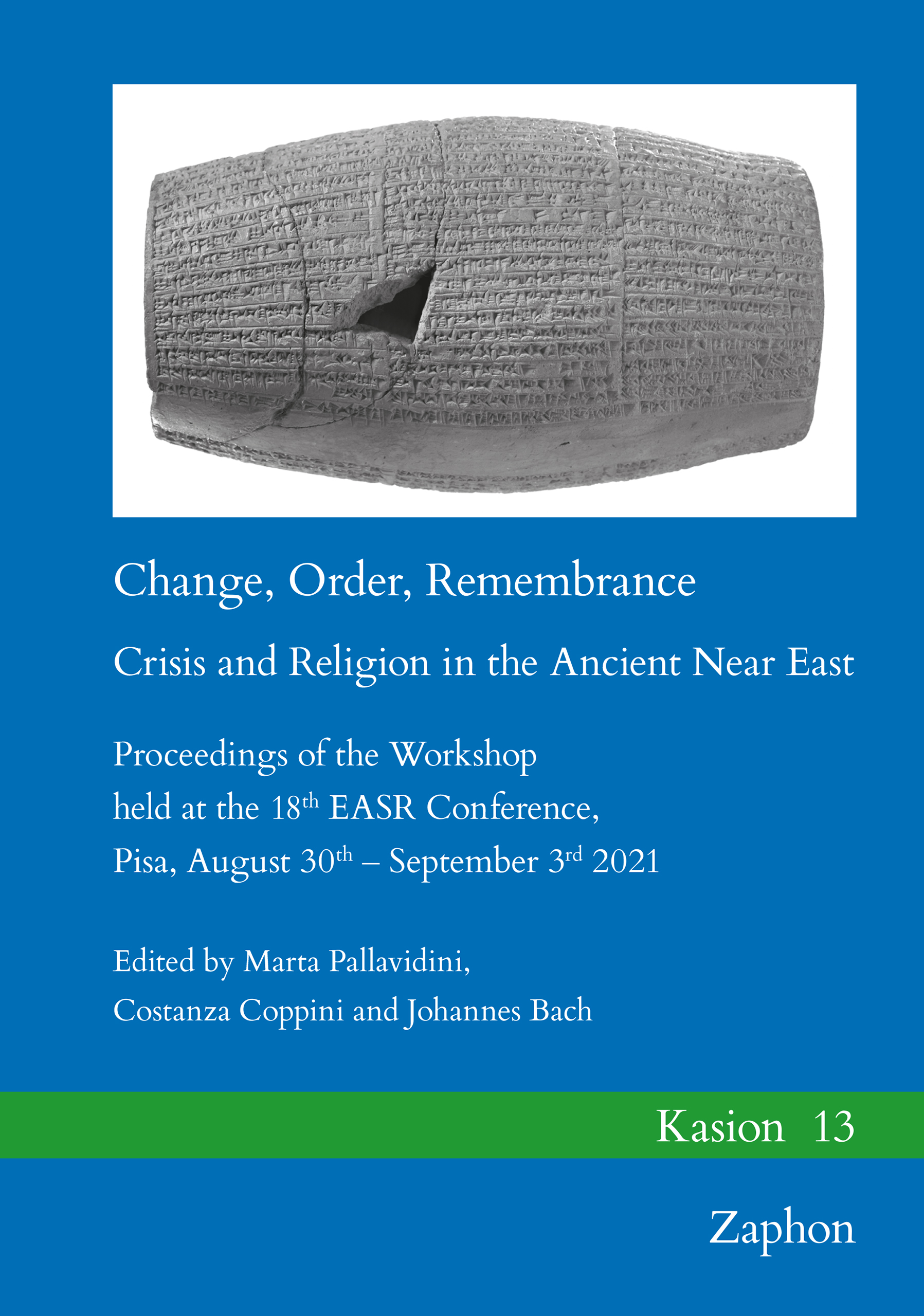 Change, Order, Remembrance
Crisis and Religion in the Ancient Near East: Proceedings of the Workshop held at the 18th EASR Conference, Pisa, August 30th - September 3rd 2021
Volume 13
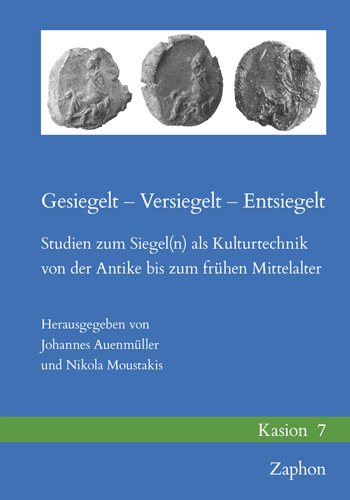 Gesiegelt – Versiegelt – Entsiegelt
Studien zum Siegel(n) als Kulturtechnik von der Antike bis zum fruhen Mittelalter
Volume 7
 Gestaltung, Funktion und Bedeutung antiker Treppenanlagen
Multiperspektivische Analyse einer transkulturellen Konstante
Volume 11
 Israel und Phonizien im 9. und 8. Jahrhundert v. Chr.
Studien zu Beziehungen und Handel zwischen den phonizischen Stadten und Israel unter den Nimsiden unter besonderer Berucksichtigung des Fundortes Kuntillet 'Agrud
Volume 9
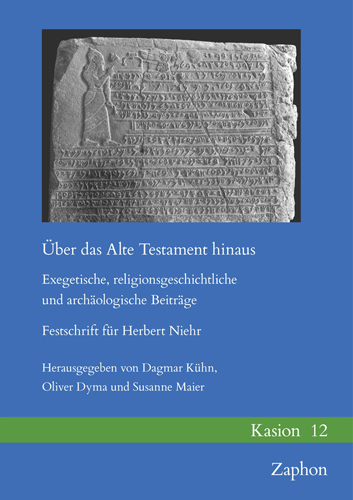 Uber das Alte Testament hinaus
Exegetische, religionsgeschichtliche und archaologische Beitrage. Festschrift fur Herbert Niehr
Volume 12
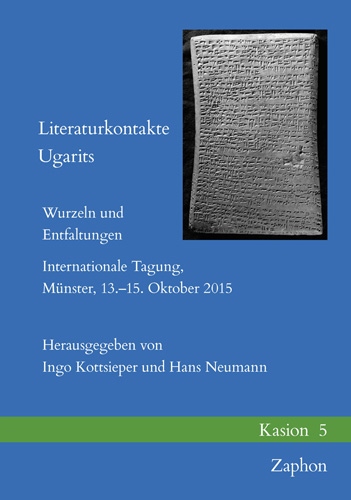 Literaturkontakte Ugarits
Wurzeln und Entfaltungen: Internationale Tagung, Munster, 13-15. Oktober 2015
Volume 5
 Heilige Orte der Antike
Gesammelte Studien im Anschluss an eine Ringvorlesung des Exzellenzclusters Religion und Politik in den Kulturen der Vormoderne und der Moderne an der Universitat Munster im Wintersemester 2013/2014
Volume 1
Similar Books

 A Companion to Christianity and Sport in Europe and North America (19th-21st centuries)
Volume 1: Western and Eastern Europe
 A Connecting Polemic in the Medieval Mediterranean
The Correspondence of Leo III and ʿUmar II
Volume 6





 Ars Prophetica
Theology in the Poetry of Twentieth-Century Hebrew Poets Avraham Halfi, Shin Shalom, Amir Gilboa, and T. Carmi
 As Messianism Turns to Heresy
The Regenstein Chair Lectures On Lurianic Kabbalah and Shabbatai Tzevi at Hebrew Union College - Cincinnati



 Contesting Labeled Identities
The Sociology of Gentilics in Biblical and Northwest Semitic Literature

 Creating the Woman in Antiquity
Proceedings of the 16th Melammu Workshop, Innsbruck, 2–3 June 2022
Volume 13
 Cultic Kisses
Fruitful Encounters Between Deities and Humans. Festschrift for Angelika Berlejung on the Occasion of Her 65th Birthday
 De/colonizing Theologies
Glocal Histories, Contemporary Challenges, Theoretical Reflections
Volume 4
 Drunk the Potion, No Whit Charmed
The Doctrine of Pure and Perfect Souls from Iamblichus to Damascius


 Epigraphic “Shades” from Hellenistic Thrace
Contextualizing Inscriptions in Greek from Thracian Tombs

 Epiphanies of the Divine in the Septuagint and the New Testament
Fifth International Symposium of the Corpus Judaeo-Hellenisticum Novi Testamenti (CJHNT), 14-17 May 2015, Nottingham
