
Mémoire et propagande à l’époque timouride
By (author) M. Bernardini

Ce volume reunit les cinq communications presentees dans le cadre des “Conferences d’etudes iraniennes Ehsan et Latifeh Yarshater”, organisees par l’Unite Mixte de Recherche “Mondes Iranien et Indien” en 2005 au College de France a Paris. Construit autour de la figure de Timur-e Lang (Tamerlan, ca. 1330-1405), l’ouvrage s’interroge sur la manipulation de la memoire historique et sur l’usage que peut en faire le pouvoir a travers la propagande politique en Asie centrale et en Iran au XVe siecle, dans l’empire timouride. Au plus pres des sources persanes, l’auteur analyse le discours des chroniqueurs de la cour de Timur et examine le processus de construction des origines vertueuses du souverain par les historiens de son epoque. En miroir, cette etude s’interesse aux textes historico-litteraires et notamment a la transposition epique de la tradition historiographique. Sur les traces de Timur, de l’Asie centrale a l’Empire ottoman a l’ouest et aux profondeurs de l’Inde a l’est, les sources font emerger deux images contrastees et forgees du conquerant et de ses actions : combattant pour la foi et roi vertueux, Timur apparait en meme temps comme un chef de guerre destructeur et comme un etre demoniaque. Cette memoire manipulee a des fins ideologiques integrera durablement le discours historique des siecles ulterieurs. This volume contains the texts of five Ehsan and Latifeh Yarshater Distinguished lectures on Iranian Studies, organized by the Unite Mixte de Recherche “Mondes Iranien et Indien”, and delivered in 2005 at the College de France in Paris. This book inquires into the manipulation of the historical memory of the figure of Timur-e Lang (Tamerlane, ca. 1330-1405) and into the uses that power-holders made of it through political propaganda in Central Asia and Iran during the 15th century, in the Timurid empire. Following up on Persian sources, the author analyses the discourse of chroniclers at Timur’s court, and examines how historians of his time constructedthe sovereign’s virtuous origins. Interest is shown in this figure’s reflection in historico-literary texts, in particular in the epic transpositionof the historiographical tradition. On Timur’s tracks from Central Asia to the Ottoman Empire in the West and deep into India in the East, the sources build up two contrasting images of the conqueror and his actions: as a virtuous ruler and fighter for the Faith, on the one hand, and, on the other, as a destructive war lord and a demoniac being. This memory, manipulated for ideological purposes, has become a lasting part of the historical discourse formulated in later centuries.
- By (author) M. Bernardini
Other Titles in this Series


 Mélanges d’ethnographie et de dialectologie irano-aryenne à la mémoire de Charles-Martin Kieffer
Volume 61
 Rabbo l’olmyn «Maitre pour l’Éternité»
Florilège offert à Philippe Gignoux pour son 80e anniversaire
Volume 43
 Chretiens en terre d’Iran III: Vita e studi di Timoteo I, patriarca cristiano di Baghdad
Ricerche sull' epistolario e sulle fonti contigue
Volume 41


 Mediaeval and Modern Iranian Studies
Proceedings of the 6th European Conference of Iranian Studies (Vienna, 2007)
Volume 45


 Iranian Languages and Literatures of Central Asia
From the Eighteenth Century to the Present
Volume 57

 Chrétiens en terre d’Iran VI: Les liens du sol
Images du pouvoir et identités des chrétiens sous Khusro Ier
Volume 63
 Further Topics in Iranian Linguistics
Proceedings of the 5th International Conference on Iranian Linguistics, held in Bamberg on 24-26 August 2013
Volume 58

 Études sur l’Iran médiéval: géographie historique et société
Édition indexée avec une introduction par Denise Aigle
Volume 60

Similar Books


 Cities through Time
Glimpses into Urbanity and Community in Mediaeval to Modern West Asia and Egypt
Volume 1
 Cuneiform Artefacts from Archaeological Contexts: New Research on Ancient Iraq
Proceedings of a Conference Held at the Bavarian Academy of Sciences and Humanities, July 4–5, 2024
Volume 2
 Des mots aux actes
Traduction épistémique et littéraire. Nouvelles tendances en histoire et didactique
Volume 15


 Global Gulf
Geo-Economic, Geo-Political, and Geo-Technological Transformation in Saudi Arabia, the United Arab Emirates, and Qatar


 Ismail Hakki Bursevi’s translation of and commentary on Fusus al-Hikam By Muhyiddin Ibn ‘Arabi
Volumes 1-4


 Monastic Manuscripts from the Eastern Mediterranean (Sinai, Jerusalem, Antioch)
Production, Use, and Contexts


 Punning in Odd or Elegant Constructions in Jeremiah
The Convergence of Linguistics, Rhetoric, and Textuality in the Hebrew Text of Jeremiah
 Qatar’s Societal Security
Towards the Inclusive National Concept of ‘Baladna’ Identity, Migration and External Threats Since 2017


 The Biblical Tale of Judah and Tamar in Fourteenth-Century Iran
A Judeo-Persian Versified Account by Shāhīn with Scholarly Edition, Annotated Translation and Persian Transliteration
Volume 94, 951
 The Discourse of Rites
Shaping and Reshaping the (Counter-)Priestly Rituals Conducted Outside the Tabernacle



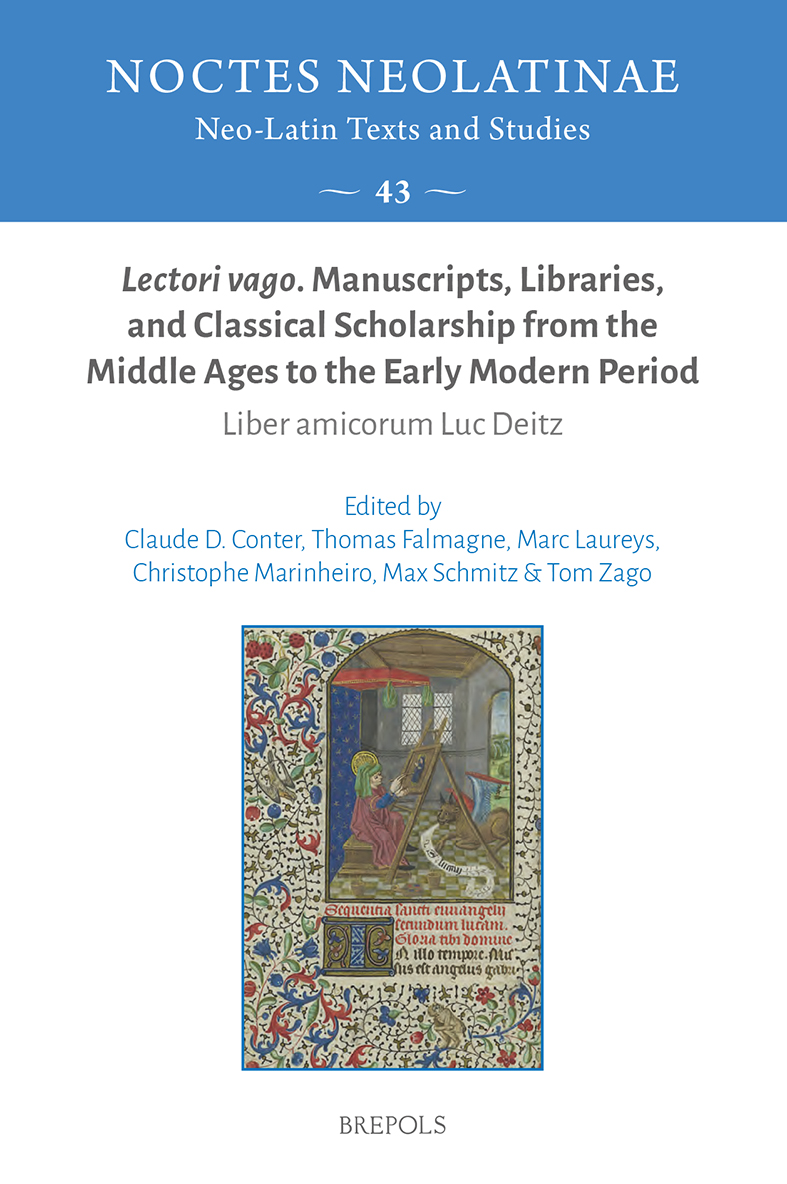 Lectori vago. Manuscripts, Libraries, and Classical Scholarship from the Middle Ages to the Early Modern Period
Liber amicorum Luc Deitz
Volume 43


 »Ein elend-schönes Land«
Gattung und Gedächtnis in Lea Goldbergs hebräischer Literatur. Aus dem Hebräischen von Rainer Wenzel

