
Ludovico Marracci at work
The evolution of his Latin translation of the Qur?an in the light of his newly discovered manuscripts. With an edition and a comparative linguistic analysis of Sura 18
by Reinhold F. Glei and Roberto Tottoli

In 2012, the manuscripts of the famous Oriental scholar Ludovico Marracci (1612-1700) were discovered in the library of the Ordine dei Chierici Regolari della Madre di Dio in Rome. Amounting to almost 10,000 pages, the 15 manuscripts include Marracci’s work material, notes and significant information on his approach to transcribing, translating and commenting the Qur’an, and different versions of his translation. In fact, Marracci’s work on the Qur’an solicits the interest of scholars of Islamic studies and the early history of this discipline as well as the interests of Latinists and historians of Early Modern Europe. As an example, one individual Sura of the Qur’an (no. 18, al-Kahf, “The Cave”) has been chosen to show Marracci’s methods of working. The book as a whole is the product of a shared discussion, but is also made up of parts carried out by each of the authors separately. The first part (I.1-4), describing the early steps in Marracci’s work, is by Roberto Tottoli, who further examines the use of Qur’anic exegesis in order to analyse Marracci’s use of Islamic sources and their reflections in the various layers of the translation. In the second part (II.1-5), Reinhold Glei discusses the questions connected to the Latin texts. In particular, he shows the development from a target language oriented to a source language oriented translation. To this purpose, editions of the various Latin versions of Sura 18 preserved in the manuscripts and a detailed linguistic commentary are included. A double Latin word index (on the first and final versions) is provided in the appendix, which also includes digital reproductions of the discussed parts of the manuscripts.
In 2012, the manuscripts of the famous Oriental scholar Ludovico Marracci (1612-1700) were discovered in the library of the Ordine dei Chierici Regolari della Madre di Dio in Rome. Amounting to almost 10,000 pages, the 15 manuscripts include Marracci’s work material, notes and significant information on his approach to transcribing, translating and commenting the Qur’an, and different versions of his translation. In fact, Marracci’s work on the Qur’an solicits the interest of scholars of Islamic studies and the early history of this discipline as well as the interests of Latinists and historians of Early Modern Europe. As an example, one individual Sura of the Qur’an (no. 18, al-Kahf, “The Cave”) has been chosen to show Marracci’s methods of working. The book as a whole is the product of a shared discussion, but is also made up of parts carried out by each of the authors separately. The first part (I.1-4), describing the early steps in Marracci’s work, is by Roberto Tottoli, who further examines the use of Qur’anic exegesis in order to analyse Marracci’s use of Islamic sources and their reflections in the various layers of the translation. In the second part (II.1-5), Reinhold Glei discusses the questions connected to the Latin texts. In particular, he shows the development from a target language oriented to a source language oriented translation. To this purpose, editions of the various Latin versions of Sura 18 preserved in the manuscripts and a detailed linguistic commentary are included. A double Latin word index (on the first and final versions) is provided in the appendix, which also includes digital reproductions of the discussed parts of the manuscripts.
- By (author) Reinhold F Glei
- By (author) Roberto Tottoli
Other Titles in this Series
 A Baroque Jesuit’s Encounter with the Qur’an
An Examination of Ignazio Lomellini's, S. J., Animadversiones, Notae ac Disputationes in Pestilentem Alcoranum
Volume 3
 Masa’il ‘Abdallah ibn Salam (Doctrina Mahumet)
Kritische Edition des arabischen Textes mit Einleitung und Ubersetzung
Volume 2
Similar Books


 Cities through Time
Glimpses into Urbanity and Community in Mediaeval to Modern West Asia and Egypt
Volume 1
 Cuneiform Artefacts from Archaeological Contexts: New Research on Ancient Iraq
Proceedings of a Conference Held at the Bavarian Academy of Sciences and Humanities, July 4–5, 2024
Volume 2
 Des mots aux actes
Traduction épistémique et littéraire. Nouvelles tendances en histoire et didactique
Volume 15


 Global Gulf
Geo-Economic, Geo-Political, and Geo-Technological Transformation in Saudi Arabia, the United Arab Emirates, and Qatar


 Ismail Hakki Bursevi’s translation of and commentary on Fusus al-Hikam By Muhyiddin Ibn ‘Arabi
Volumes 1-4


 Monastic Manuscripts from the Eastern Mediterranean (Sinai, Jerusalem, Antioch)
Production, Use, and Contexts


 Punning in Odd or Elegant Constructions in Jeremiah
The Convergence of Linguistics, Rhetoric, and Textuality in the Hebrew Text of Jeremiah
 Qatar’s Societal Security
Towards the Inclusive National Concept of ‘Baladna’ Identity, Migration and External Threats Since 2017


 The Biblical Tale of Judah and Tamar in Fourteenth-Century Iran
A Judeo-Persian Versified Account by Shāhīn with Scholarly Edition, Annotated Translation and Persian Transliteration
Volume 94, 951
 The Discourse of Rites
Shaping and Reshaping the (Counter-)Priestly Rituals Conducted Outside the Tabernacle



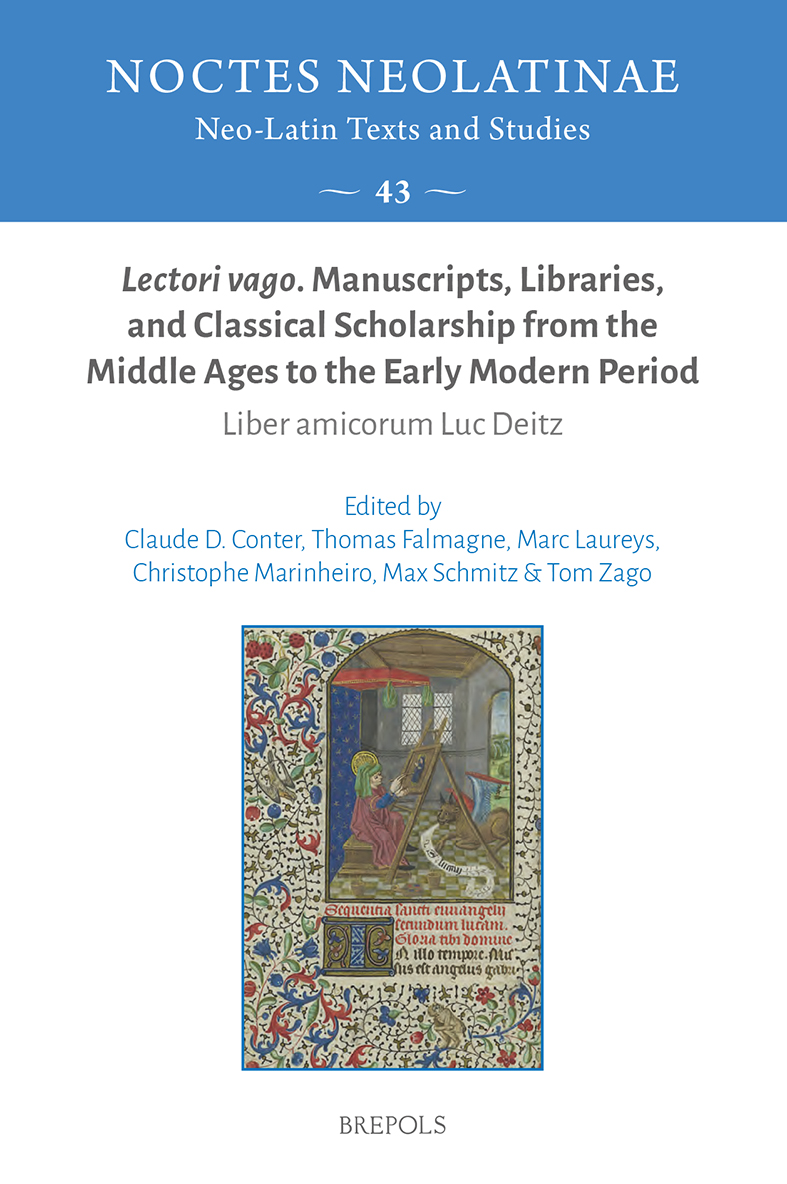 Lectori vago. Manuscripts, Libraries, and Classical Scholarship from the Middle Ages to the Early Modern Period
Liber amicorum Luc Deitz
Volume 43


 »Ein elend-schönes Land«
Gattung und Gedächtnis in Lea Goldbergs hebräischer Literatur. Aus dem Hebräischen von Rainer Wenzel

