
L’Égypte des villages autour du seizième siècle
By (author) N. Michel
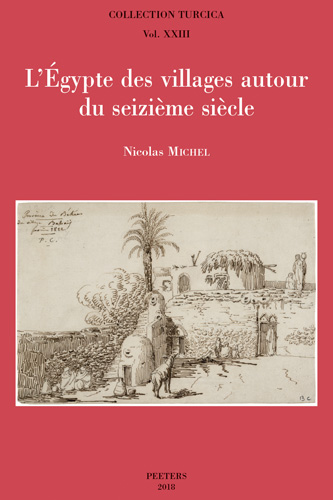
This book aims at studying the history of Islamic Egypt during a little-known time period (the 16th century) through the lens of its rural world, an even lesser-known reality. Following their conquest of Egypt in 1517, the Ottomans developed a lasting concern for the countryside, as it represented a major source of state income. Their attempt to assess and harness its resources brought about an exceptional set of archival records, part of which remain extant to date. These archives retain information on land regimes and fiscal organization as well as shedding light on the distribution of power and authority within rural societies. Despite giving evidence on the wide-ranging autonomy that local peasant communities could enjoy, such records still impart uniformity to highly diverse and unequal societies. Studying 16th-century Egypt in this way is thus insightful to understand its former Mamluk history as well as its evolutions to come during Ottoman times.
This book aims at studying the history of Islamic Egypt during a little-known time period (the 16th century) through the lens of its rural world, an even lesser-known reality. Following their conquest of Egypt in 1517, the Ottomans developed a lasting concern for the countryside, as it represented a major source of state income. Their attempt to assess and harness its resources brought about an exceptional set of archival records, part of which remain extant to date. These archives retain information on land regimes and fiscal organisation as well as shedding light on the distribution of power and authority within rural societies. Despite giving evidence on the wide-ranging autonomy that local peasant communities could enjoy, such records still impart uniformity to highly diverse and unequal societies. Studying 16th-century Egypt in this way is thus insightful to understand its former Mamluk history as well as its evolutions to come during Ottoman times.
- By (author) N. Michel
Other Titles in this Series
 La diplomatie ottomane sous le règne de Selîm II
Paramètres et périmètres de l'Empire ottoman dans le troisième quart du XVIe siècle
Volume 20

 Detroner le sultan
Deux conjurations a l'epoque des reformes ottomanes: Kuleli (1859) et Meslek (1867)
Volume 18
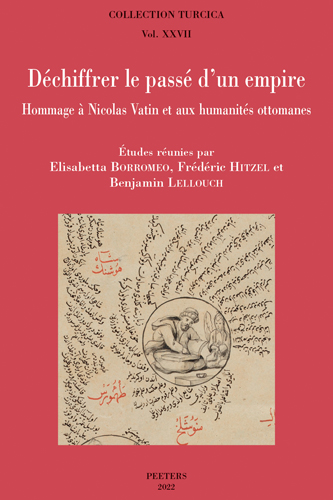
 Penser, agir et vivre dans l’Empire ottoman et en Turquie
Etudes reunies pour Francois Georgeon
Volume 19
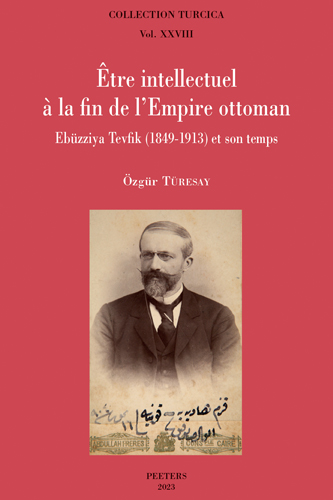

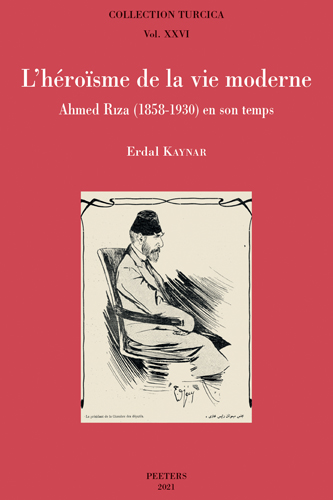
 L’épitaphe ottomane musulmane (XVIe-XXe siècles)
Contribution à une histoire de la culture ottomane
Volume 13
 Catalogue of the Ottoman Holdings of St John’s Monastery in Patmos, Part Two: Dossiers 21-38
Katalogos ton Othomanikon Engrafon tou archeiou tis Ieras Monis tou Agiou Ioannou tou Theologou tis Patmou, Meris Difteron: Oi fakelloi 21-38
Volume 25


 Les intérêts culturels français dans l’Empire ottoman finissant
L'enseignement laïque et en partenariat
Volume 16
 Un empire de mots
Pouvoir, culture et soufisme à l'époque des derniers Timourides au mirroir de la «Khamsa» de Mir 'Ali Shir Nawa'i
Volume 22


 Une société hors de soi
Identités et relations sociales à Smyrne au XVIIIe et XIXe siècles
Volume 10

Similar Books


 Balthasar Caymox of Nuremberg
Early Modern German Print Publishers: Popular Prints of the Seventeenth Century


 Beyond Sovereign Courts
Agents and Practices in Early Modern Spanish and Habsburg Diplomacy
Volume 3

 Circulation, Use, Impact
The Consumption of Architectural Books in the Early Modern Eastern Adriatic
Volume 1
 Cities through Time
Glimpses into Urbanity and Community in Mediaeval to Modern West Asia and Egypt
Volume 1

 Councils, Conflicts, Correspondence
Urban Diplomacy in Reval (Tallinn) and Lübeck (c. 1470–1570)
Volume 67
 Cuneiform Artefacts from Archaeological Contexts: New Research on Ancient Iraq
Proceedings of a Conference Held at the Bavarian Academy of Sciences and Humanities, July 4–5, 2024
Volume 2


 From the Frontiers of the Empire to the Borders of the Nations
Borderland Security and Safety in the (post-)Ottoman Spaces (1700–1939)
 Global Gulf
Geo-Economic, Geo-Political, and Geo-Technological Transformation in Saudi Arabia, the United Arab Emirates, and Qatar
 Homo-Politicus in the Balkans
Early Modern Southeast European History in Imperial and Regional Context


 Innovationes Lovanienses: Arts, Law and Theology at the University of Louvain (1425–1797)
Studium Lovaniense: Learning across Borders, 2
Volume 18

 Islamic Rituals Beyond the Mosque
Historical Evolution of Prayer and Devotion in Physical Space and Cyberspace
 Ismail Hakki Bursevi’s translation of and commentary on Fusus al-Hikam By Muhyiddin Ibn ‘Arabi
Volumes 1-4
 Legal Visuality
Exegesis, Ambiguity, and Dissimulation of the Donation of Constantine in the Early Modern Period
 Monastic Manuscripts from the Eastern Mediterranean (Sinai, Jerusalem, Antioch)
Production, Use, and Contexts


 Naples as Laboratory / Laboratorium Neapel
Style Options, Artistic Rivalry and Self Fashioning in Neapolitan Baroque Painting / Plurale Stilbildung, Kunstlerkonkurrenz und Self Fashioning in der neapolitanischen Barockmalerei


 Power and Women in Southeast and Central Europe in Late Medieval and Early Modern Period (1300-1600)
Volume 10
 Qatar’s Societal Security
Towards the Inclusive National Concept of ‘Baladna’ Identity, Migration and External Threats Since 2017


