
Jonathan Edwards’s Turn from the Classic-Reformed Tradition of Freedom of the Will
by Philip John Fisk

Philip J. Fisk offers a critical reappraisal of Jonathan Edwards’s Freedom of Will, interpreting Edwards from within his own tradition, Reformed Orthodoxy (1550-1750), avoiding the outdated paradigms of the conventional interpretation of Edwards and his tradition, a so-called deterministic, reconciliationist Calvinism, and demonstrating from primary sources, such as Harvard and Yale commencement theses and quaestiones, that Edwards departed ways with Reformed Orthodoxy’s robust and highly nuanced view of freedom of will, contingency, and necessity.
- By (author) Philip John Fisk
Other Titles in this Series


 Jonathan Edwards’ Concerning The End for Which God Created the World
Exposition, Analysis, and Philosophical Implications
Volume 6


Similar Books

 A Companion to Christianity and Sport in Europe and North America (19th-21st centuries)
Volume 1: Western and Eastern Europe
 A Connecting Polemic in the Medieval Mediterranean
The Correspondence of Leo III and ʿUmar II
Volume 6





 Ars Prophetica
Theology in the Poetry of Twentieth-Century Hebrew Poets Avraham Halfi, Shin Shalom, Amir Gilboa, and T. Carmi
 As Messianism Turns to Heresy
The Regenstein Chair Lectures On Lurianic Kabbalah and Shabbatai Tzevi at Hebrew Union College - Cincinnati


 Creating the Woman in Antiquity
Proceedings of the 16th Melammu Workshop, Innsbruck, 2–3 June 2022
Volume 13
 Cultic Kisses
Fruitful Encounters Between Deities and Humans. Festschrift for Angelika Berlejung on the Occasion of Her 65th Birthday
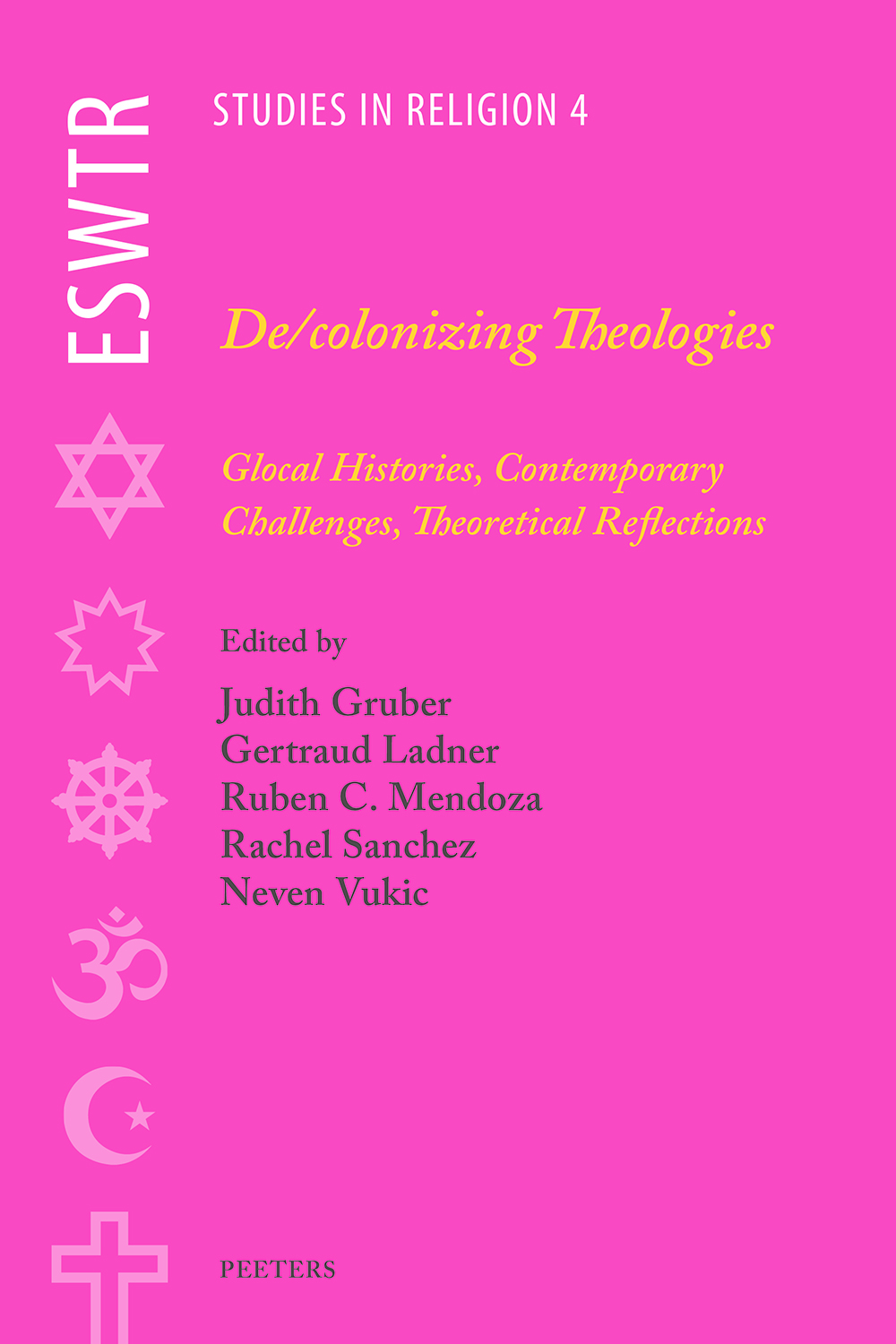 De/colonizing Theologies
Glocal Histories, Contemporary Challenges, Theoretical Reflections
Volume 4
 Drunk the Potion, No Whit Charmed
The Doctrine of Pure and Perfect Souls from Iamblichus to Damascius






 Extracanonical Traditions and the Holy Land
Texts, Rituals, and Material Culture in Late Antique Palestine
 Fear, Fear of God, God-Fearers
Philological and Historical Perspectives on the World of Ancient Judaism and Christianity

