
Infant Milk or Hardy Nourishment?
The Bible for Lay People and Theologians in the Early Modern Period
Edited by W. François Edited by A.A. den Hollander

Paperback (Published)
(August 2009)
ISBN: 9789042921443
Price: $100.00
On back order
The Pauline expressions “infant milk” and “hardy nourishment” or “solid food” (cf. 1 Cor 3,2 and Heb 5,12-14) have frequently been used by the Church fathers, medieval preachers and early modern writers, to voice the contrasting opinions that the words of Scripture are either simple to understand for the uneducated laity, or only discernable for professional theologians. Hence, the present volume considers the place of the Scriptures in both lay spirituality and in theological thinking. It includes a wide range of articles, dealing with vernacular Bible translations intended for common people, visual Bible culture, Bible commentaries written by theologically and philologically skilled scholars, and other related topics. The essays have been arranged in a chronological order, and divided into three sections, the first part considering the period from 1450 to 1520. This period begins when the mediaeval production of Bible translations is at a peak, and when another readership, other than the clergy, has increasingly found its way to the Bible. The printing press, which makes an appearance at the time, provides an immediate response to this growing demand. During the same period, also in the north, we see the gradual rise of humanism, which for figures such as Erasmus and Lefevre d’Etaples, also entailed a great interest in the Bible sources (ad fontes). In 1519 Erasmus published his Novum Testamentum (a revised version of his 1516 Novum Instrumentum), providing from 1520 the basis for various vernacular Bible publications. His Paraphrases on diverse books of the New Testament also appealed to a broad reading public. The effects of this Biblical humanism provide the point of departure for the second part of this book. During the same decennia, through the influence of the Reformation and its sola scriptura principle, new translations became available. The response to this new Bible elan in Catholic circles was varied, from an absolute prohibition of Bible translation in the vernacular, to a cautious integration of a Biblical spirituality in teaching and preaching. The different contributions demonstrate how the religious diversity and plurality continues to expand in this period, with each group increasingly accentuating its own confessional identity. The way in which the Bible is dealt with reflects this process. In the seventeenth century, on which the third section of this book focuses, this evolution is pursued further. From the middle of this century however, an evolution takes place, with a growing number of exegetes taking a critical, scholarly attitude to the Bible, a development that is in an obvious relationship with the growing contemporary phenomenon of secularisation and rationalism. The present book will serve as a valuable companion to Lay Bibles in Europe 1450-1800 (eds. August den Hollander and Mathijs Lamberigts), the proceedings of the 2004 Amsterdam Conference with the same title, which has been published as volume 198 of the BETL-series.
- Edited by W. François
- Edited by A.A. den Hollander
Other Titles in this Series

 Florilegium Lovaniense
Studies in Septuagint and Textual Criticism in Honour of FlorentinoGarcía Martínez
Volume 224


 Half-Truths
The Irish College, Rome, and a Select History of the Catholic Church, 1771-1826
Volume 322


 The Holy Spirit, The Church, and Christian Unity
Proceedings of the Consultation Held at the Monastery of Bose, Italy(14-20 October 2002)
Volume 181
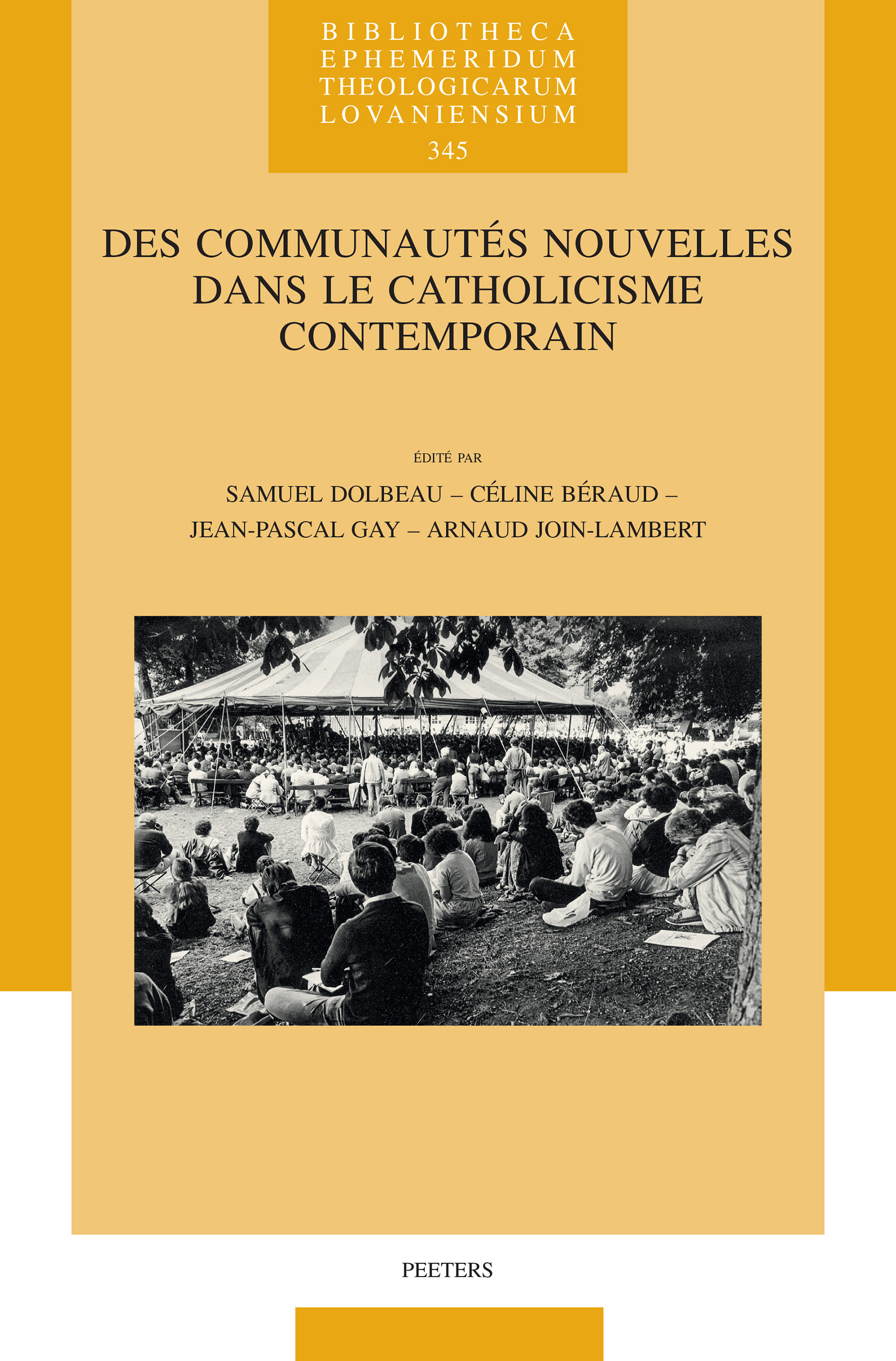 Des communautés nouvelles dans le catholicisme contemporain
Innovations, réinventions, ruptures et régulations
Volume 345
 Writing, Rewriting, and Overwriting in the Books of Deuteronomy and the Former Prophets
Essays in Honor of Cynthia Edenburg
Volume 304

 The Belgian Contribution to the Second Vatican Council
International Research Conference at Mechelen, Leuven andLouvain-la-Neuve (September 12-16, 2005)
Volume 216

 Éléments d’une théologie fondamentale de la création artistique
Les écrits théologiques sur l'art chez Karl Rahner (1954-1983)
Volume 307


 Where is the Truth?
Narrative Exegesis and the Question of True and False Prophecy in Jer26-29 (MT)
Volume 214
 Polycarpiana
Studies on Martyrdom and Persecution in Early Christianity. Collected Essays
Volume 205
 Fading Frontiers?
A Historical-Theological Investigation into the Notion of the 'Elementa Ecclesiae'
Volume 321

 Virtuelle Vergangenheit
Die Textrekonstruktion einer verlorenen mittelniederländischenEvangelienharmonie. Die Handschrift Utrecht Universitätsbibliothek 1009
Volume 210
 Theology and Christology in the Fourth Gospel
Essays by the Members of the SNTS Johannine Writings Seminar
Volume 184

 The Anthropological Turn, Christian Humanism, and Vatican II
Louvain Theologians Preparing the Path for 'Gaudium et spes'(1942-1965)
Volume 303
Similar Books


 Athanasius of Alexandria, Epistula ad episcopos Aegypti et Libyae
Old Slavonic Version and English Translation
Volume 261

 Balthasar Caymox of Nuremberg
Early Modern German Print Publishers: Popular Prints of the Seventeenth Century
 Beyond Sovereign Courts
Agents and Practices in Early Modern Spanish and Habsburg Diplomacy
Volume 3


 Circulation, Use, Impact
The Consumption of Architectural Books in the Early Modern Eastern Adriatic
Volume 1

 Councils, Conflicts, Correspondence
Urban Diplomacy in Reval (Tallinn) and Lübeck (c. 1470–1570)
Volume 67
 Cyril of Alexandria’s Christological Exegesis
Explorations of Partitive Exegesis in the Dialogues on the Trinity
Volume 70


 Epiphanies of the Divine in the Septuagint and the New Testament
Fifth International Symposium of the Corpus Judaeo-Hellenisticum Novi Testamenti (CJHNT), 14-17 May 2015, Nottingham

 Extracanonical Traditions and the Holy Land
Texts, Rituals, and Material Culture in Late Antique Palestine
 From Joseph to Jesus
The Joseph Narrative as a Compositional Template from Old Greek Esther to the Gospel of Luke
Volume 125


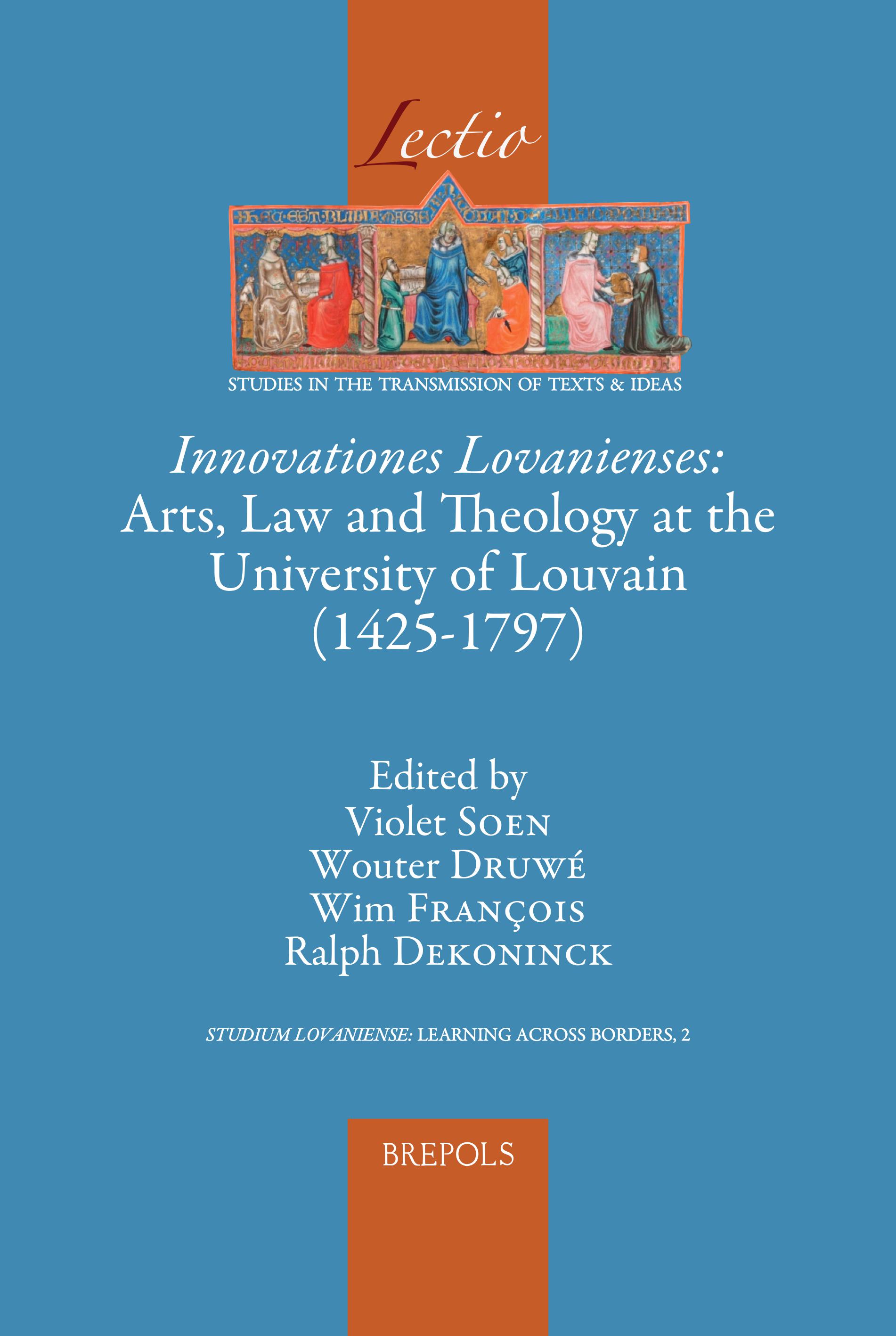 Innovationes Lovanienses: Arts, Law and Theology at the University of Louvain (1425–1797)
Studium Lovaniense: Learning across Borders, 2
Volume 18


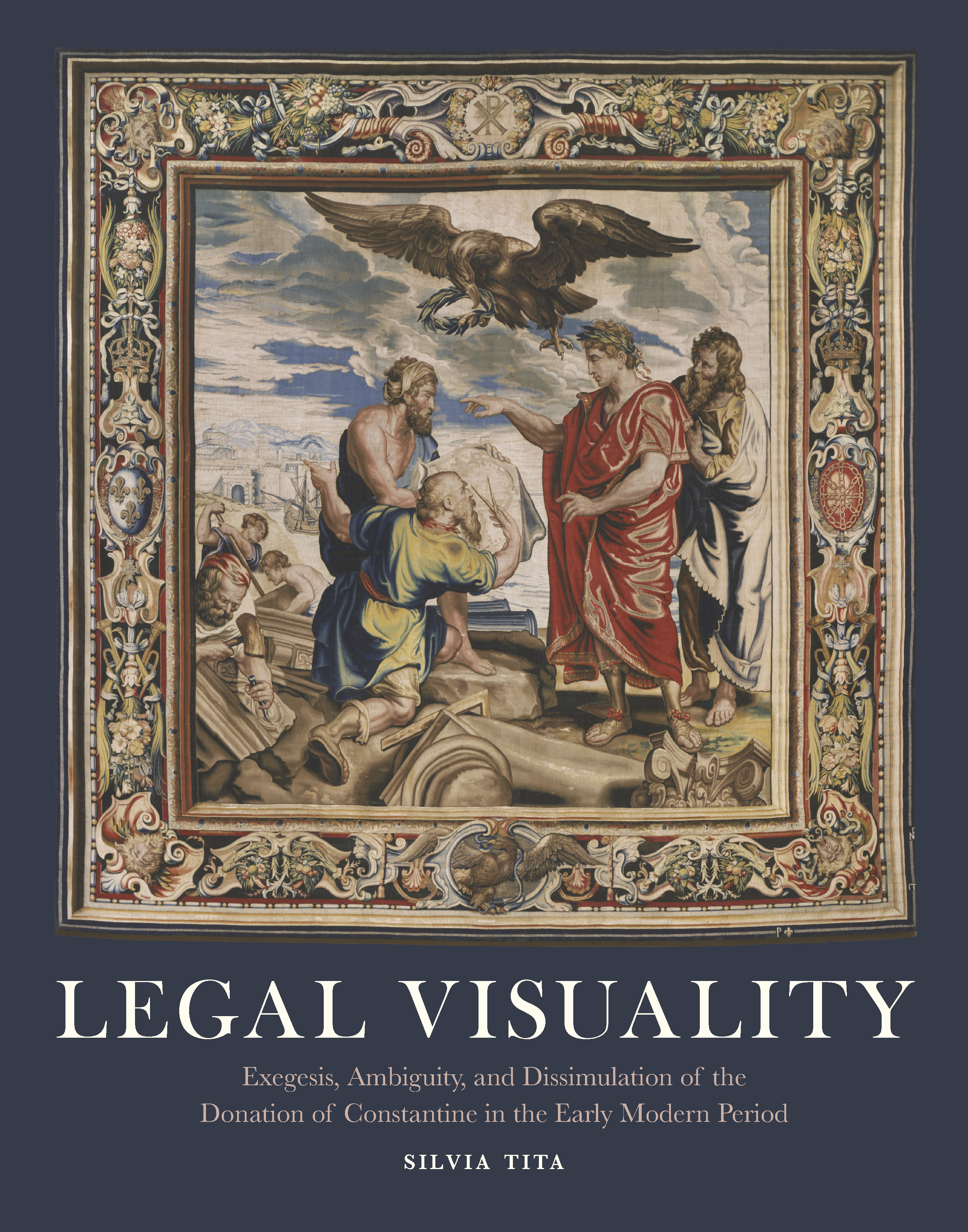 Legal Visuality
Exegesis, Ambiguity, and Dissimulation of the Donation of Constantine in the Early Modern Period


 Naples as Laboratory / Laboratorium Neapel
Style Options, Artistic Rivalry and Self Fashioning in Neapolitan Baroque Painting / Plurale Stilbildung, Kunstlerkonkurrenz und Self Fashioning in der neapolitanischen Barockmalerei
 Paradise Lost in Transmission
The Return to Eden in the Apocalypse of Peter within Its Ethiopic and Early Christian Contexts


