
Gott und Gewalt gegen Kinder im Alten Testament
by Andreas Michel

English summary: Children are often the victims of violence in the Old Testament, and in most instances God bears the responsibility for these acts of violence. In this work, Andreas Michel demonstrates that there are parallels between today’s attitude regarding these acts and the attitude of the Greek translators of the Old Testament who, because they could not bear the thought of God permitting these acts of violence, simply omitted some of these incidents from their bible. In order to present proof of this, the author evaluates for the first time all those negative verbs which are related to violence and which have God as their subject. In doing so, he is guided by the presentation of the so-called countertestimony in Walter Brueggemann’s Theology of the Old Testament from 1997. In a discussion of Psalm 137 and Genesis 22, two texts which pertain particularly to violence against children, and of texts concerning cannibalism of children, the author reaches the conclusion that the biblical image of God, as repulsive as it may seem, must be taken seriously. German description: Kinder sind im alttestamentlichen Kontext in einem erschreckend hohen Ausmass Opfer tatsachlicher oder angekundigter korperlicher Gewalt. Dabei verblufft die starke negative Involvierung der Gottesfigur in diese Gewaltszenarien. Andreas Michel vergleicht die hebraischen und griechischen Fassungen der Gewalt-gegen-Kinder-Texte textkritisch mit denjenigen Texten, in denen negative, gewaltnahe Verben mit gottlichem Subjekt verbunden werden. Eine eindruckliche Sammlung dieser Verben aus dem biblischen countertestimony (Brueggemann 1997) wird hier erstmals prasentiert. Es zeigt sich, dass die Verbindung von eGott’ und eGewalt’ schon seit fruhesten Zeiten als problematisch empfunden worden ist, freilich nicht so sehr wegen der Opfer, den Kindern, sondern wegen des Taters, Gott. In exemplarischen Durchgangen werden drei besonders exponierte Gewalt-gegen-Kinder-Kontexte im Blick auf das Gottesbild beleuchtet, und zwar Psalm 137 (Kinder zerschlagen), die Kinder-Kannibalismus-Texte (Kinder essen) und Genesis 22 (Kinder opfern). Der Autor pladiert dafur, sich auch mit der als abstossend empfundenen Abgrundigkeit des biblischen Gottes auseinander zu setzen.
Andreas Michel, Geboren 1963; Studium der katholischen Theologie, der Geschichte und der Altorientalistik in Freiburg, Jerusalem und Tubingen; 1997 Promotion; 2003 Habilitation; wissenschaftlicher Angestellter an der Universitat Mainz.
- By (author) Andreas Michel
Other Titles in this Series

 Economics in Persian-Period Biblical Texts
Their Interactions with Economic Developments in the Persian Period and Earlier Biblical Traditions

 History and the Hebrew Bible
Studies in Ancient Israelite and Ancient Near Eastern Historiography
Volume 61
 Gott in Zion
Geschichte der Zionstheologien im alten Israel mit Schwerpunkten auf den Psalmen und dem Jesajabuch
Volume 181


 Hiob – Vom Gottesfurchtigen zum Reprasentanten Israels
Studien zur Buchwerdung des Hiobbuches und zu seinen Quellen
Volume 70
 Weisung fur Israel
Studien zu religiosem Lehren und Lernen im Deuteronomium und in seinem Umfeld
Volume 44


 The Formation of the Hebrew Psalter
The Book of Psalms Between Ancient Versions, Material Transmission and Canonical Exegesis
Volume 151

 Die Geschichtspsalmen
Eine Studie zu den Psalmen 78, 105, 106, 135 und 136 als hermeneutische Schlusseltexte im Psalter
Volume 84

 The Poetics of Visuality
Ekphrasis, Material Agency, and the Visual Imagination in Biblical Antiquity
Volume 182


 Das Hohelied Salomos zwischen Poesie und Erzahlung
Erzahltextanalyse eines poetischen Textes
Volume 72

 Die Erzelternerzahlungen im Lichte hofischer Erzahlkunst
Motivkritische Studien zu den Uberlieferungen von Lot, Isaak, Rebekka und Jakob
Volume 161


 The Building of the First Temple
A Study in Redactional, Text-Critical and Historical Perspective
Volume 103


Similar Books



 Cyril of Alexandria’s Christological Exegesis
Explorations of Partitive Exegesis in the Dialogues on the Trinity
Volume 70


 Reformed Covenantal Eudaimonism
Wilhelmus à Brakel (1635–1711) on Highest Good, Virtue, and Law
Volume 87

 The Biblical Tale of Judah and Tamar in Fourteenth-Century Iran
A Judeo-Persian Versified Account by Shāhīn with Scholarly Edition, Annotated Translation and Persian Transliteration
Volume 94, 951

 The Therapeutae as the Best Paradigm for the Contemplative Life
A Contextual Reading of Philo of Alexandria's De Vita Contemplativa

 De Moïse à Jésus: une messianité en discussion
Une interprétation de Jean 6 à partir de la section narrative (vv. 1-25a)
Volume 244


 Die Sprache der Psalmen
Skizzierung eines lyrischen Prototyps der hebräischen Psalmen mithilfe von gattungs- und lyriktheoretischen Ansätzen
Volume 440

 Makrothymia im Neuen Testament
Semantik und Ethik einer vergessenen ethischen Norm. Kontexte und Normen neutestamentlicher Ethik / Contexts and Norms of New Testament Ethics. Band XV
 Parola di Dio, di uomo e di Re
L'assoluta verità della Bibbia nella dottrina cattolica di Bacchisio Raimondo Motzo


 Breaking New Ground in John
Imagery, Parables, Characters, Christology, and Ethics in the Fourth Gospel
Volume 531
 But the Wise Shall Understand
Reuse of Prophecies, Chronotope, and Merging of Eschatological Horizons in Daniel 10-12
 Creation Concepts and Creation Care
Perspectives from Early Judaism, Early Christianity, and Beyond. Kontexte und Normen neutestamentlicher Ethik / Contexts and Norms of New Testament Ethics XVII
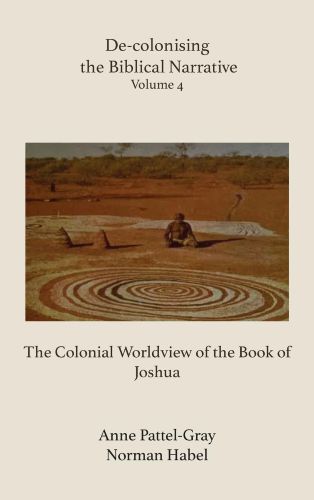 De-colonising the Biblical Narrative. Volume 4
The Colonial Worldview of the Book of Joshua
Volume 4


 Personified Mountains in Ancient Canonical Narratives
Spatial and Mythic Studies of Mesopotamian, Greek, and Hebrew Bible Landscapes
Volume 62
