
Gibt es eine Welt in Hegels Phanomenologie des Geistes?
by Tereza Matejckova

Paperback (Published)
(February 2018)
ISBN: 9783161556418
6.06 x 9.09 inches
Price: $99.00
In stock
English summary: Criticism is often levelled at Hegel’s philosophy of the absolute spirit for its being conceived at the expense of the world. In view of this, Hegel’s regular reference to a “world” in the Phenomenology of Spirit is somewhat puzzling. How then are we to understand the presence of the world, or even numerous worlds? Tereza Matejckova contends that at every stage of its journey, consciousness designs a new world-model, each built on central concepts of the respective form of consciousness. Consciousness thus finds itself in a world of contradiction, of life, of struggle, or one of “unhappy diremption”. The point of absolute knowledge is not that the world is now derived from consciousness itself, but rather that it conceives a world-model that corresponds with reality, as whose reflection it itself now grasps. German description: Oft wird gegen Hegel der Vorwurf erhoben, seine Philosophie des absoluten Geistes sei auf Kosten der Welt konzipiert. Umso auffallender ist, dass Hegel in der Phanomenologie des Geistes nahezu auf jeder Ebene auf eine Welt zu sprechen kommt. Wie ist diese Gegenwart der Welt, sogar einer Mehrzahl von Welten zu deuten? Tereza Matejckova behauptet, dass das Bewusstsein auf jeder Ebene seiner Genese ein Weltmodell entwirft, in dessen Zentrum Schlusselbegriffe der einschlagigen Bewusstseinsgestalt stehen. Das Bewusstsein findet sich somit in einer Welt des Widerspruchs, des Lebens, des Kampfes oder der unglucklichen Entzweiung wieder. Pointe des absoluten Wissens ist nicht, dass das Bewusstsein nun die Welt aus sich selbst ableitet, sondern dass es ein der Wirklichkeit entsprechendes Weltmodell konzipiert, als dessen Widerschein es sich selbst erfasst.
English summary: Criticism is often levelled at Hegel’s philosophy of the absolute spirit for its being conceived at the expense of the world. In view of this, Hegel’s regular reference to a “world” in the Phenomenology of Spirit is somewhat puzzling. How then are we to understand the presence of the world, or even numerous worlds? Tereza Matejckova contends that at every stage of its journey, consciousness designs a new world-model, each built on central concepts of the respective form of consciousness. Consciousness thus finds itself in a world of contradiction, of life, of struggle, or one of “unhappy diremption”. The point of absolute knowledge is not that the world is now derived from consciousness itself, but rather that it conceives a world-model that corresponds with reality, as whose reflection it itself now grasps. German description: Oft wird gegen Hegel der Vorwurf erhoben, seine Philosophie des absoluten Geistes sei auf Kosten der Welt konzipiert. Umso auffallender ist, dass Hegel in der Phanomenologie des Geistes nahezu auf jeder Ebene auf eine Welt zu sprechen kommt. Wie ist diese Gegenwart der Welt, sogar einer Mehrzahl von Welten zu deuten? Tereza Matejckova behauptet, dass das Bewusstsein auf jeder Ebene seiner Genese ein Weltmodell entwirft, in dessen Zentrum Schlusselbegriffe der einschlagigen Bewusstseinsgestalt stehen. Das Bewusstsein findet sich somit in einer Welt des Widerspruchs, des Lebens, des Kampfes oder der unglucklichen Entzweiung wieder. Pointe des absoluten Wissens ist nicht, dass das Bewusstsein nun die Welt aus sich selbst ableitet, sondern dass es ein der Wirklichkeit entsprechendes Weltmodell konzipiert, als dessen Widerschein es sich selbst erfasst.
- By (author) Tereza Matejckova
Other Titles in this Series


 Die anthropologische Asthetik Arnold Gehlens und Helmuth Plessners
Entlastung der Kunst und Kunst der Entlastung
Volume 36


 Licht und Dunkel als Denkfiguren der Philosophie
Philosophisches Denken zwischen Affirmativitat und Negativitat
Volume 54


 Das Dasein und das isolierte Subjekt
Die Frage der philosophischen Selbstinterpretation des Menschen bei Heidegger


 Denkende Korper
Die metaphysische Unteilbarkeit des Menschen von Descartes und Spinoza bis La Mettrie
Volume 56


 Die Konstitution der Macht
Kompetenz, Ordnung und Integration in der politischen Verfassung
Volume 12


Similar Books


 Drunk the Potion, No Whit Charmed
The Doctrine of Pure and Perfect Souls from Iamblichus to Damascius

 Libertinage et philosophie à l’époque classique (XVIe-XVIIIe siècle)
Athéisme, Modernité et Sécularisation / Atheism, Modernity and Secularization
Volume 23

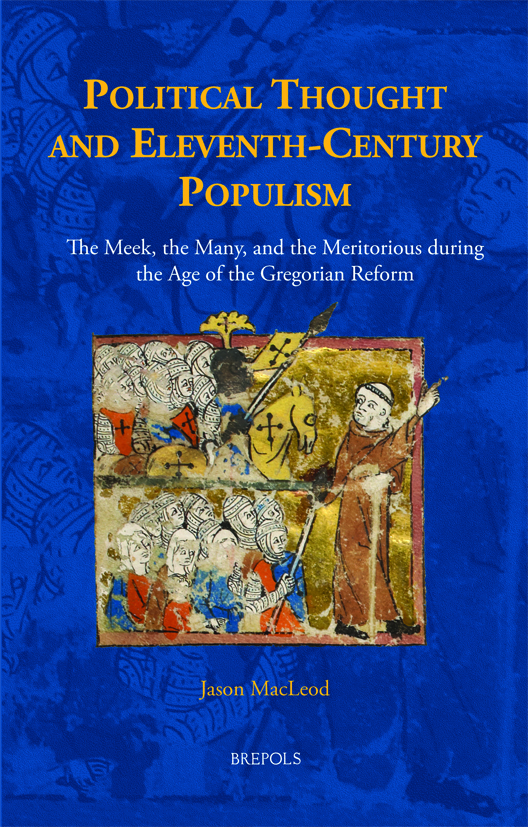 Political Thought and Eleventh-Century Populism
The Meek, the Many, and the Meritorious during the Age of the Gregorian Reform
Volume 38


 The Latin Hermes in Translation
Asclepius, Glosses on Trismegistus, Book of Six Principles of Things, Book of 24 Philosophers
Volume 50



 Éthique, politique, religions
Superstition (XVIIe - XXIe siècles). Sémantique, histoires et cultures


 Lehrreiche Literatur
Die didaktische Gestaltung von Plutarchs Quaestiones Graecae und Romanae und Gellius' Noctes Atticae


 Sitten zwischen Moralphilosophie und Politischer Okonomie am Ende des 18. Jahrhunderts
Mit einer zweisprachigen Edition von Ludwig Heinrich Jakobs Preisschrift Quelles sont les institutions les plus propres a fonder la morale d'un peuple

 Theologische Anthropologie in G. E. Lessings Frühwerk
Literarische Bilder von Gemeinschaft und Nonkonformität, Glück und Sünde

