
Wiederholungen
Philosophiegeschichtliche Studien
by Damir Barbaric

English summary: In this volume, Damir Barbaric argues that many, if not all, of contemporary philosophy’s problems reveal their true significance and hence their way of resolution when considered against the backdrop of the history of philosophy as a whole. To “repeat” this history–that is, to at once integrate and transform the history of philosophy for the sake of future solutions–it is important to let its central texts speak within their own horizon of meaning through rigorous philological and hermeneutic interpretation. In this vein, Barbaric interprets the fundamental texts of classical thinkers from ancient Greece (Heraclitus, Plato and Aristotle), the early and late modernity (Descartes, Leibniz, Kant, Fichte, Hegel and Schopenhauer), up to classical and contemporary modernity (Nietzsche, Heisenberg, Cassirer and Gadamer), with consistent attention to their foundational concepts and the larger context of their respective works. German description: In den in diesem Band versammelten Betrachtungen geht Damir Barbaric davon aus, dass viele, wenn nicht alle, Probleme der gegenwartigen Philosophie erst vor dem Hintergrund der gesamten Philosophiegeschichte ihren wahren Sinn und damit auch Wege zu ihrer moglichen Losung zeigen. Um diese Geschichte philosophisch zu “wiederholen”, also aufzunehmen und zugleich zukunftstrachtig abzuwandeln, gilt es, ihre zentralen Texte durch eine streng philologische und hermeneutische Auslegung innerhalb ihres eigenen Sinnhorizontes sprechen zu lassen. In diesem Sinne interpretiert Barbaric die Grundtexte der klassischen Denker von den antiken Griechen (Heraklit, Platon, Aristoteles) uber die Grunder und Vollender der Neuzeit (Descartes, Leibniz, Kant, Fichte, Hegel, Schopenhauer) bis zu prominenten Vertretern der klassischen und gegenwartigen Moderne (Nietzsche, Heisenberg, Cassirer, Gadamer), immer im Rahmen ihres Gesamtwerks und auf ihre philosophischen Grundbegriffe hin.
- By (author) Damir Barbaric
Other Titles in this Series

 Metaphysik des absoluten Geschehens
Eine systematische Interpretation des Zusammenhangs der Geschichtlichkeit, des Denkens und der ‚Realität’ bei Heidegger und Hegel


 Licht und Dunkel als Denkfiguren der Philosophie
Philosophisches Denken zwischen Affirmativitat und Negativitat
Volume 54

 Die anthropologische Asthetik Arnold Gehlens und Helmuth Plessners
Entlastung der Kunst und Kunst der Entlastung
Volume 36


 Das Dasein und das isolierte Subjekt
Die Frage der philosophischen Selbstinterpretation des Menschen bei Heidegger


 Denkende Korper
Die metaphysische Unteilbarkeit des Menschen von Descartes und Spinoza bis La Mettrie
Volume 56


 Die Konstitution der Macht
Kompetenz, Ordnung und Integration in der politischen Verfassung
Volume 12


Similar Books


 Drunk the Potion, No Whit Charmed
The Doctrine of Pure and Perfect Souls from Iamblichus to Damascius

 Libertinage et philosophie à l’époque classique (XVIe-XVIIIe siècle)
Athéisme, Modernité et Sécularisation / Atheism, Modernity and Secularization
Volume 23

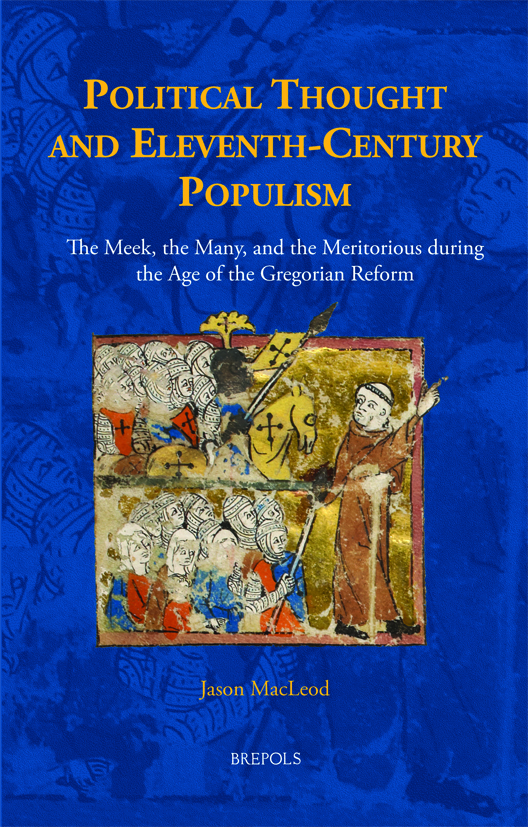 Political Thought and Eleventh-Century Populism
The Meek, the Many, and the Meritorious during the Age of the Gregorian Reform
Volume 38


 The Latin Hermes in Translation
Asclepius, Glosses on Trismegistus, Book of Six Principles of Things, Book of 24 Philosophers
Volume 50



 Éthique, politique, religions
Superstition (XVIIe - XXIe siècles). Sémantique, histoires et cultures


 Lehrreiche Literatur
Die didaktische Gestaltung von Plutarchs Quaestiones Graecae und Romanae und Gellius' Noctes Atticae


 Sitten zwischen Moralphilosophie und Politischer Okonomie am Ende des 18. Jahrhunderts
Mit einer zweisprachigen Edition von Ludwig Heinrich Jakobs Preisschrift Quelles sont les institutions les plus propres a fonder la morale d'un peuple

 Theologische Anthropologie in G. E. Lessings Frühwerk
Literarische Bilder von Gemeinschaft und Nonkonformität, Glück und Sünde

