
Hermeneutisches Wissen
Essays nach Gadamer
By (author) Tobias Keiling

Paperback (Published)
(March 2026)
ISBN: 9783161623363
6.1 x 9.13 inches
Price: $126.00
In stock
Based on Gadamer’s own critique of Truth and Method, Tobias Keiling develops a hermeneutics ‘after Gadamer’. Gadamer’s hermeneutics is as indispensable as it is problematic. To think ‘after Gadamer’ is to ask whether he is ahead of us.
English summary: Based on Hans-Georg Gadamer’s own critique of Truth and Method, Tobias Keiling develops a Philosophical Hermeneutics ‘after Gadamer’. Its theoretical focus in Part One is the question what follows from Gadamer’s emphasis on the dialogical and historical nature of understanding for questions of epistemology. Discussing Gettier’s critique of the standard theory of knowledge and contemporary debates around epistemic virtue, Keiling sketches ideas for a specific hermeneutical epistemology. In Part Two, Keiling engages with contemporary positions: Gumbrecht’s discussion of latent meaning, Bredekamp’s theory of image-acts, and Boehm’s hermeneutics of images open onto a hermeneutic theory of imagination. Figal, Koch, and Gabriel invite reflections on hermeneutic realism. In Part Three, different applications show the import of Keiling’s approach: Gerhard Richter’s Betty invites reflection about the ethics of vulnerability. Buildings by Peter Zumthor and Alexander Schwarz allow to develop a hermeneutics of architecture. Engaging with Lear, Chakrabarty, and Toadvine, Keiling sketches a critical hermeneutics of the Anthropocene. In each case, Gadamer’s hermeneutics is shown to be as indispensable as it is problematic. German description: Ausgehend von Hans-Georg Gadamers eigener Kritik an Wahrheit und Methode entwickelt Tobias Keiling eine Hermeneutik ‘nach Gadamer’. Im Zentrum des ersten Teils steht die Frage, welches epistemische Selbstverstandnis der Hermeneutik aus Gadamers Betonung des dialogischen und historischen Charakters von Verstehen folgt. Keiling nimmt Gettiers Kritik der Standardtheorie von Wissen und aktuelle Diskussionen um epistemische Tugenden auf, um Grundzuge einer spezifisch hermeneutischen Epistemologie zu skizzieren. Im zweiten Teil greift Keiling zentrale Positionen der Gegenwart auf: Gumbrechts Uberlegungen zur Latenz von Sinn, Bredekamps Theorie des Bildakts und Boehms Bildhermeneutik lassen eine Theorie hermeneutischer Einbildungskraft hervortreten. Figal, Koch und Gabriel regen eine Neubestimmung des Verhaltnisses von Hermeneutik und Realismus an. Im dritten Teil verdeutlichen Anwendungen Keiling Ansatz. Am Beispiel eines Gemaldes Gerhard Richters Betty lasst sich uber die Ethik visueller Verletzlichkeit nachdenken. Bauten von Peter Zumthors und Alexander Schwarz erlauben das Verhaltnis von Architektur und Geschichte zu bestimmen. In Auseinandersetzung mit Lear, Chakrabarty und Toadvine entwirft Tobias Keiling eine kritische Hermeneutik des Anthropozans. Gadamers Hermeneutik, so zeigt sich, ist ebenso kritikwurdig wie unverzichtbar.
I. Programmatik
1. Im Ausgang von Wahrheit und Methode
2. Hermeneutik und das Problem der Rechtfertigung
3. Offenheit als epistemische Tugend
4. Hermeneutischer Humanismus
II. Dialoge
5. Zur Hermeneutik latenten Sinns
6. Hermeneutischer Kontextualismus
7. Realismus und Hermeneutik
III. Anwendungen
8. Über ein Bild Gerhard Richters
9. Bewahren/Erneuern. Hermeneutik der Architektur
10. Probleme einer hermeneutischen Anthropologie im Ausgang von W. G. Sebald
11. Geschichtliches Bewusstsein im Anthropozän
- By (author) Tobias Keiling
Other Titles in this Series

 Versammelte Bewegung
Zu Heideggers Interpretation des Logos und der Dynamis bei Platon und Aristoteles
Volume 43

 Sein und Gott
Ein systematischer Ansatz in Auseinandersetzung mit M. Heidegger, E. Levinas und J.-L. Marion
Volume 26


 Koexistenz im Ineinander
Eine problemgeschichtliche Analyse der Fremdwahrnehmungstheorie und der Intersubjektivitatsproblematik im Denken Edmund Husserls
Volume 51
 Die Konstitution der Macht
Kompetenz, Ordnung und Integration in der politischen Verfassung
Volume 12

 Objektive Ideen
Untersuchungen zum Verhaltnis von Idee, Begriff und Begrundung bei Ren Descartes und in der nachkartesischen Philosophie des 17. Jahrhunderts
Volume 35


 Auf der Suche nach dem Gegenstand und dem Theoriestatus der Philosophie
Philosophiegeschichtlich-kritische Studien
Volume 17

 Seinsgeschichte und phanomenologischer Realismus
Eine Interpretation und Kritik der Spatphilosophie Heideggers
Volume 37


 Realismus und Wissenschaft
Der empirische Erfolg der Wissenschaft zwischen metaphysischer Erklarung und methodologischer Beurteilung
Volume 19
 Metaphysik des absoluten Geschehens
Eine systematische Interpretation des Zusammenhangs der Geschichtlichkeit, des Denkens und der ‚Realität’ bei Heidegger und Hegel

 Die Bestimmung des Janus
Ereignisontologische und ereignislogische Grundlagen des analytischen Existenzialismus
Volume 18

 Licht und Dunkel als Denkfiguren der Philosophie
Philosophisches Denken zwischen Affirmativitat und Negativitat
Volume 54

 Die anthropologische Asthetik Arnold Gehlens und Helmuth Plessners
Entlastung der Kunst und Kunst der Entlastung
Volume 36
Similar Books


 Drunk the Potion, No Whit Charmed
The Doctrine of Pure and Perfect Souls from Iamblichus to Damascius

 Libertinage et philosophie à l’époque classique (XVIe-XVIIIe siècle)
Athéisme, Modernité et Sécularisation / Atheism, Modernity and Secularization
Volume 23

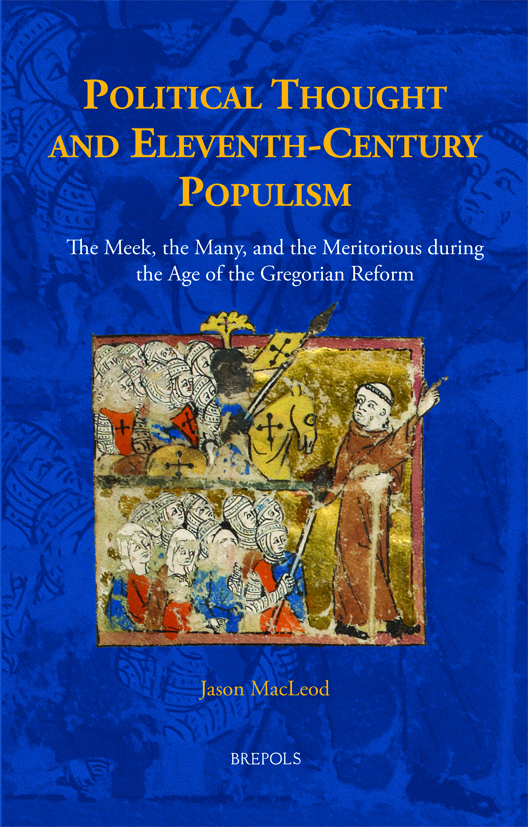 Political Thought and Eleventh-Century Populism
The Meek, the Many, and the Meritorious during the Age of the Gregorian Reform
Volume 38


 The Latin Hermes in Translation
Asclepius, Glosses on Trismegistus, Book of Six Principles of Things, Book of 24 Philosophers
Volume 50

![Book cover: Transitive Media [Philosophy]](https://isd.stisonbooks.com/images/books/native/9781804132333.jpg?asset_id=66970)


 Éthique, politique, religions
Superstition (XVIIe - XXIe siècles). Sémantique, histoires et cultures


 Lehrreiche Literatur
Die didaktische Gestaltung von Plutarchs Quaestiones Graecae und Romanae und Gellius' Noctes Atticae


 Sitten zwischen Moralphilosophie und Politischer Okonomie am Ende des 18. Jahrhunderts
Mit einer zweisprachigen Edition von Ludwig Heinrich Jakobs Preisschrift Quelles sont les institutions les plus propres a fonder la morale d'un peuple

 Theologische Anthropologie in G. E. Lessings Frühwerk
Literarische Bilder von Gemeinschaft und Nonkonformität, Glück und Sünde


