
English for Theology
A Resource for Teachers and Students
by Gabrielle Kelly

English for Theology has a specific goal. It is a resource workbook for the development of academic English language skills in theology and related disciplines for students – and their language teachers – from non-English speaking backgrounds. The author has sought to make the contents ecumenically relevant. The book assumes a level of proficiency in English suitable for tertiary-level study. The contents focus especially on developing reading skills. Section 1 (eleven units) provides instruction and practice in the skills of reading comprehension in English, using authentic theological texts. The way in which meaning is conveyed through mode of discourse, genre, organization of ideas, paragraph and sentence structure, and the skills of scanning, skimming and interpreting cohesive devices are included. Section 2 (13 units) offers practice in applying reading skills, as well as practice in listening, writing and speaking skills. Because theology is always grounded in a cultural context, and because this resource book has been produced in the first place with Asia-Pacific students in mind (though the principles are universally applicable), the socio-cultural realities of this region are background themes in many of the units.
English for Theology has a specific goal. It is a resource workbook for the development of academic English language skills in theology and related disciplines for students – and their language teachers – from non-English speaking backgrounds. The author has sought to make the contents ecumenically relevant. The book assumes a level of proficiency in English suitable for tertiary-level study. The contents focus especially on developing reading skills. Section 1 (eleven units) provides instruction and practice in the skills of reading comprehension in English, using authentic theological texts. The way in which meaning is conveyed through mode of discourse, genre, organization of ideas, paragraph and sentence structure, and the skills of scanning, skimming and interpreting cohesive devices are included. Section 2 (13 units) offers practice in applying reading skills, as well as practice in listening, writing and speaking skills. Because theology is always grounded in a cultural context, and because this resource book has been produced in the first place with Asia-Pacific students in mind (though the principles are universally applicable), the socio-cultural realities of this region are background themes in many of the units.
- By (author) Gabrielle Kelly
Other Titles in this Series


Similar Books

 A Companion to Christianity and Sport in Europe and North America (19th-21st centuries)
Volume 1: Western and Eastern Europe
 A Connecting Polemic in the Medieval Mediterranean
The Correspondence of Leo III and ʿUmar II
Volume 6





 Ars Prophetica
Theology in the Poetry of Twentieth-Century Hebrew Poets Avraham Halfi, Shin Shalom, Amir Gilboa, and T. Carmi
 As Messianism Turns to Heresy
The Regenstein Chair Lectures On Lurianic Kabbalah and Shabbatai Tzevi at Hebrew Union College - Cincinnati


 Creating the Woman in Antiquity
Proceedings of the 16th Melammu Workshop, Innsbruck, 2–3 June 2022
Volume 13
 Cultic Kisses
Fruitful Encounters Between Deities and Humans. Festschrift for Angelika Berlejung on the Occasion of Her 65th Birthday
 De/colonizing Theologies
Glocal Histories, Contemporary Challenges, Theoretical Reflections
Volume 4
 Drunk the Potion, No Whit Charmed
The Doctrine of Pure and Perfect Souls from Iamblichus to Damascius






 Extracanonical Traditions and the Holy Land
Texts, Rituals, and Material Culture in Late Antique Palestine
 Fear, Fear of God, God-Fearers
Philological and Historical Perspectives on the World of Ancient Judaism and Christianity


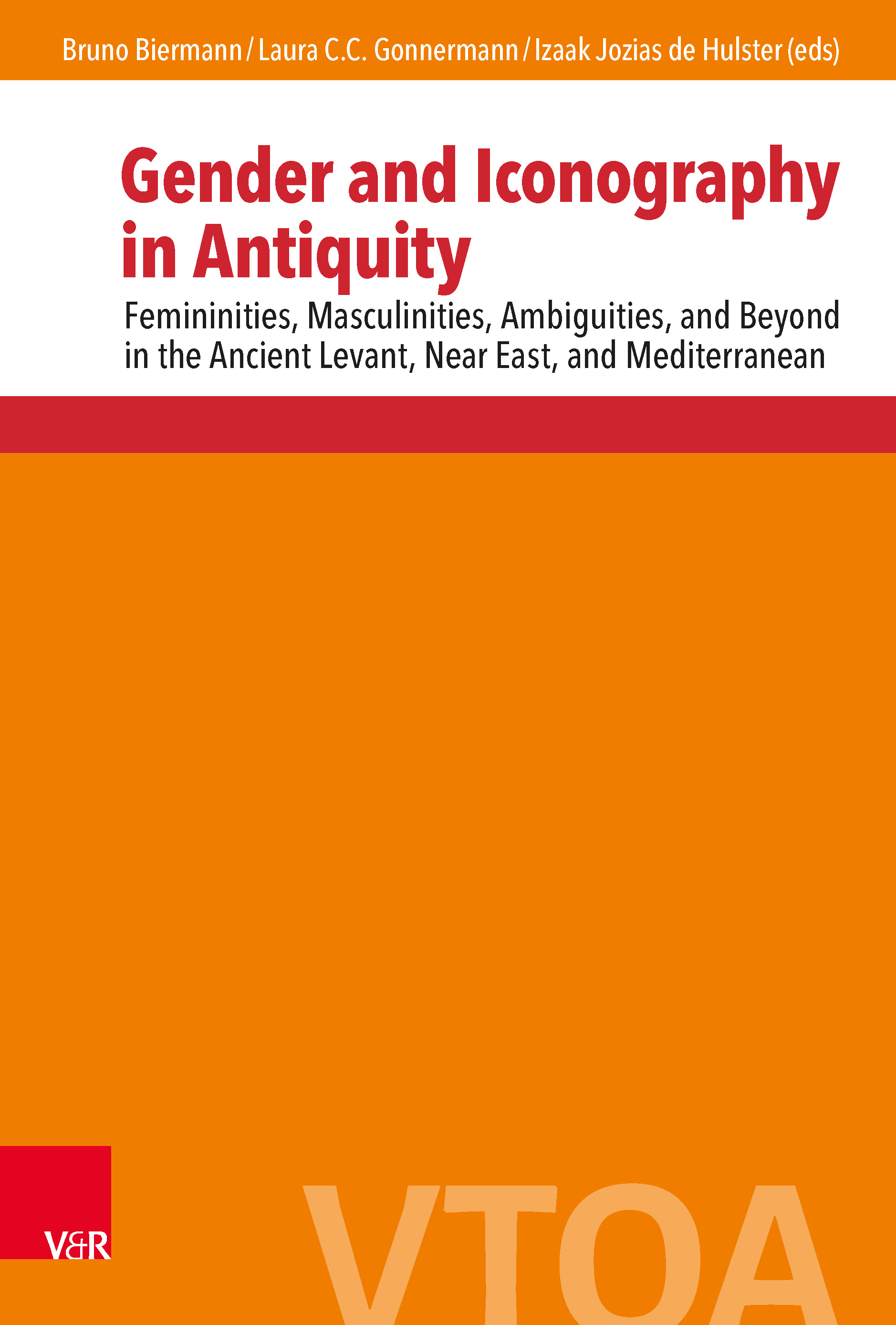 Gender and Iconography in Antiquity
Femininities, Masculinities, Ambiguities, and Beyond in the Ancient Levant, Near East, and Mediterranean