Earth, Empire and Sacred Text
Muslims and Christians as Trustees of Creation
by David L. Johnston

Earth, Empire and Sacred Text examines the Muslim-Christian theology of creation and humanity, aiming to construct a dialogue to enable both faiths to work together to preserve our planet, to bring justice to its most needy inhabitants, and to contribute to peace-building. Earth, Empire and Sacred Text opens with an analysis of the influential shift from the Cartesian view of the autonomous, disembodied self to a self-defined in discourse, community and culture. The “career” of Q. 2:30 (Adam’s God-mandated trusteeship) is then traced, from Islamic commentaries of the classical period to writings of Muslim scholars in the modern and postmodern periods. This is examined alongside the concept of human trusteeship under God in Christian and Jewish writers. The book concludes by highlighting the essential elements for a Muslim-Christian theology of human trusteeship.
“The breadth of Johnston’s reading and research on display here is simply staggering. In addition to his deep familiarity with over a millennium of Islamic commentary on the Qur’an, he also brings to this project a range of insights drawn from the disciplines of sociology, economics, politics, and philosophy, as well as from hermeneutics and from both Muslim and Christian theology.” – Stephen J. Davis, Yale University, USA “Johnston offers a possible rapprochement between Christians, Muslims, Jews, and indeed, the whole human family, based on insightful Christian and Islamic readings of sacred texts conveying God’s original creational commission.” – David Naugle, Dallas Baptist University, USA “A brilliant example of profound scholarship that connects with social and political realities. Trusteeship is not just a concept that will enhance Christian- Muslim relations. It offers a sound and solid foundation for the articulation of our common humanity. Johnston has brought all these elements together in this magnificent work.” – Chandra Muzaffar, Nordin Sopiee Professor of Global Studies,Universiti Sains Malaysia, Malaysia Earth, Empire and Sacred Text examines the Muslim-Christian theology of creation and humanity, aiming to construct a dialogue to enable both faiths to work together to preserve our planet, to bring justice to its most needy inhabitants, and to contribute to peace-building. Earth, Empire and Sacred Text opens with an analysis of the influential shift from the Cartesian view of the autonomous, disembodied self to a self-defined in discourse, community and culture. The “career” of Q. 2:30 (Adam’s God-mandated trusteeship) is then traced, from Islamic commentaries of the classical period to writings of Muslim scholars in the modern and postmodern periods. This is examined alongside the concept of human trusteeship under God in Christian and Jewish writers. The book concludes by highlighting the essential elements for a Muslim-Christian theology of human trusteeship.
- By (author) David L. Johnston
Other Titles in this Series




 Orientalists, Islamists and the Global Public Sphere
A Genealogy of the Modern Essentialist Image of Islam


Similar Books
 ‘For You I Study, For You I Work, For You I Live, For You I Am Ready To Even Give My Life’
Essays in Honour of Francis (Frank) J Moloney, SDB




 Ars Prophetica
Theology in the Poetry of Twentieth-Century Hebrew Poets Avraham Halfi, Shin Shalom, Amir Gilboa, and T. Carmi
 As Messianism Turns to Heresy
The Regenstein Chair Lectures On Lurianic Kabbalah and Shabbatai Tzevi at Hebrew Union College - Cincinnati


 Cities through Time
Glimpses into Urbanity and Community in Mediaeval to Modern West Asia and Egypt
Volume 1
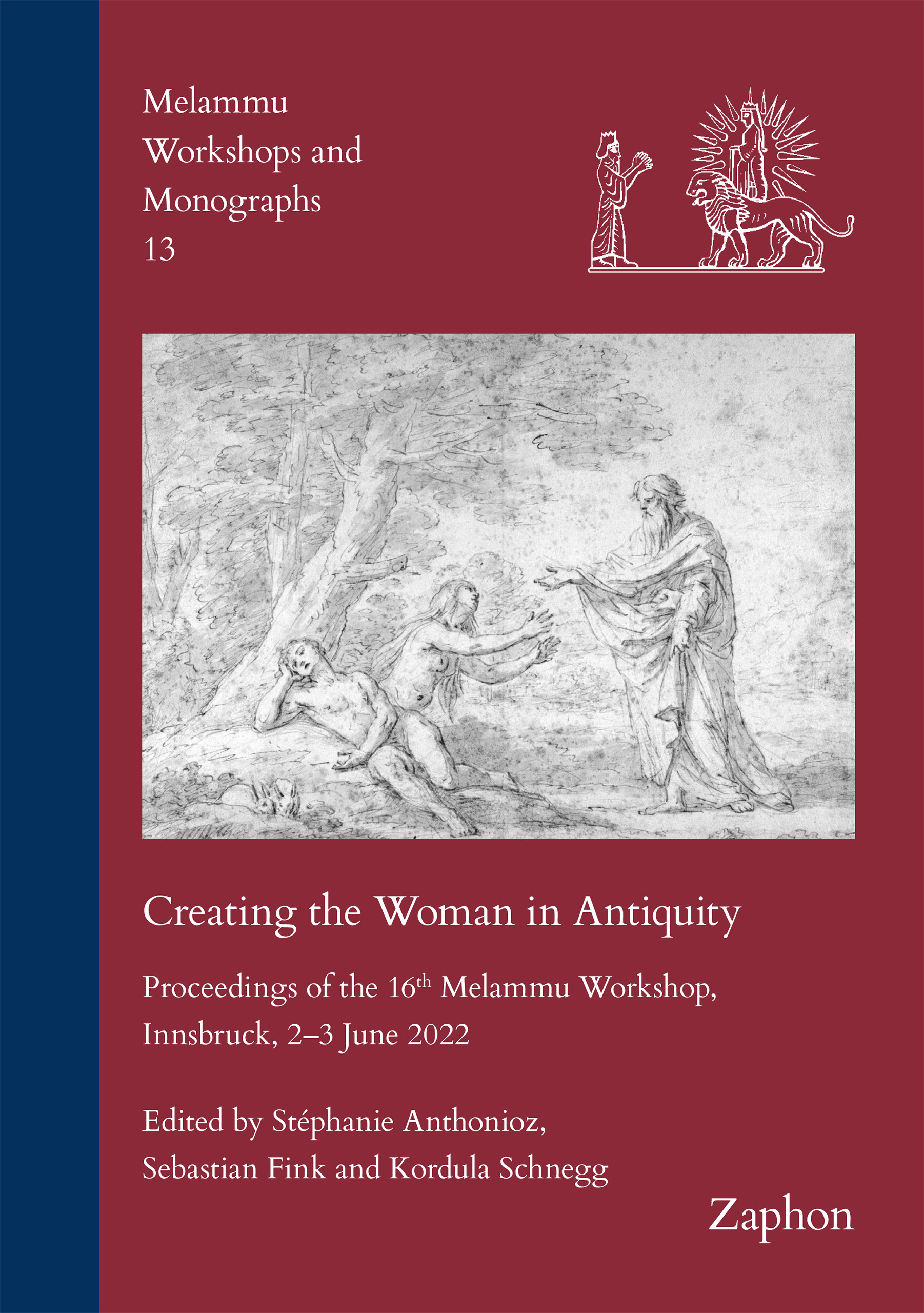 Creating the Woman in Antiquity
Proceedings of the 16th Melammu Workshop, Innsbruck, 2–3 June 2022
Volume 13
 Cuneiform Artefacts from Archaeological Contexts: New Research on Ancient Iraq
Proceedings of a Conference Held at the Bavarian Academy of Sciences and Humanities, July 4–5, 2024
Volume 2

 Drunk the Potion, No Whit Charmed
The Doctrine of Pure and Perfect Souls from Iamblichus to Damascius



 Extracanonical Traditions and the Holy Land
Texts, Rituals, and Material Culture in Late Antique Palestine
 Fear, Fear of God, God-Fearers
Philological and Historical Perspectives on the World of Ancient Judaism and Christianity


 Global Gulf
Geo-Economic, Geo-Political, and Geo-Technological Transformation in Saudi Arabia, the United Arab Emirates, and Qatar